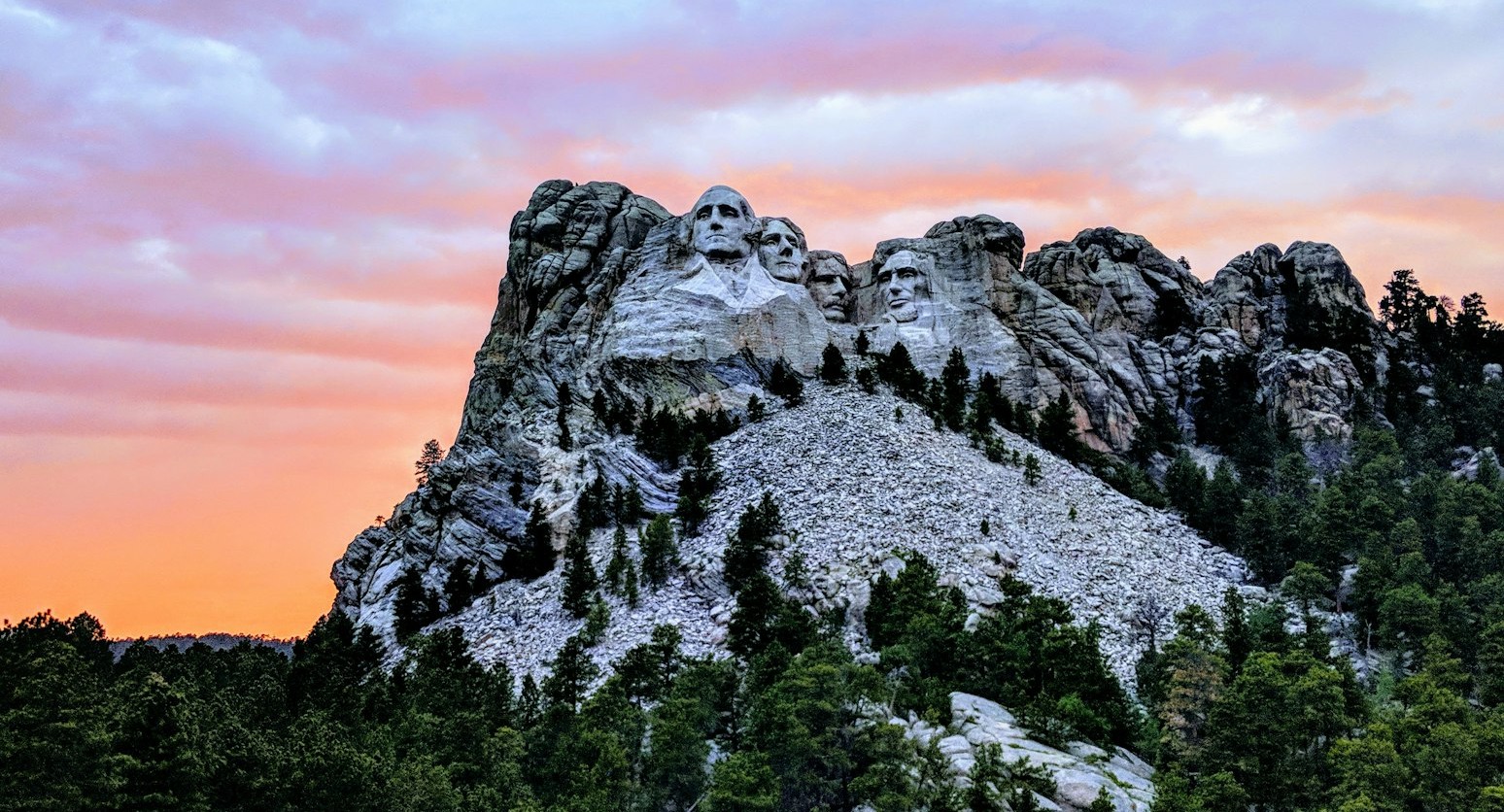
The one thing your National Park pass won't cover: Mount Rushmore
 Landmarks
Visit the National Parks
The one thing your National Park pass won't cover: Mount Rushmore
You've seen Mount Rushmore in pictures your whole life, but there's nothing quite like standing in front of those famous faces. The park receives approximately two million visitors a year, and for good reason; it’s glorious. But that many people can also be overwhelming. The good thing is that, with a few changes and the right information, the experience can be completely different. When the best time to arrive is, what your park pass actually covers, and where to go for the best views and the extra activities: Here’s all you need to know to do it right.
Understand the fees
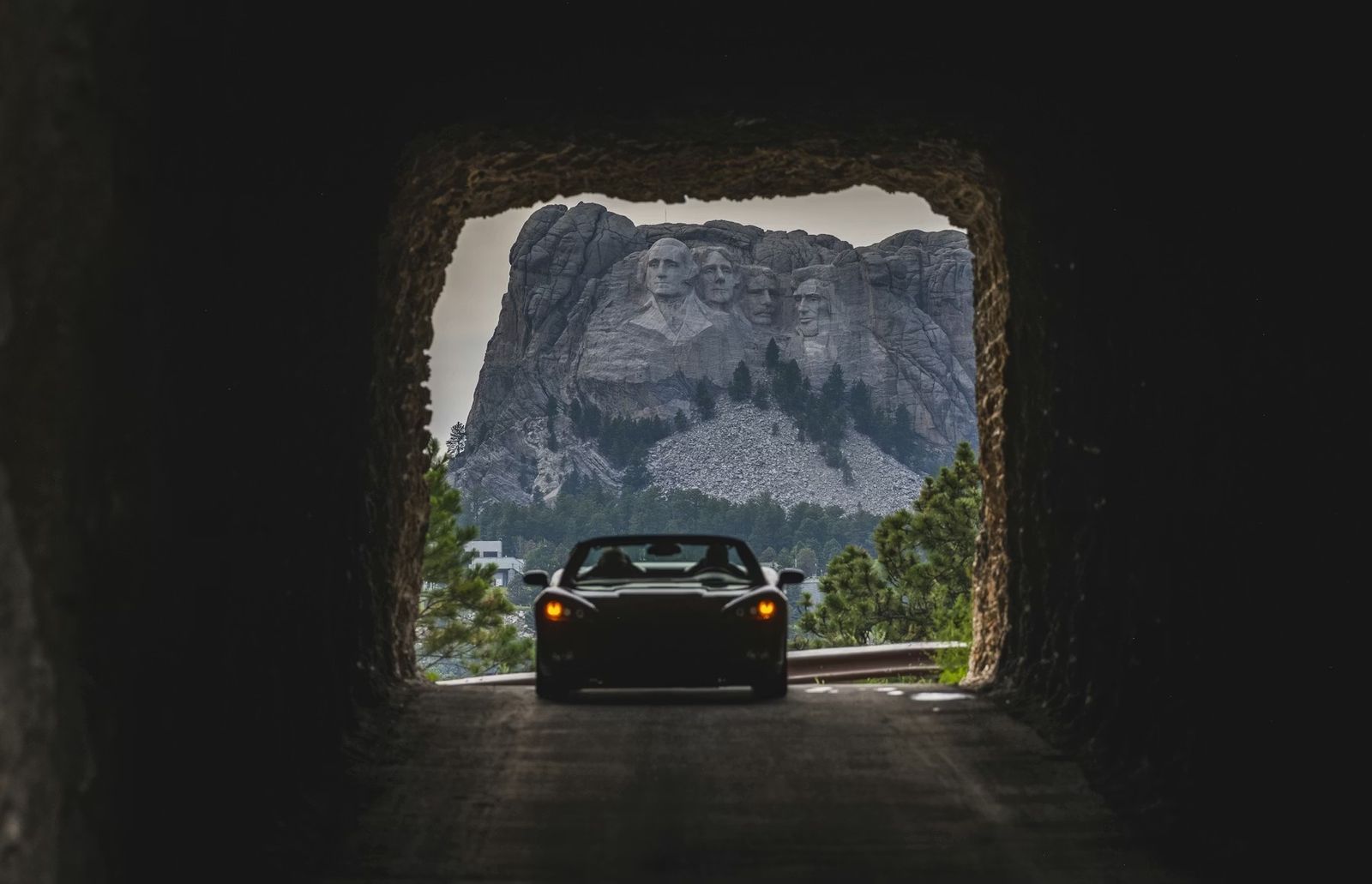
There’s no admission fee to see Mount Rushmore itself, which is always good news. However, there is a parking fee, and it applies to pretty much everyone. Even if you have a National Park pass, it won’t cover parking here.
Parking fees can be paid with cash or most major credit cards. As of July 2026, rates are $10 per vehicle, $5 for seniors (62 and older), and free for active-duty military personnel. It's good to know before you arrive and save yourself some frustration.
What’s the best time to go?
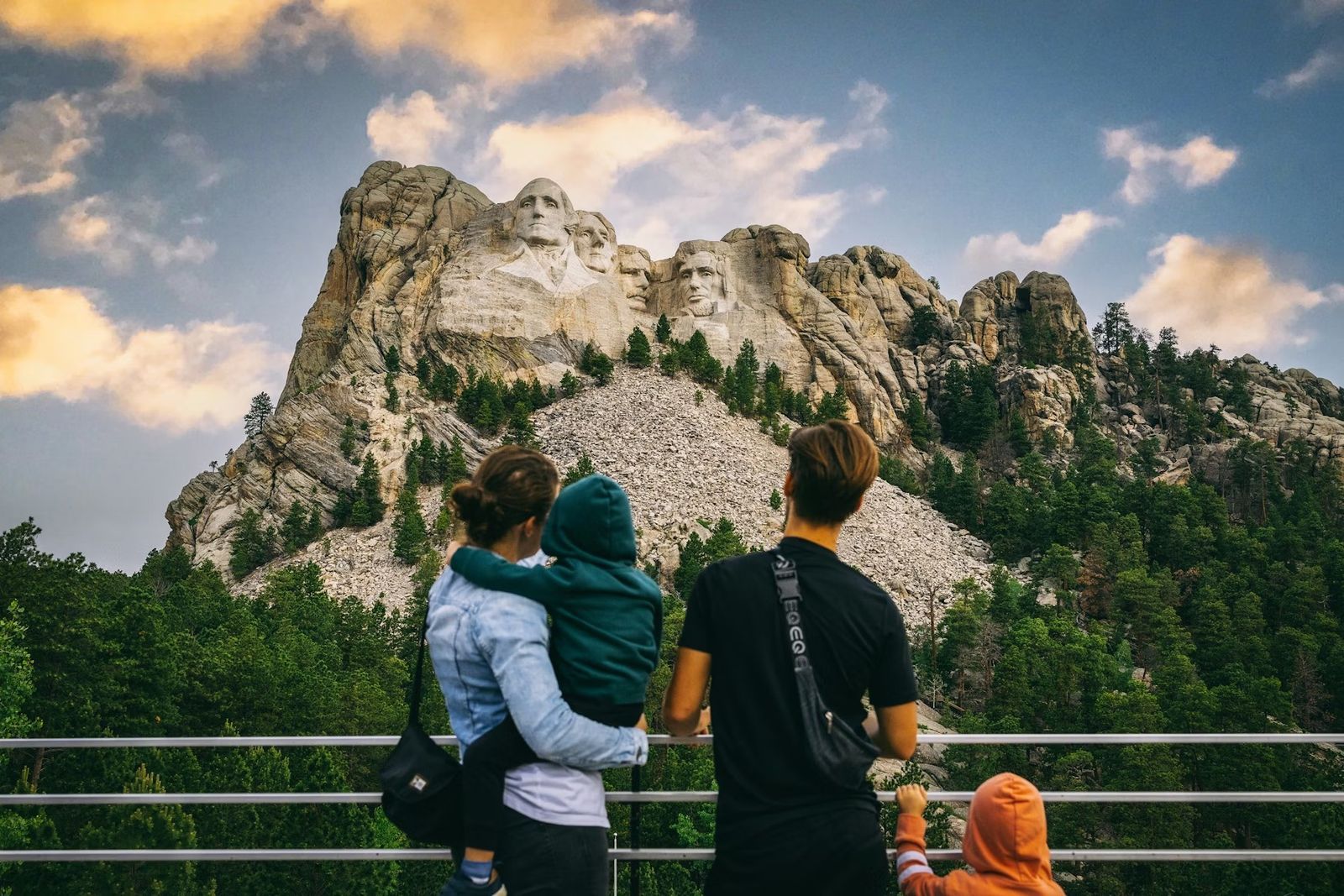
If you’ve ever shown up somewhere "fashionably late" and paid the price, you’ll understand this one. Considering it’s one of the most visited spots in the U.S., Mount Rushmore gets busy fast, especially in the summer months.
The sweet spot is around 8 in the morning: the air is cooler, the crowds are thin, and the morning light hits the faces just right for photos. By mid-morning, tour buses start rolling in, and the peaceful feeling fades. If you enjoy a quieter pace, early is the way to go here.
30 minutes is not enough
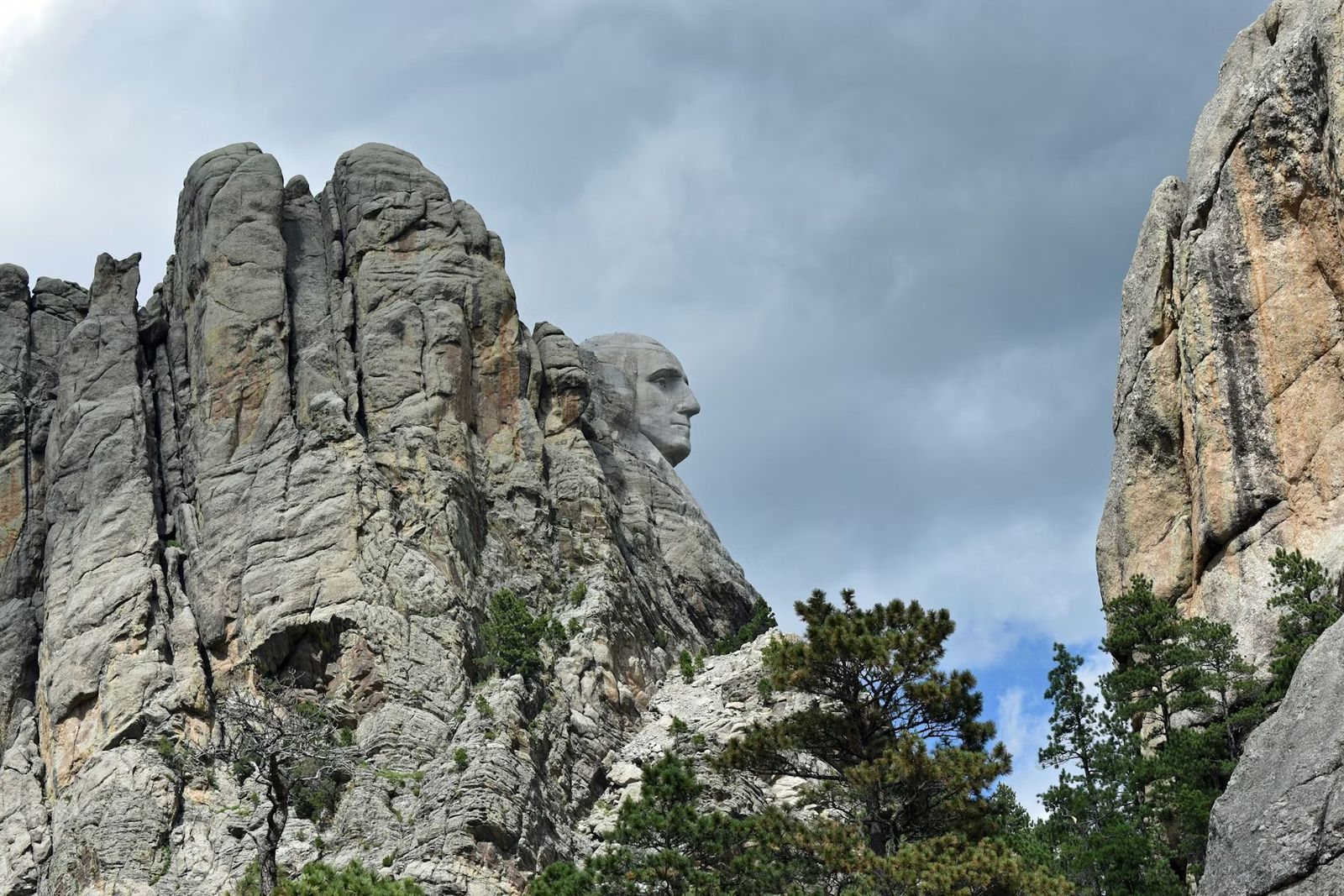
If you think a visit to Mount Rushmore is simply standing in front of the faces, snapping a quick picture, and moving on, think again. Yes, you can see Mount Rushmore in half an hour; plenty of people do, but you’d be missing out. It’s a good idea to give yourself one to two hours to fully enjoy Mount Rushmore, because while the famous faces are the main attraction, there’s much more to see and do.
You’ll have enough time to stroll along the main promenade, explore the exhibits, and take a walk on the Presidential Trail. The park also includes ranger talks, lighting ceremonies, and special events that you can check on mountrushmorememorial.com.
Stay for the evening
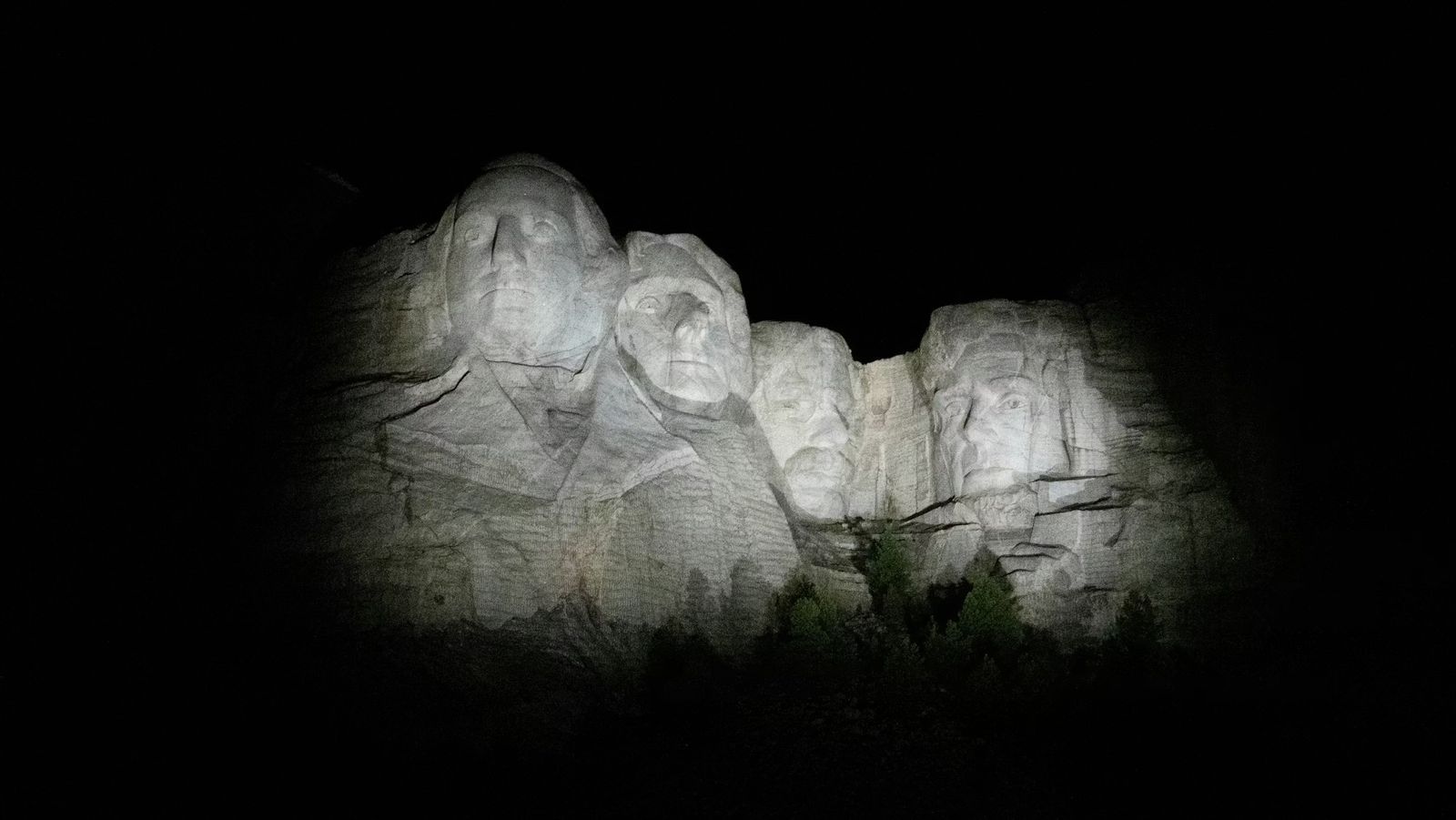
The monument is impressive, but wait until you see it at night. Every evening, between 8:00 and 8:30 p.m., there’s a lighting ceremony that takes place year-round. Following the sunset, the event includes a majestic turn-on of 1,600 individually focused LEDs, offering a new view of the site.
From late May through the end of September, you can also follow a park ranger to the outdoor amphitheater, where there’s a moving 45-minute program that begins at 9:00 p.m. and narrates the history of the carving, the presidents, and the country. The program concludes with the national anthem and a flag-folding ceremony.
Why these four presidents?
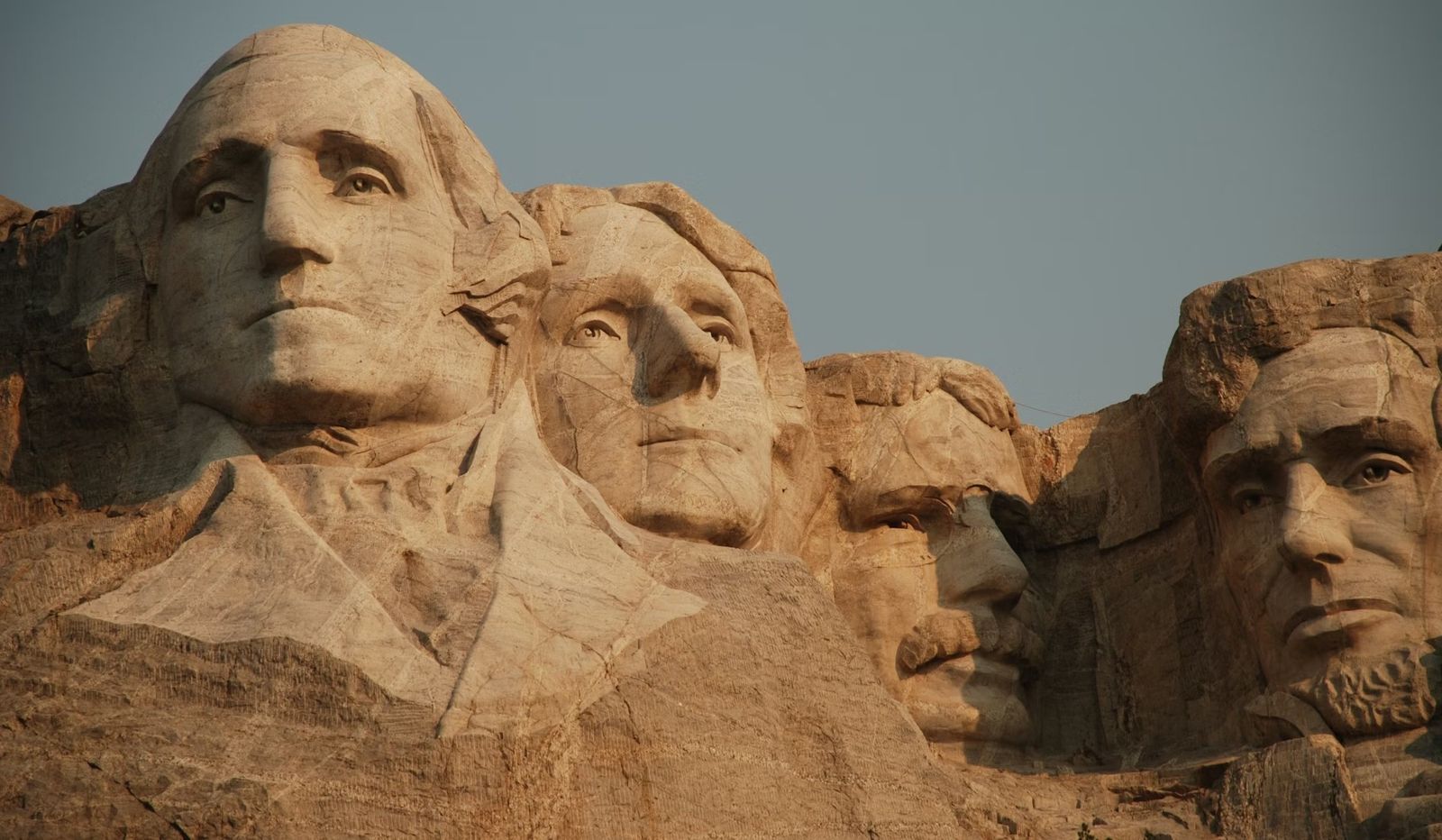
Of all the presidents America has seen, why did Gutzon Borglum, the sculptor, choose these four? From his perspective, the four presidents carved into the mountain represented the most important chapters in American history.
George Washington stands for the nation’s birth, not just as the first president but as the leader of the Revolutionary War. Thomas Jefferson represents expansion; beyond the Declaration of Independence, he was also responsible for the Louisiana Purchase and opened the door to territorial growth. Abraham Lincoln, in turn, was selected as a representative of preservation. He led the nation through the Civil War, and his leadership kept the U.S. together while abolishing slavery. And, finally, Theodore Roosevelt was the main figure of development; his presidency pushed the country into the modern era.
Join ranger programs
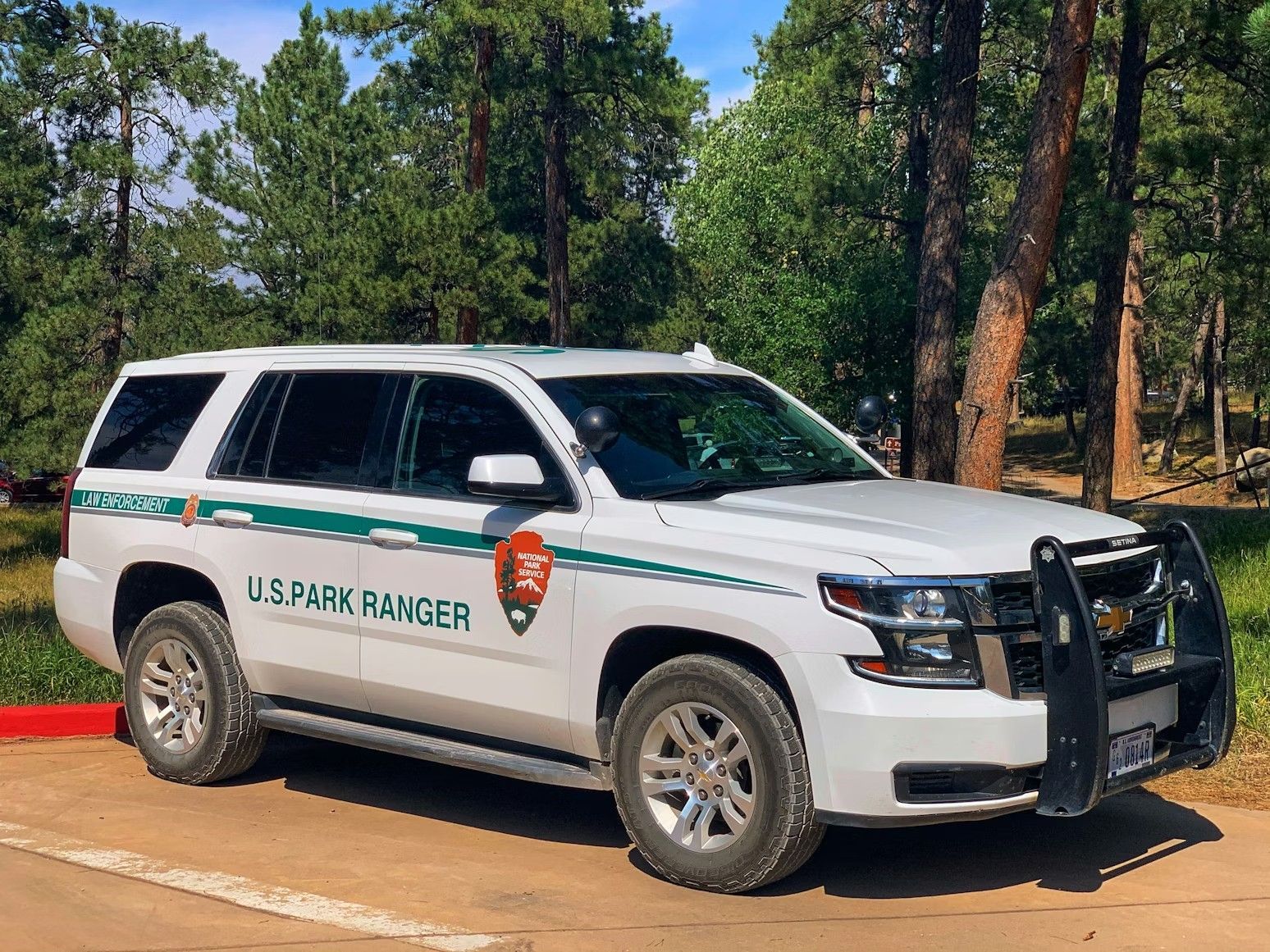
Once you’ve taken in the main view, you can join a variety of ranger programs, which give you a closer connection to the site beyond the photos. All these programs are available throughout the day and don’t require a reservation.
One option is the Hoop Dance performance, in which you can follow hoop dancers for an hour of dancing and storytelling. This program runs for 45 to 60 minutes, and it’s interactive. If you’re visiting during the summer months, the Youth Exploration Area is a nice addition. This shorter program of about 10 to 30 minutes is designed to take you around different parts of the park while you learn about natural, cultural, and historical aspects of the memorial. A complete schedule of programs is available within the Memorial at the Information Center, Lincoln Borglum Visitor Center, and the event calendar on the website.
Avenue of the Flags
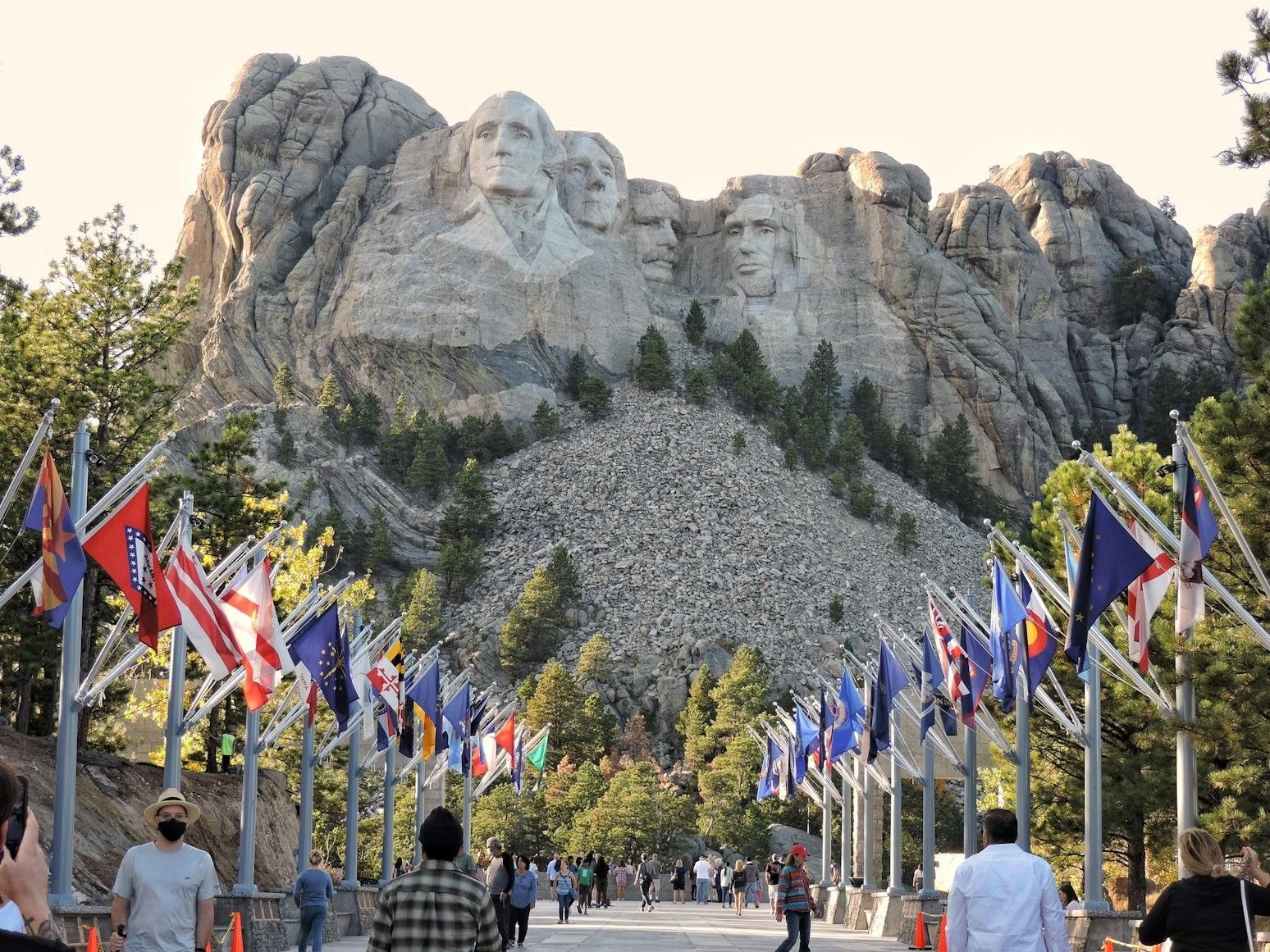
Right after you enter the park, there’s something easy to walk past if you’re in a hurry, but it’s worth slowing down for. The Avenue of Flags was added to the park as part of the U.S. Bicentennial celebration in 1976, and it lines the path with 56 flags arranged in alphabetical order.
The flags represent the 50 states, the District of Columbia, and the territories and commonwealths (Puerto Rico, Guam, American Samoa, U.S. Virgin Islands, and Northern Mariana Islands).
Presidential Trail
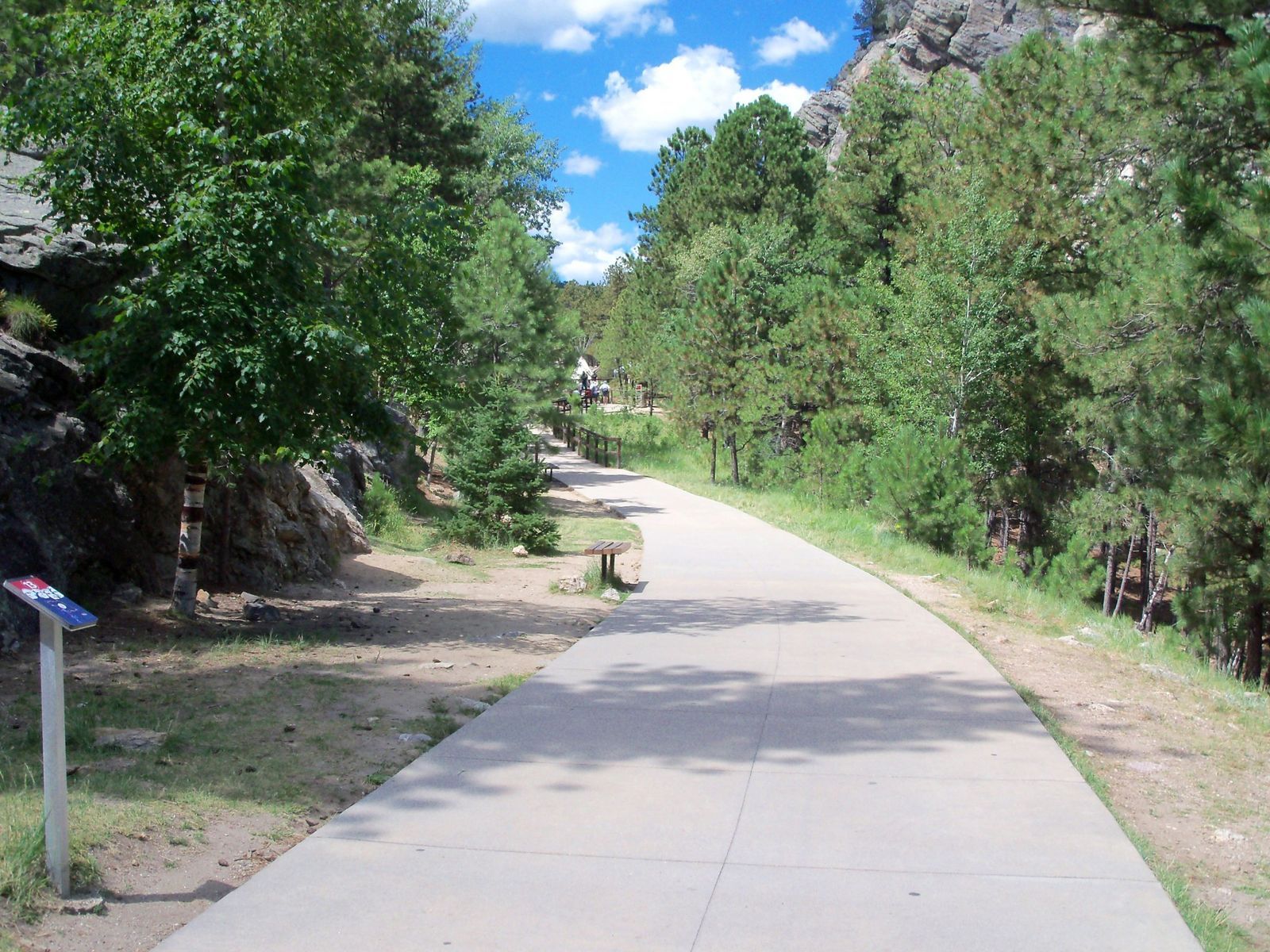
If you want to feel like you’ve actually experienced Mount Rushmore, not just seen it, this is the walk to take. The Presidential Trail is a 0.6-mile loop trail that gets you closer to the base of the monument and offers angles you won’t see from the main viewing area.
The first 0.2 miles is flat and wheelchair-accessible. The remaining 0.4 miles of the trail lead away from the mountain to the Sculptor’s Studio and are not accessible for people with mobility impairments since it consists of 422 stairs. It’s perfect to take time, stop for photos, and enjoy the perspective.
Sculptor’s Studio and Museum
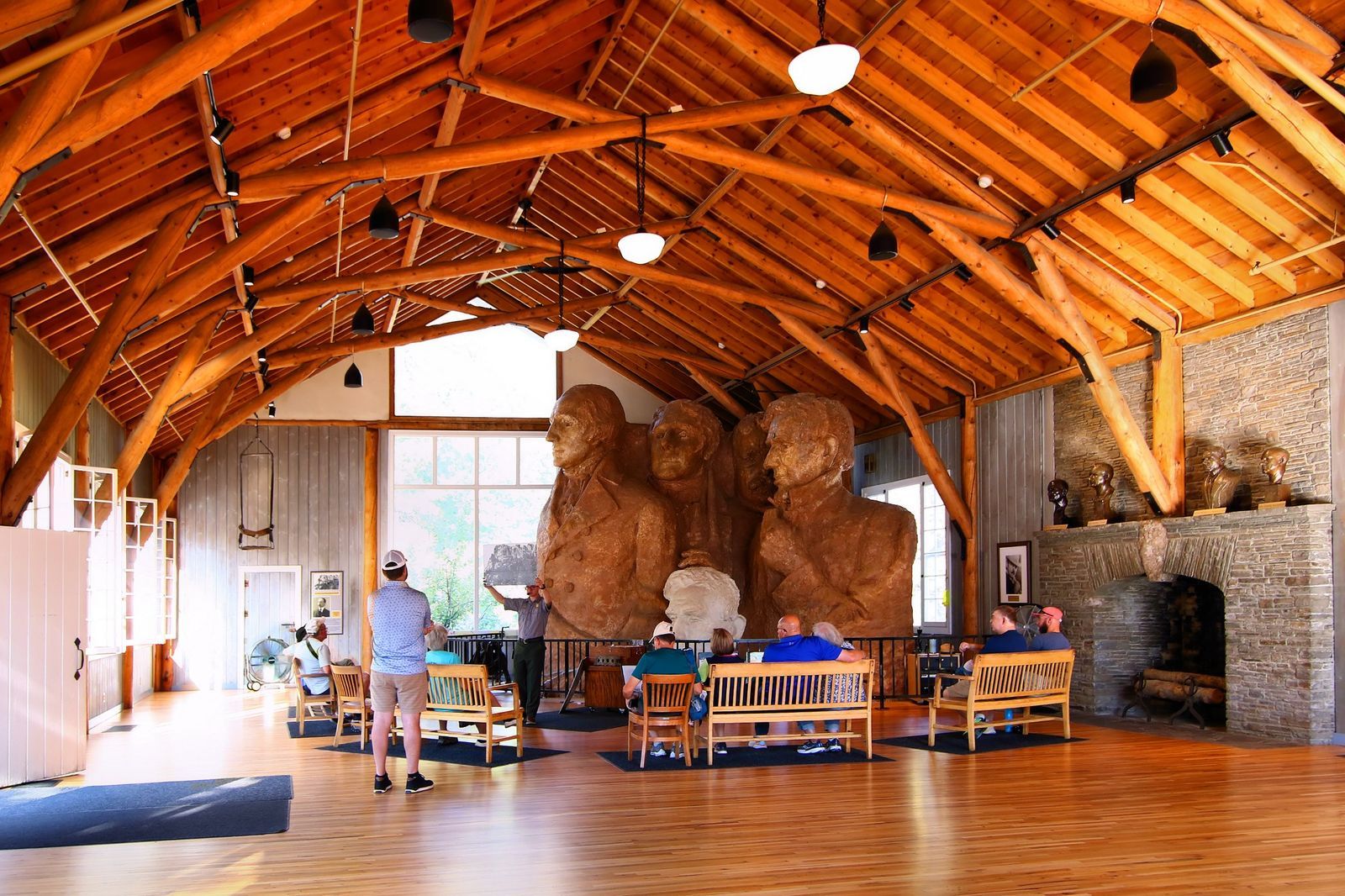
Rome wasn't built in a day, and neither was this park. The Sculptor’s Studio is where the story behind the memorial comes to life. Located along the Presidential Trail, this place was built to allow Borglum to oversee the monument's final stages of carving closely. Today, it offers visitors a detailed look at how they pulled this off between 1939 and 1941.
Moreover, you’ll be able to see a scale model of the monument and get a better sense of the original vision and the challenges they faced carving into a mountain. There’s also a museum in the main visitor center for those who want to delve deeper into the monument’s construction.
Nearby attractions
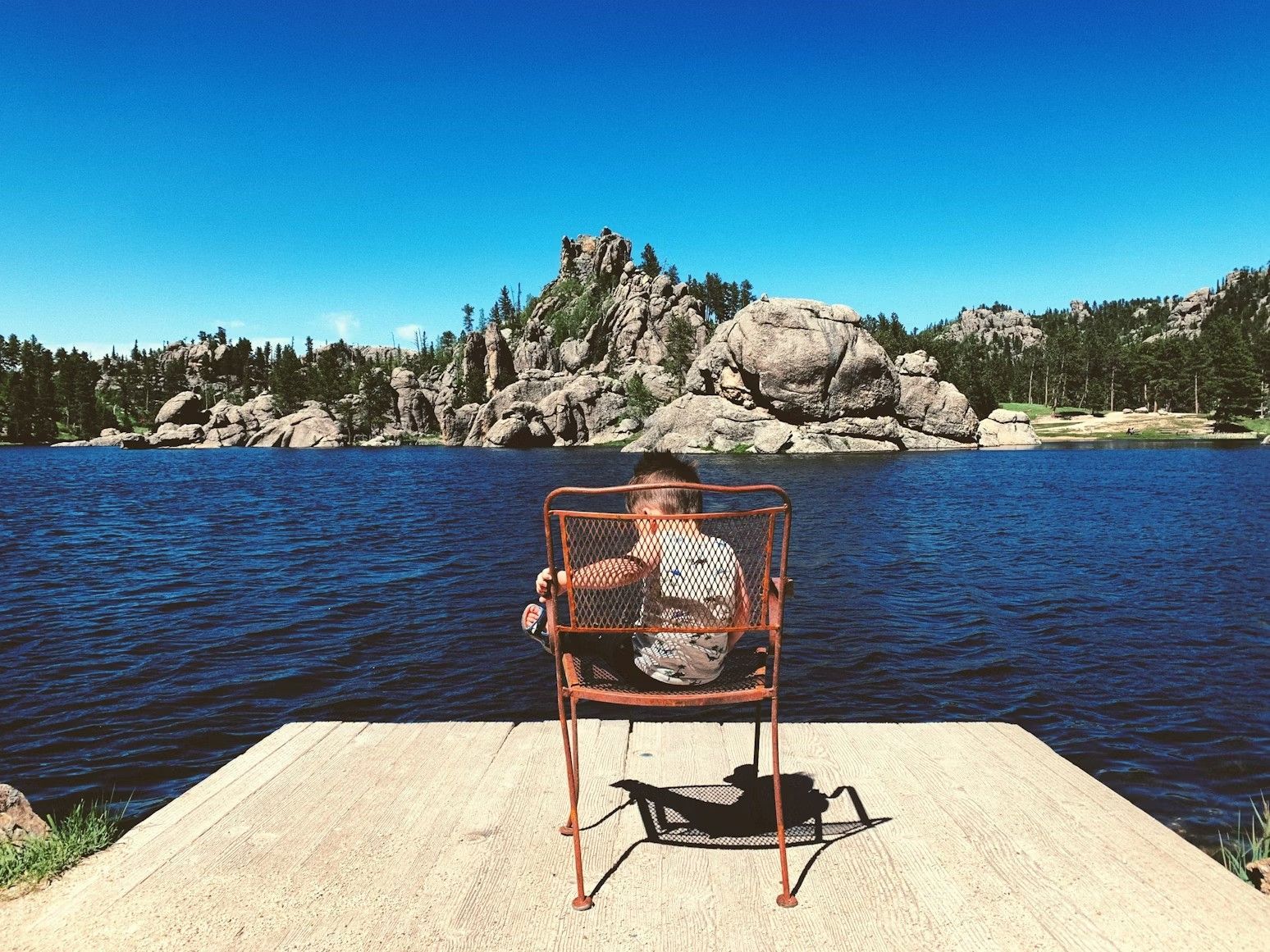
If you've made the trip to Mount Rushmore, it's worth taking a little extra time to explore the surrounding area. There's plenty more to see beyond the memorial itself. Located 27 miles South of Mount Rushmore, you can visit Custer State Park, a 71,000-acre park in the Black Hills, home to abundant wildlife and adventure, where you can go camping, hiking, biking, swimming, fishing, or relaxing.
South of Custer State Park, another option is Wind Cave National Park. Book a tour of Wind Cave to go through more than 84 miles of underground caves. Access is by a ranger-guided tour, and all tours leave from the Visitor Center within the National Park. Finally, five miles North of Custer Park is Crazy Horse Memorial. Sculptor Korczak Ziolkowski began work on this colossal tribute to Lakota hero and leader Crazy Horse in 1948, and it is still under construction.
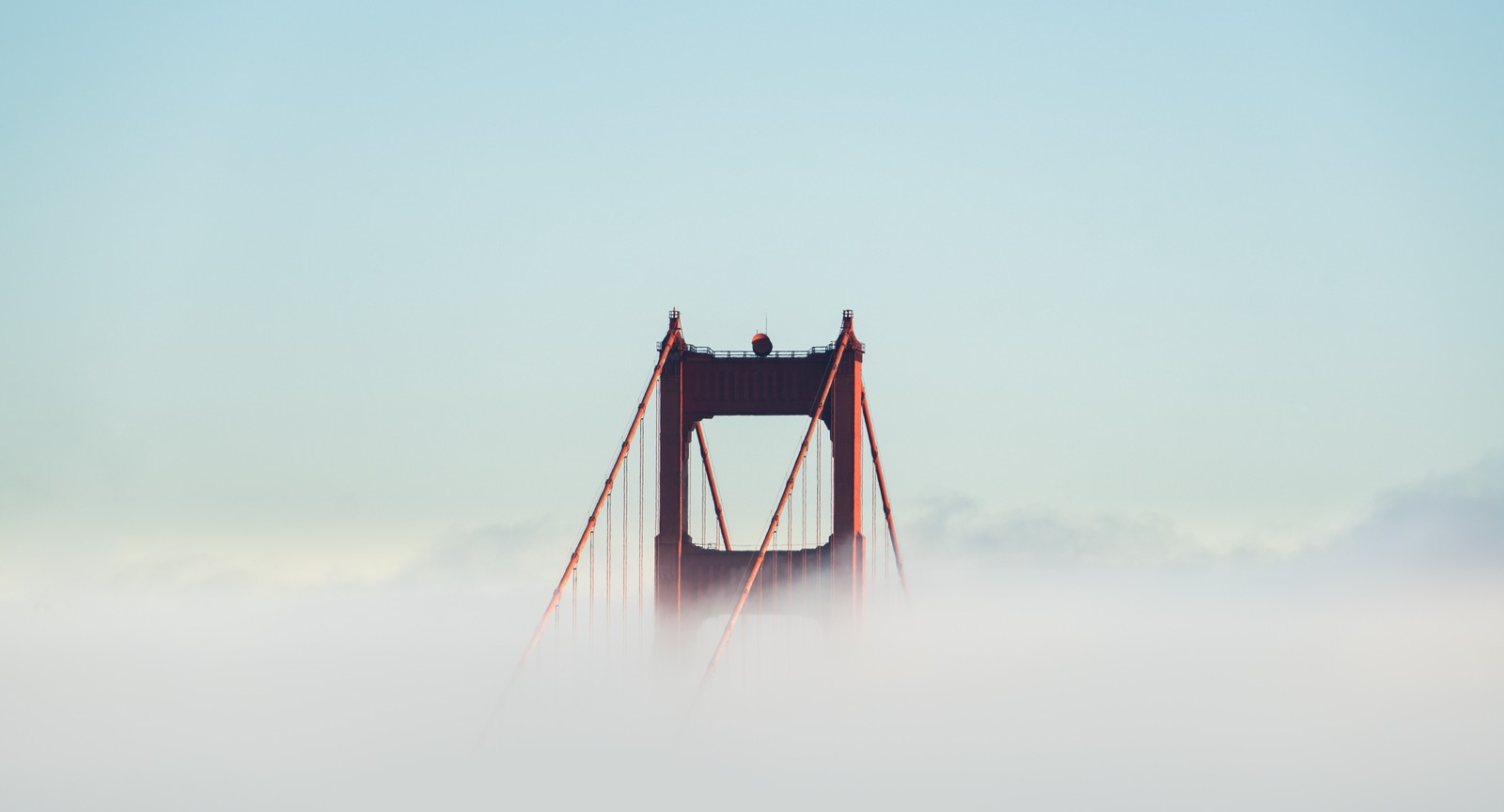
What is the purpose of the Golden Gate Bridge's orange color?
Bridging the U.S.
American connections: 10 bridges that are architectural masterpieces
Who says that architectural structures and works of art can’t be one and the same? Bridges are mainly built to ease the passage between two locations, but some bridges are masterpieces of engineering, architecture, and design. Here are 10 iconic American bridges that are worth a visit.
Golden Gate Bridge, California
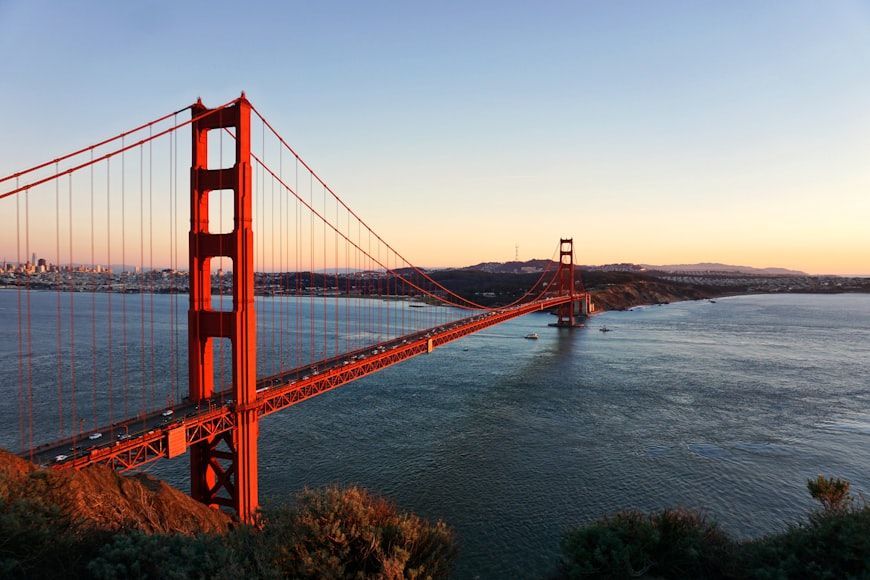
Probably one of the most recognizable landmarks in the U.S., this 1937 bridge broke records at the time as an engineering marvel. Designed to link San Francisco with Marin County across the Golden Gate Strait —previously only crossed by ferry—, it was at the moment of its inauguration the longest suspension bridge in the world, with the tallest bridge towers.
One of the world’s biggest examples of the Art Deco style, it is also renowned for its particular orange vermillion color in the shade of international orange. The color choice was not accidental: besides complementing the natural surroundings, it enhances the bridge’s visibility in the fog.
Brooklyn Bridge, New York
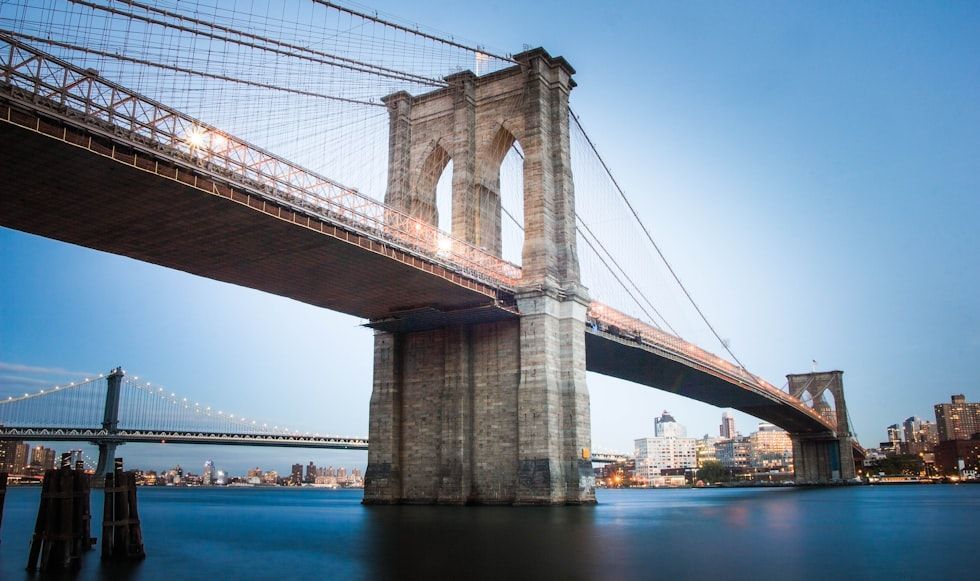
Initially called the "New York and Brooklyn Bridge" and the "East River Bridge", the Brooklyn Bridge was the first suspension bridge in the world to use steel cables instead of iron. Completed in 1883, it was at the time the longest suspension bridge in the world.
John Roebling, the chief engineer in charge of the project, designed the bridge to be six times as strong as the structure required, a foresight that proved providential when it was discovered that a contractor had supplied faulty wire. However, rumors about the integrity of the construction abounded. To reassure the public, circus master P.T. Barnum led a parade of 21 elephants across the bridge, showcasing the strength of the structure.
Mackinac Bridge, Michigan
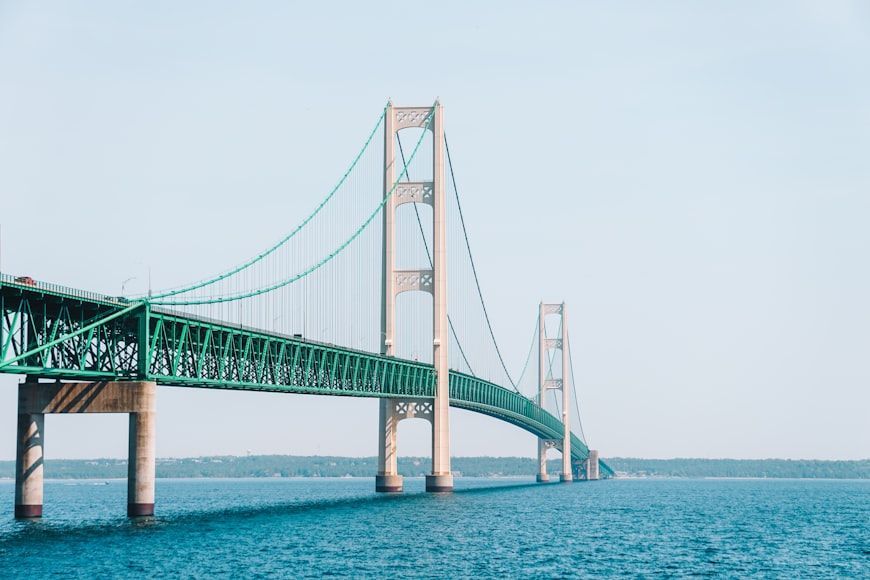
Affectionately dubbed ‘Mighty Mac’ and ‘Big Mac’ by the locals, this 5-mile suspension bridge connects Michigan’s Upper and Lower Peninsulas across the Straits of Mackinac. Opened in 1957, it is the 7th-longest suspension bridge in the world to date, and the longest in the Western hemisphere.
Do you know that there is one day when vehicles are banned from using the bridge? Each Labor Day, the Mackinac Bridge is open for pedestrians only, who can walk along it and enjoy the views, but be aware: walking across the bridge can take up to two hours, and there are no restrooms along the way.
Seven Mile Bridge, Florida
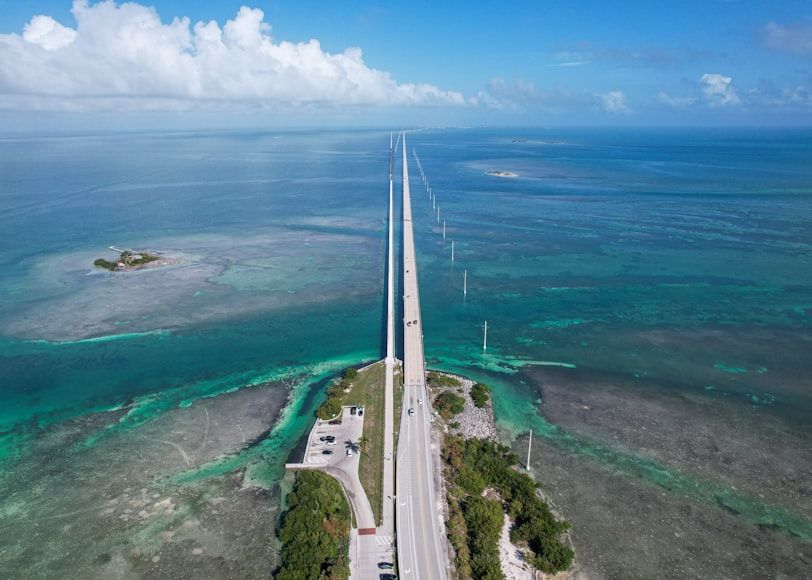
Initially built as a railway bridge in 1912, it was repurposed as a highway in 1935 after a hurricane caused severe damage to the structure. Between 1978 and 1982, a wider two-lane bridge was built parallel to the original one, which is now used for pedestrians and cyclists.
Considered the Eighth Wonder of the World at the time of its construction, the Seven Mile Bridge connects the Florida Keys from Knight's Key in Marathon to Little Duck Key over long stretches of water. Despite its name, the bridge spans only 6.79 miles.
George Washington Bridge, New Jersey and New York
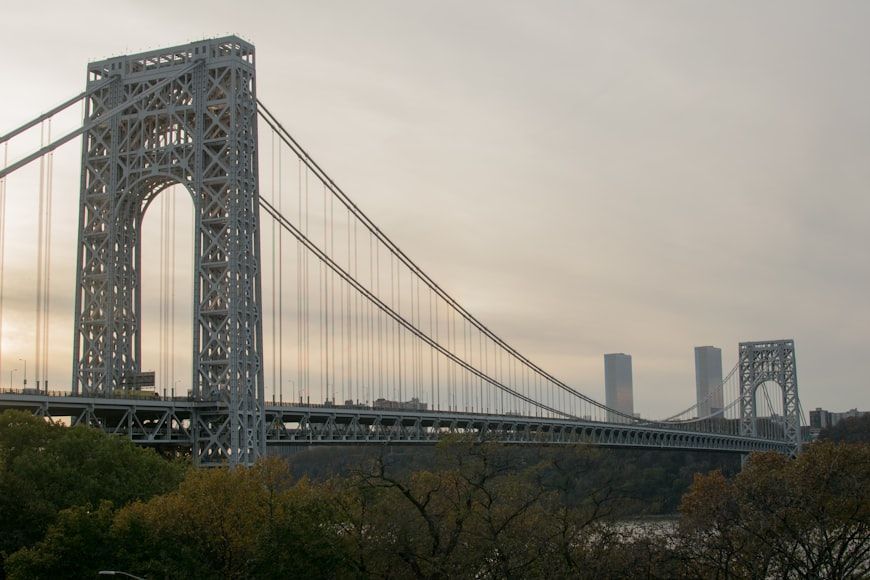
Connecting Fort Lee, New Jersey, with Manhattan, New York City, this 1931 suspension bridge is one of the busiest motor vehicle bridges in the world, carrying around 100 million vehicles annually. In 1962, a lower level with six traffic lanes, nicknamed ‘Martha’, was added to the original structure.
Famous for its 604-foot exposed steel towers, this feature was not part of the original design. Although the steel structures were supposed to be encased in concrete and granite, they were left bare to save funds during the Great Depression, accidentally creating its iconic look.
New River Gorge Bridge, West Virginia
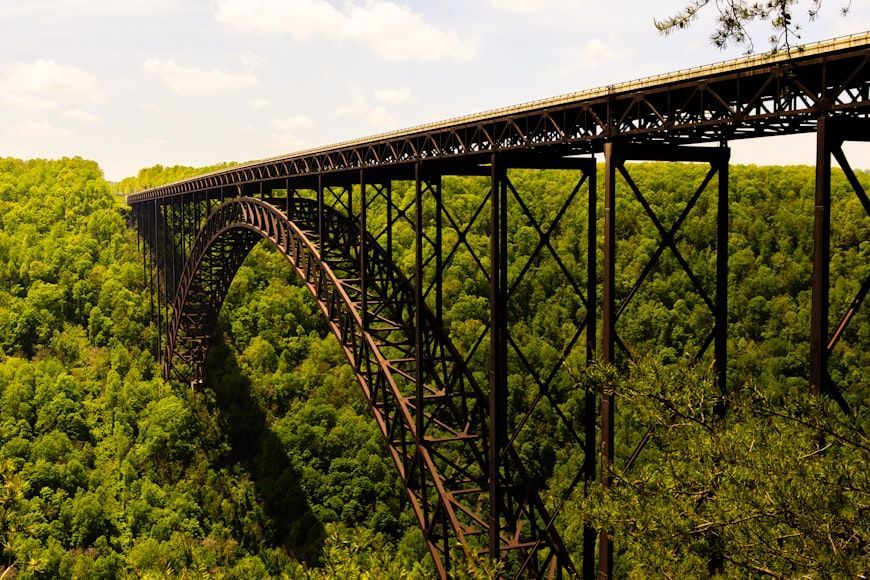
Standing 876 feet above the New River in Fayetteville, West Virginia, this bridge is the longest arch bridge in the Western hemisphere and one of the highest vehicular bridges in America. Built between 1974 and 1977, it shortened the trip across the New River Gorge from nearly an hour to less than a minute.
A destination landmark for adrenaline seekers since its construction, it is the center of Fayette County’s "Bridge Day" on the third Saturday of October. That day, the bridge is open for rappelling, ascending, and BASE jumping. Bungee jumping, however, has been banned since 1993 due to the time it takes for jumpers to be reeled back up.
Chesapeake Bay Bridge-Tunnel, Virginia
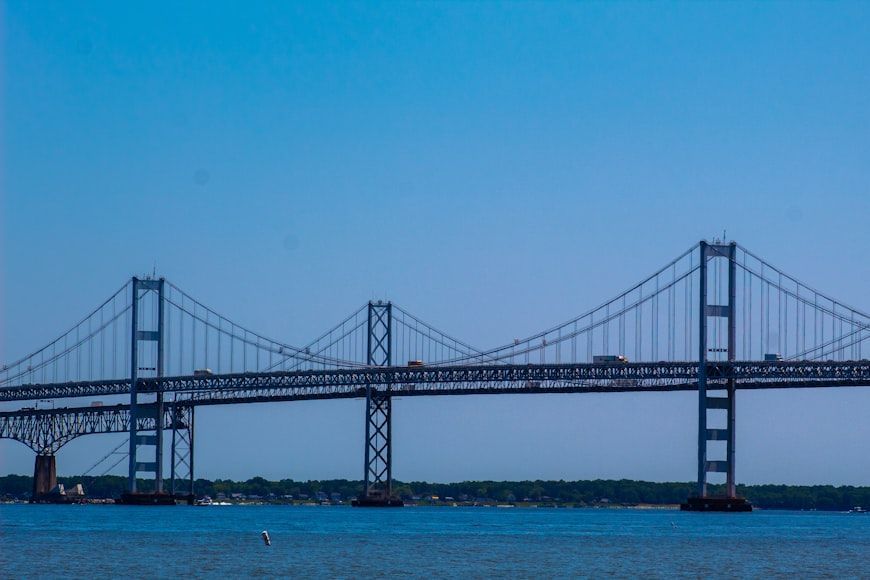
Officially the "Lucius J. Kellam, Jr. Bridge-Tunnel", it is one of only 14 bridge-tunnel systems in the world, connecting Delmarva and Hampton Roads across the Chesapeake Bay. Its 17.6-mile distance is composed of 12 miles of low-level trestles, two underwater tunnels, two high-level bridges, and four artificial islands.
Considered one of the scariest drives in America due to the different highs and lows, the bridge was opened to the public in 1964. While its underwater tunnels might seem unnecessarily complicated at first glance, they were a requirement to allow U.S. Navy ships from the nearby Naval Station Norfolk to have unrestricted access to the Atlantic Ocean.
Royal Gorge Bridge, Colorado
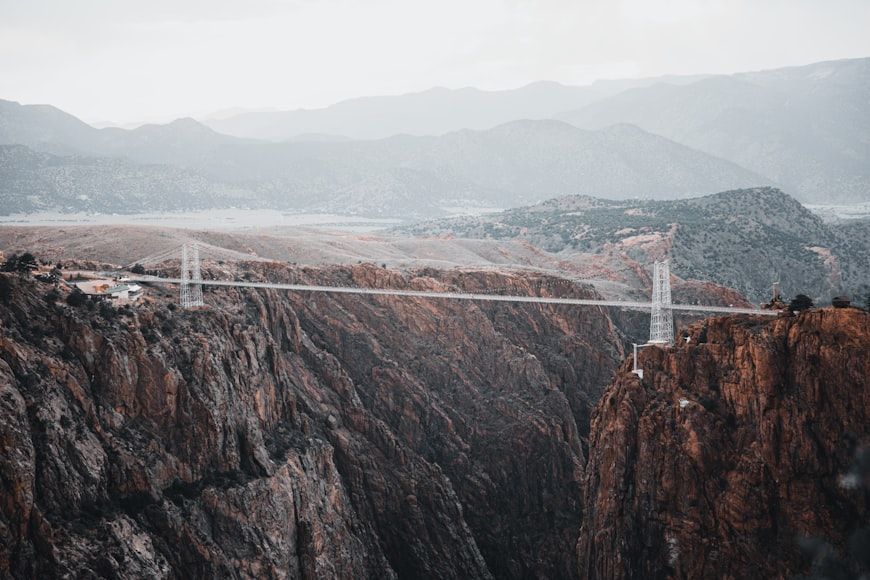
The highest bridge in the U.S., and the highest in the world between 1929 and 2001, the Royal Gorge Bridge is suspended 955 feet over the Arkansas River. Conceived as a tourist attraction and open only to pedestrians, the 18-foot-wide bridge has a steel base covered by more than a thousand wood planks, with a quarter of them replaced annually.
The choice of materials for this bridge was intentional: by using wooden planks, the structure sways with the wind, adding a thrill for visitors. Construction of the bridge was done in record time, taking about seven months and opening to the public in November 1929. Part of the Royal Gorge Bridge & Park amusement park, it receives around 400,000 visitors a year.
O'Callaghan-Tillman Memorial Bridge, Nevada and Arizona
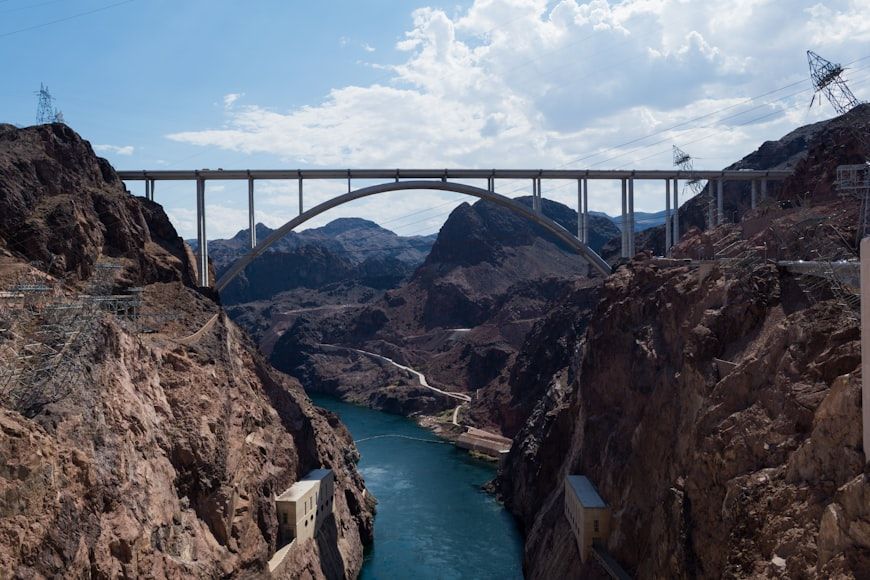
Straddling the Nevada-Arizona border, the O'Callaghan-Tillman Memorial Bridge is the second-tallest bridge and the highest concrete arch bridge in America. Its 1,600-foot arch stands 840 feet above the Colorado River.
Completed in 2010, the bridge was part of a project to reroute the US Route 93, previously crossing on top of the Hoover Dam, to reduce congestion, while providing a safer path with fewer blind curves and turns.
Bixby Creek Bridge, California
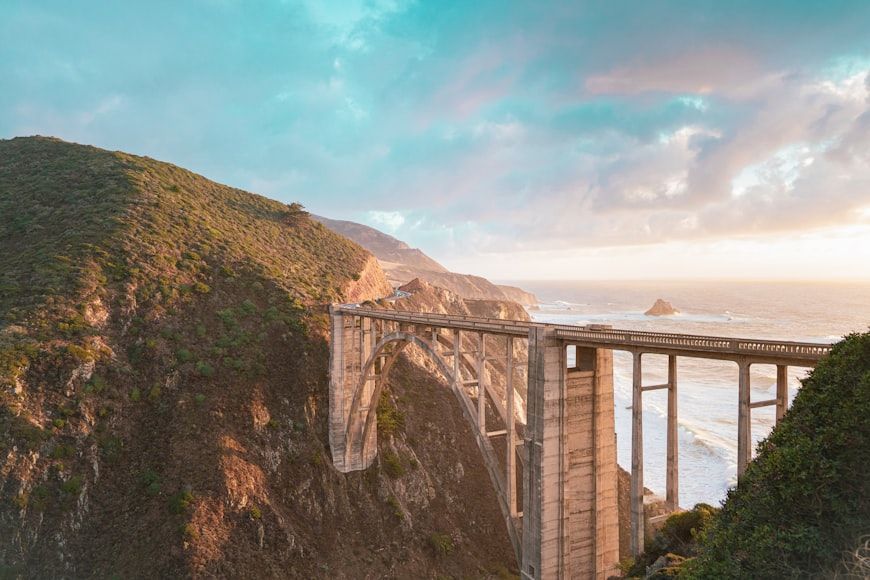
Designed to blend with the surrounding nature, the Bixby Creek Bridge is one of the most photographed in America. Opened in 1932, it provided access for Big Sur residents, who would often be isolated during winter due to blockages in the Old Coast Road.
Though the bridge is now considered functionally obsolete for modern standards, its construction was an extraordinary feat of the Great Depression Era. Cement was chosen over steel to reduce construction and maintenance costs, but because of the remote location, 45,000 sacks of cement had to be lifted across the creek with a system of slings and cables.
Keep wandering
There’s always
more to explore
 General
Why are hard landings sometimes the perfect landings?
6 min.
Read Now
 History
Was Moby-Dick a real whale? These marine stories have real backgrounds
6 min.
Read Now
What passengers never see after midnight on a cruise ship
4 min.
Read Now
These 10 mysteries were solved. So why do we still believe them?
6 min.
Read Now