Route 66 roadside attractions too quirky to tear down
 Landmarks
Ten quirky Route 66 roadside attractions that have survived the decades
Route 66 roadside attractions too quirky to tear down
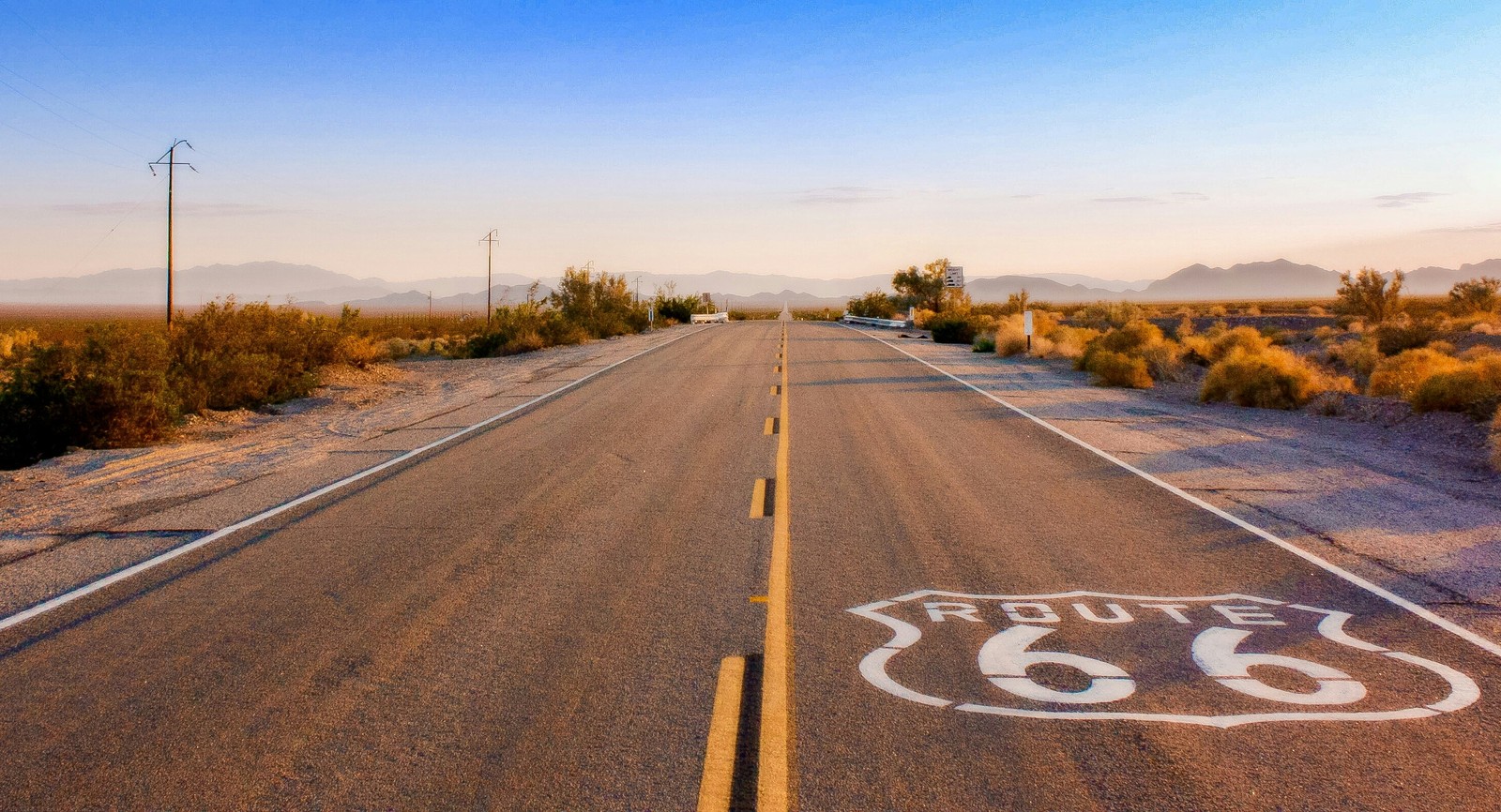
The Mother Road has seen better days, sure, but some of its weirdest landmarks refuse to fade into history. These ten survivors prove that America's appetite for roadside oddities is stronger than ever.
Blue Whale of Catoosa, Oklahoma
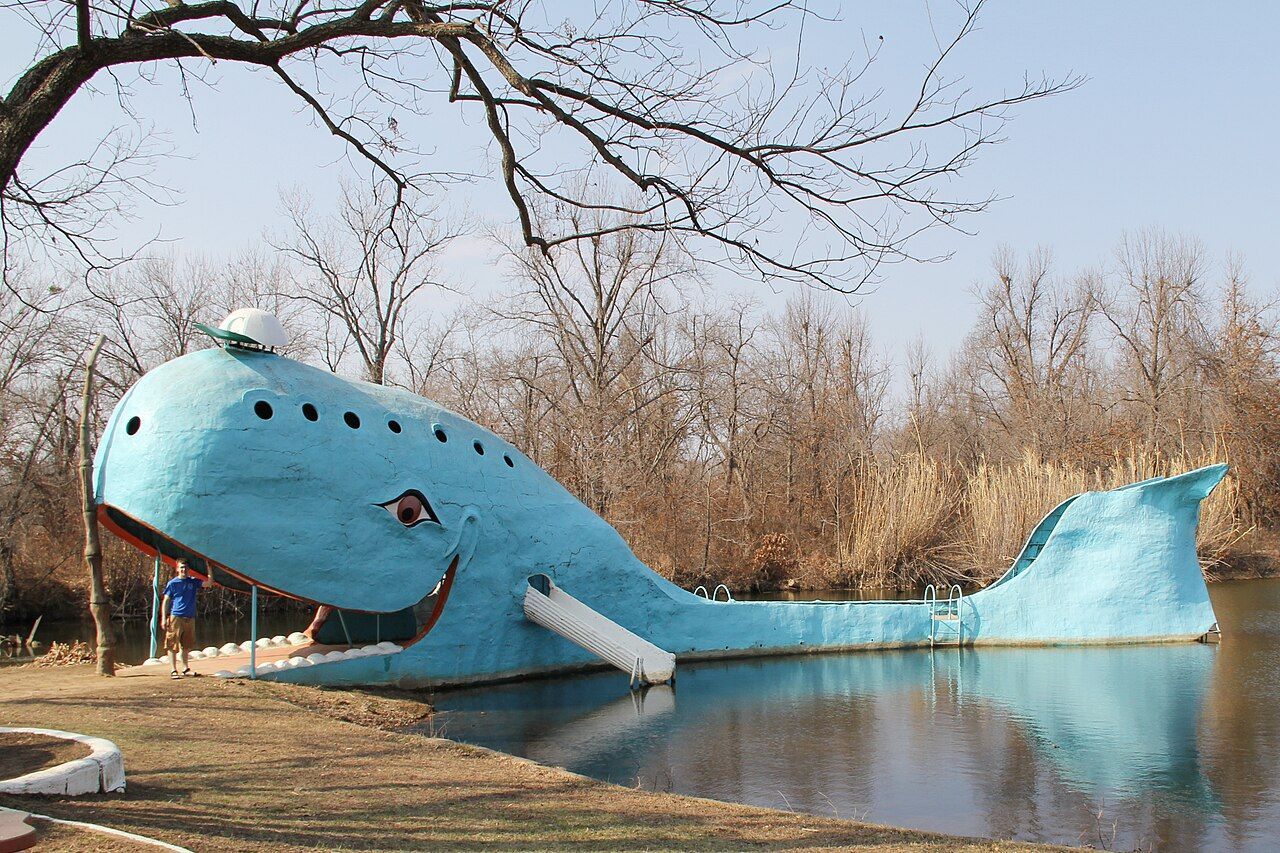 Image: The Erica Chang, CC BY 3.0 <https://creativecommons.org/licenses/by/3.0>, via Wikimedia Commons
Hugh Davis built this smiling 80-foot whale in 1972 as an anniversary gift for his wife, who collected whale figurines. What started as a backyard pond ornament became a beloved swimming hole where kids would cannonball off the tail and slide down the fins. The water's gone now, but that goofy grin remains.
Today, it stands as one of Route 66's most photographed stops, which is saying something on a highway full of giant things.
Cadillac Ranch, Amarillo, Texas
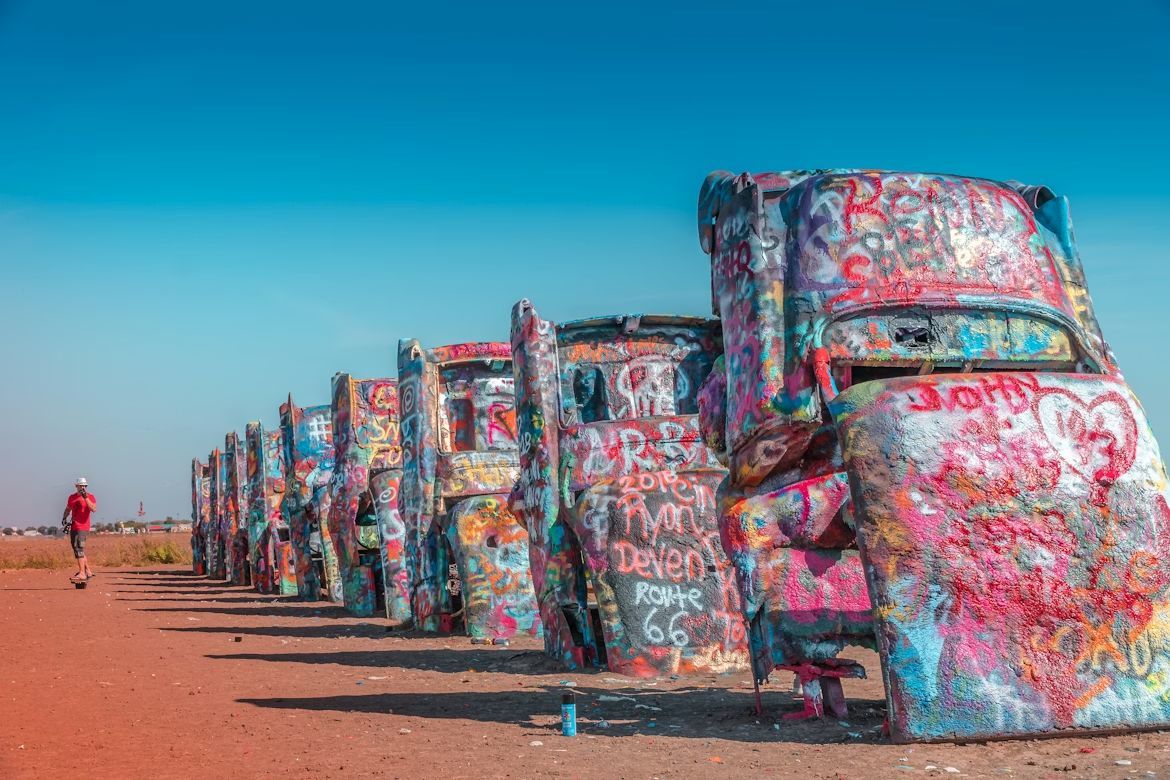 Image: Heidi Kaden
In 1974, some artists decided the best use for ten Cadillacs was planting them nose-first in a wheat field at the same angle as the Great Pyramid of Giza. Sure, why not? Visitors are actively encouraged to spray paint the cars, so they've been repainted thousands of times in every color combination imaginable.
The installation has been relocated once to escape urban development, but otherwise remains as wonderfully useless as it was fifty years ago.
Gemini Giant, Wilmington, Illinois
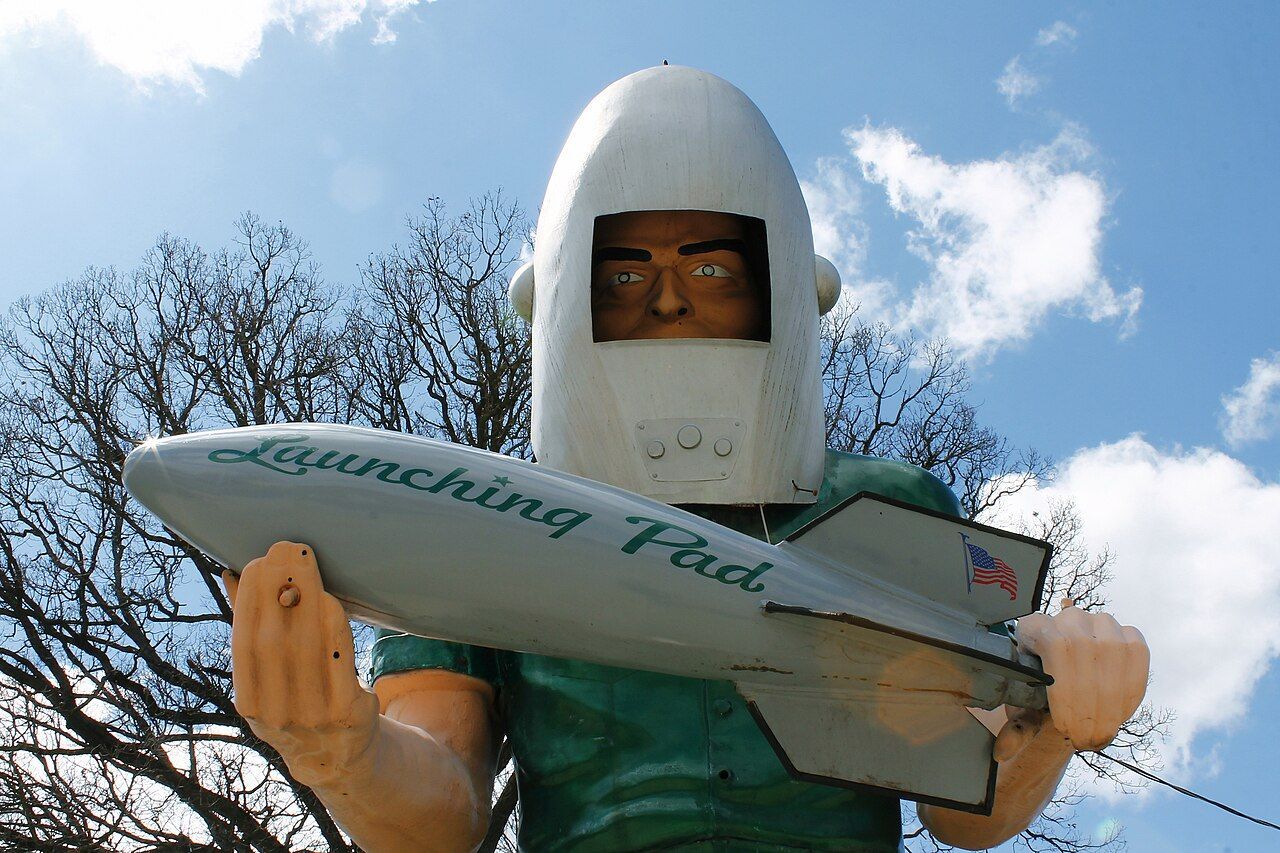 Image: formulanone from Huntsville, United States, CC BY-SA 2.0 <https://creativecommons.org/licenses/by-sa/2.0>, via Wikimedia Commons
Standing 28 feet tall in full astronaut gear, clutching a silver rocket ship, the Gemini Giant has been luring hungry motorists to what's now a Polish restaurant since 1965. He's one of the few surviving "Muffler Men", those giant fiberglass statues that used to decorate the American landscape like some weird corporate totem pole convention.
His space suit might be a bit outdated, but he's been restored and repainted a couple of times. The restaurant beneath him has changed concepts more times than anyone can count, but the big guy stays put, still holding that rocket like he's waiting for NASA to call him back.
Elmer's Bottle Tree Ranch, Oro Grande, California
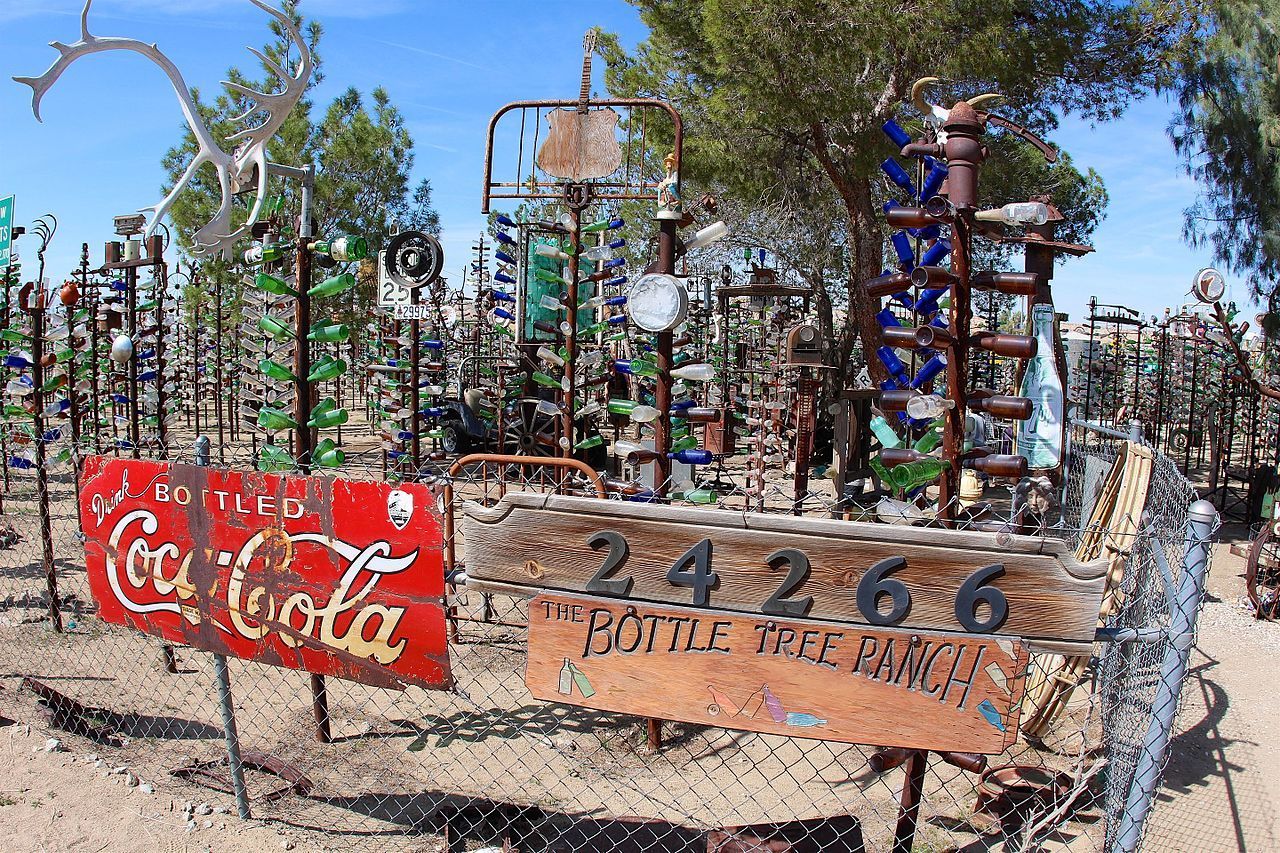 Image: daveynin, CC BY 2.0 <https://creativecommons.org/licenses/by/2.0>, via Wikimedia Commons
Elmer Long took his father's old glass bottles and created a forest of "trees" made from pipes and bottles that catch the desert sun like a fever dream. Over 200 bottle trees stand in the Mojave Desert, along with vintage signs, old railings, and whatever else Elmer felt like adding to his peculiar garden.
It started as one man's tribute to his dad and became a kaleidoscope attraction that makes you question whether you've had too much sun. Elmer passed away in 2019, but his family keeps the ranch open and free to visitors.
U-Drop Inn, Shamrock, Texas
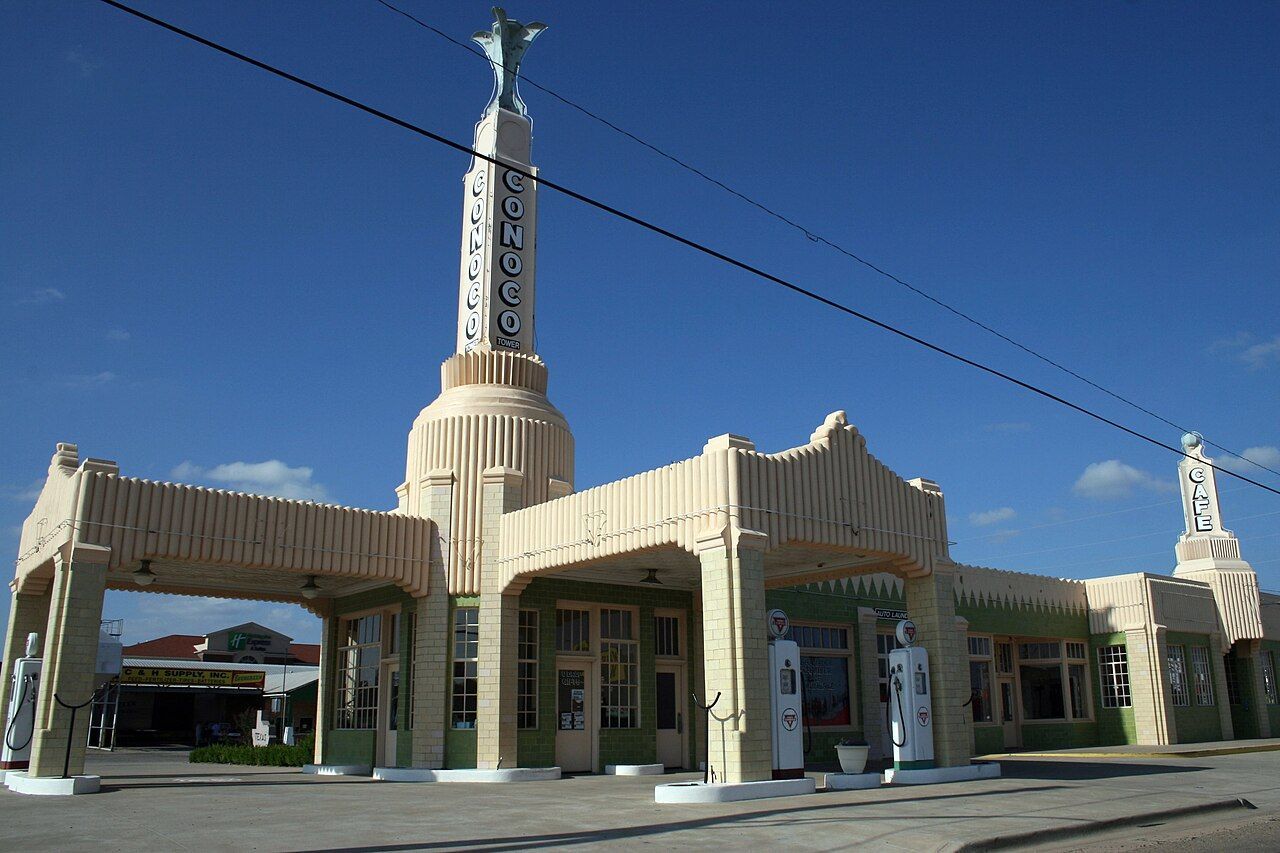 Image: ExqBoredinNac, CC BY-SA 4.0 <https://creativecommons.org/licenses/by-sa/4.0>, via Wikimedia Commons
This Art Deco masterpiece from 1936 was nearly demolished before locals rallied to save and restore it. With its green glazed tiles, geometric patterns, and tower that wouldn't look out of place in Oz, it's no wonder Pixar used it as inspiration for the Cars movie.
Today, it serves as Shamrock's visitor center. The restoration brought back the neon signs, making nighttime photos spectacular.
Wigwam Village #7, San Bernardino, California
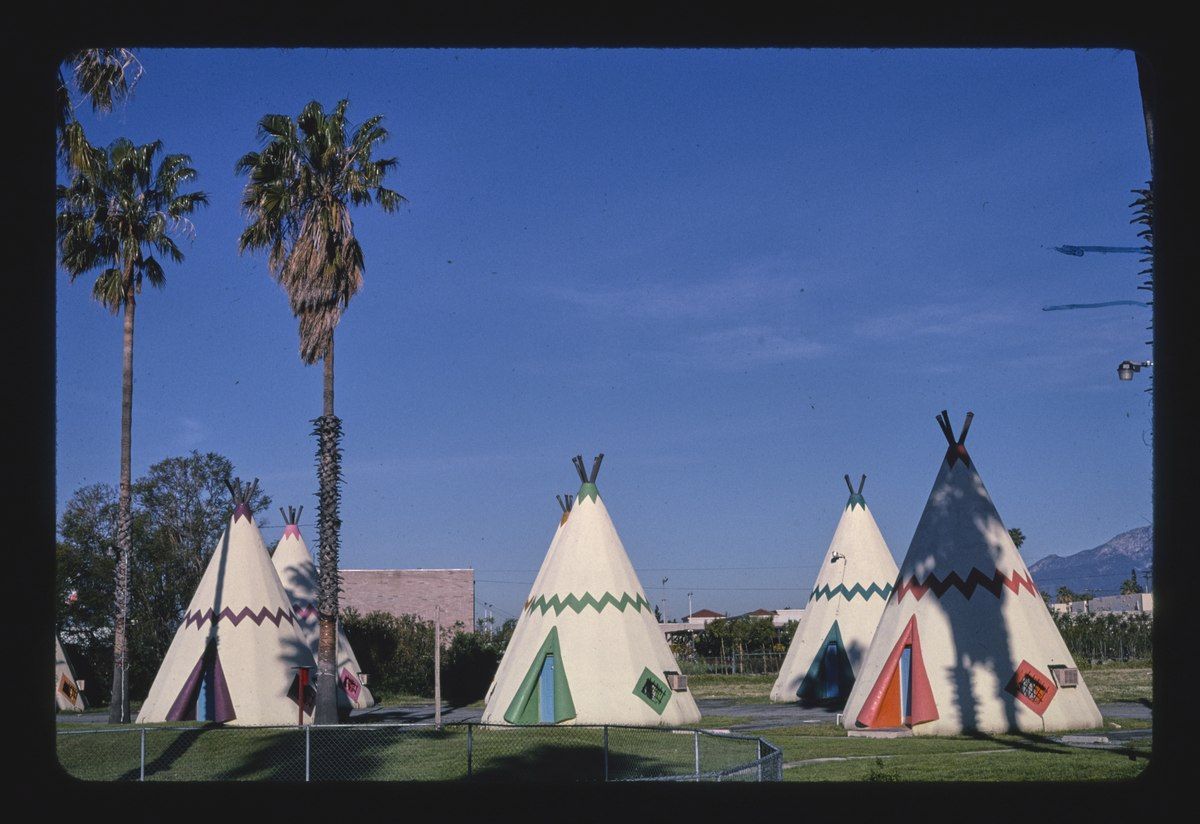 Image: John Margolies, Public domain, via Wikimedia Commons
Built in 1949, this is one of the only three surviving Wigwam Villages from a chain of seven that once dotted the country. Each "wigwam" is a separate room arranged in a semicircle around the main office wigwam.
Despite the questionable concept, preservationists fought to save it, and it's now on the National Register of Historic Places. The rooms have been updated with modern amenities, but the outsides remain wonderfully vintage.
World's Largest Catsup Bottle, Collinsville, Illinois
 Image: Dofftoubab, CC BY-SA 4.0 <https://creativecommons.org/licenses/by-sa/4.0>, via Wikimedia Commons
A 170-foot water tower disguised as a Brooks Catsup bottle has been confusing and delighting drivers since 1949. It held water for the Brooks bottling plant, which means this town literally kept itself hydrated with a giant condiment. The plant closed, but destroying a beloved ketchup monument? That's un-American.
A community group formed specifically to save and restore it in the 1990s, complete with fresh paint and structural repairs. It's now a proud symbol of Collinsville, which really commits to the bit—they even host an annual catsup bottle festival.
Standin' on the Corner Park, Winslow, Arizona
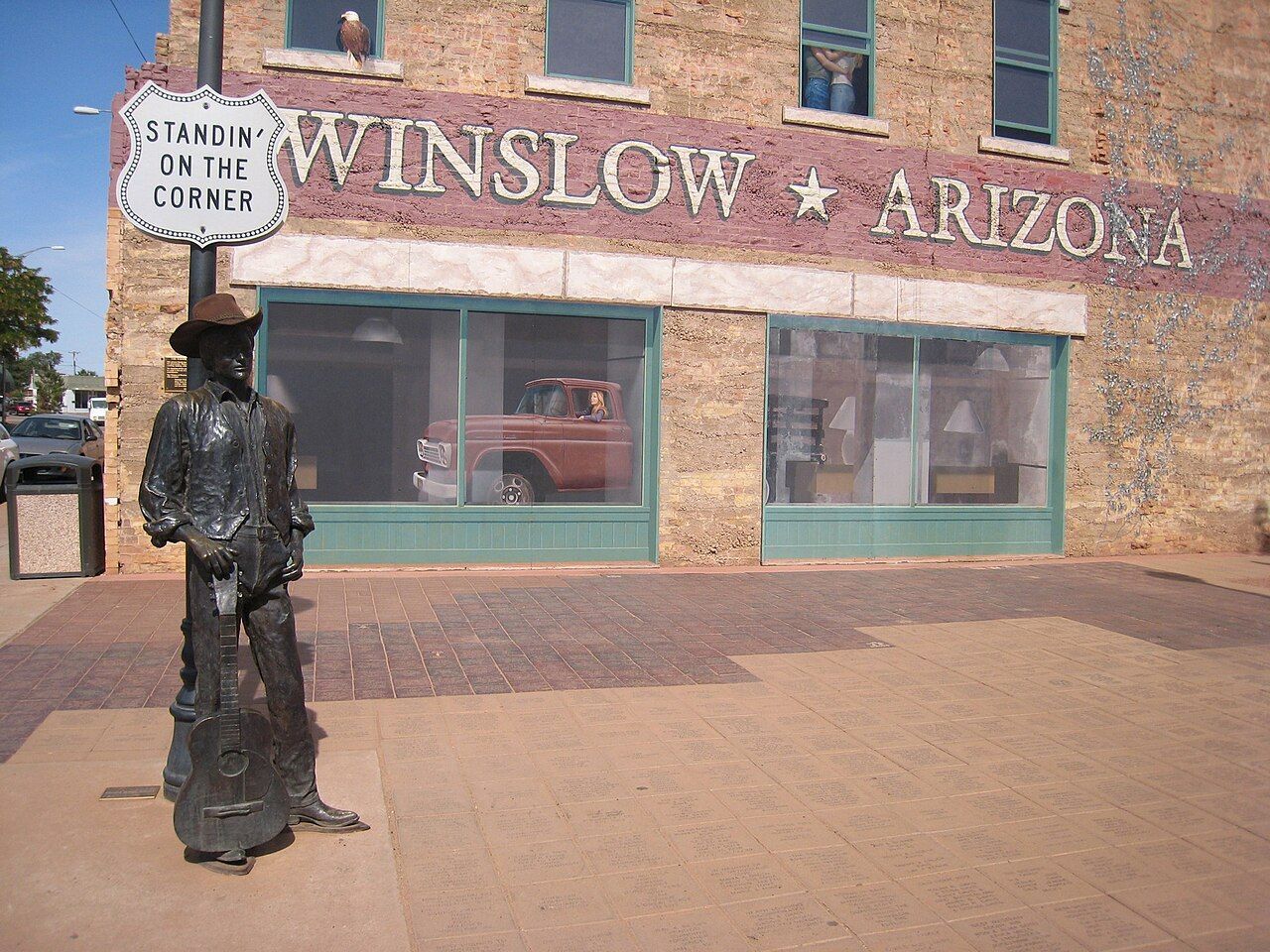 Image: Alan Levine, CC BY-SA 2.0 <https://creativecommons.org/licenses/by-sa/2.0>, via Wikimedia Commons
When the Eagles sang about standing on a corner in Winslow, Arizona, they probably didn't imagine the town would build an actual tourist attraction around it. But that's exactly what happened. There's a statue of a guy with a guitar, a trompe-l'oeil mural showing the girl in the flatbed Ford, and tourists taking turns posing on that corner every single day.
Winslow was dying when Route 66 got bypassed by the interstate, but this corner became a lifeline. The whole town got into the act with shops and restaurants cashing in on seven words from a song.
Chain of Rocks Bridge, Madison, Illinois/ St. Louis, Missouri
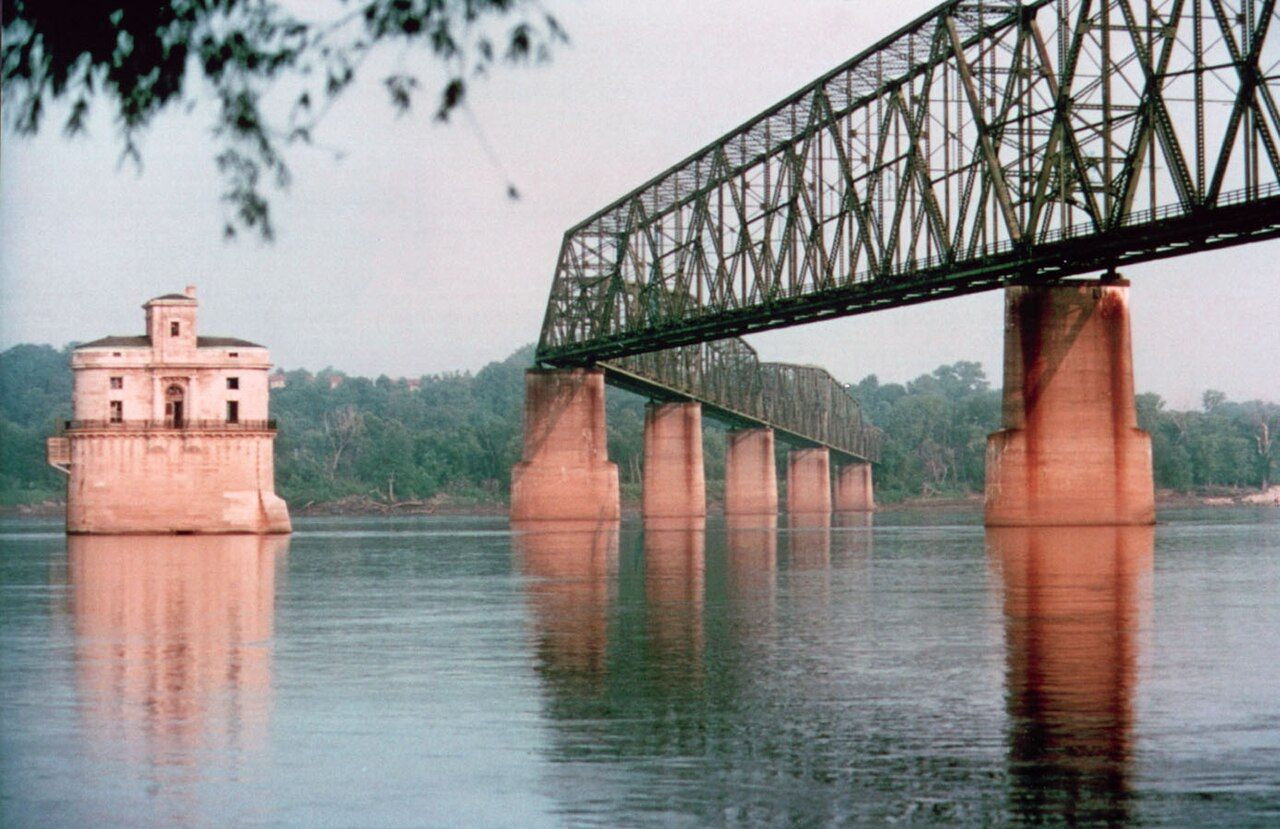 Image: David Hinkson, http://www.trailnet.org/, Public domain, via Wikimedia Commons
Most bridges go straight across the water because, you know, engineering. This one makes a dramatic 22-degree bend halfway across the Mississippi River, which must have been a delightful surprise for drivers. The bend was built to avoid a rock formation underneath, proving that sometimes geography can beat good sense.
Closed to cars in 1970, it's now a bike and walking trail where you can experience that weird bend without worrying about oncoming traffic. On a clear day, you can see the Gateway Arch from here, making it a two-for-one landmark special.
Jack Rabbit Trading Post, Joseph City, Arizona
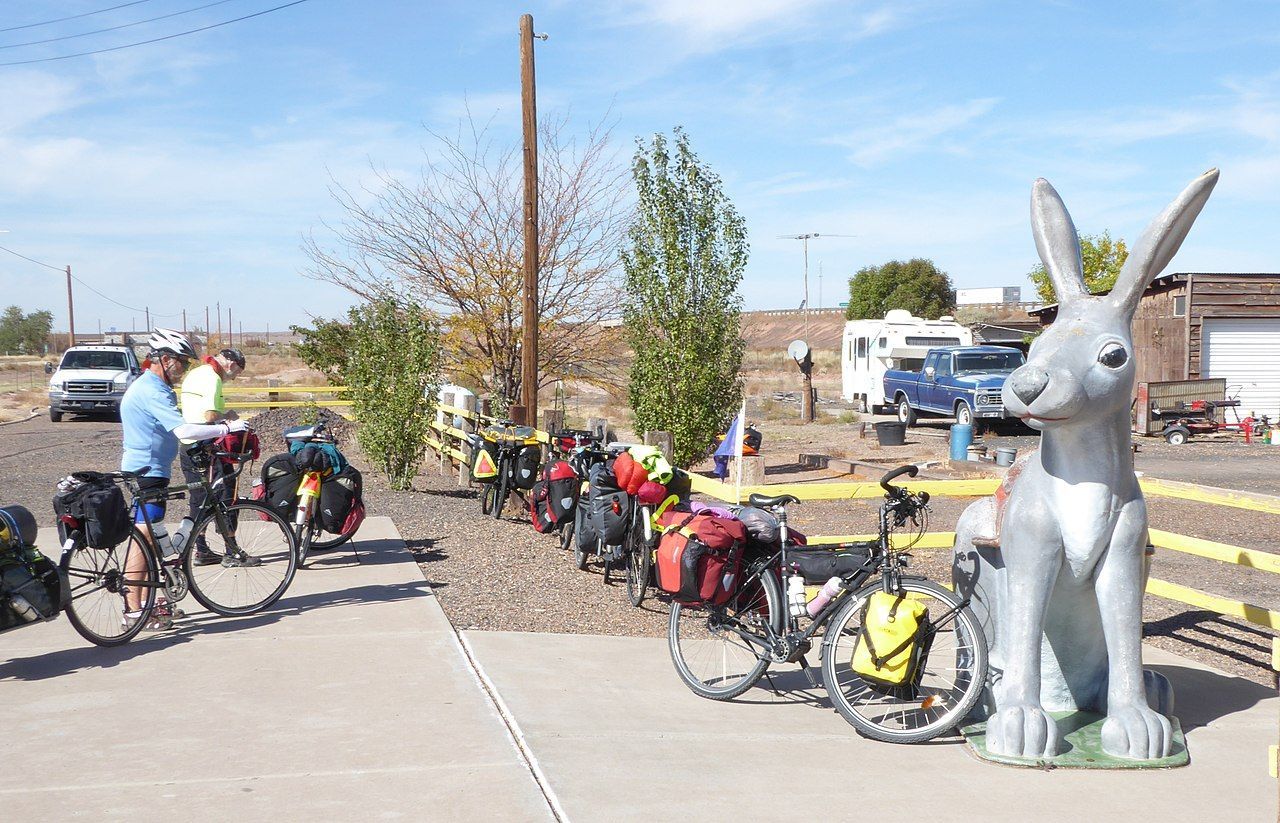 Image: Volker Schmidt, CC0, via Wikimedia Commons
For miles along the highway, yellow billboards proclaim "HERE IT IS". When you finally arrive, you're greeted by a giant jackrabbit statue that's equal parts charming and unsettling. The trading post has been selling souvenirs, Native American crafts, and jackrabbit postcards since 1949, proving that effective advertising never goes out of style.
The rabbit itself has become more famous than what's being sold inside, which is the whole point of roadside attractions anyway.
Chasing legends: A practical guide to reaching the Seven Modern Wonders
Chasing legends: A practical guide to reaching the Seven Modern Wonders
Humans have always been builders of the impossible, leaving behind monuments that bridge the gap between the mundane and the divine. While the original Seven Wonders of the Ancient World have mostly crumbled into dust, a global campaign in 2007 established a new list of marvels. These "Modern Wonders" represent the pinnacle of human ingenuity across four continents and several millennia. Whether you are a history buff, an architecture enthusiast, or a restless traveler, visiting these sites is a rite of passage. Here is everything you need to know about the 7 modern wonders and how to experience them for yourself.
The Colosseum, Italy
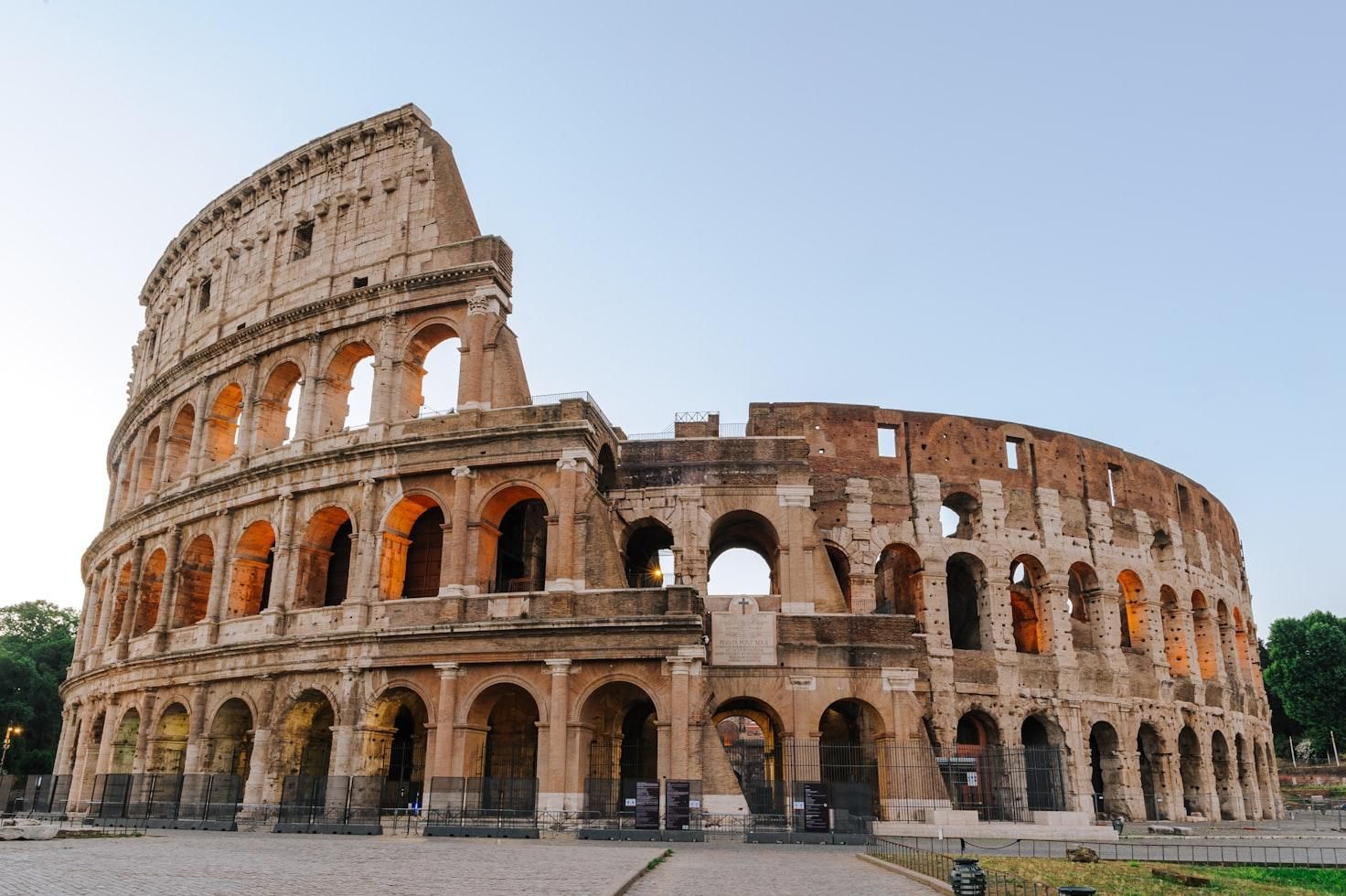 Image: Matteo del Piano
Standing in the heart of Rome, the Colosseum is the world’s largest ancient amphitheater. Completed in 80AD, it once held up to 80,000 spectators who gathered to watch gladiatorial contests, animal hunts, and even mock naval battles.
If you want to visit today, you can easily take the Metro to the Colosseo station. Take into account that you must book tickets weeks in advance. For a unique experience, book an "Underground Tour" to see the hypogeum, the tunnels where gladiators and animals waited before entering the arena floor.
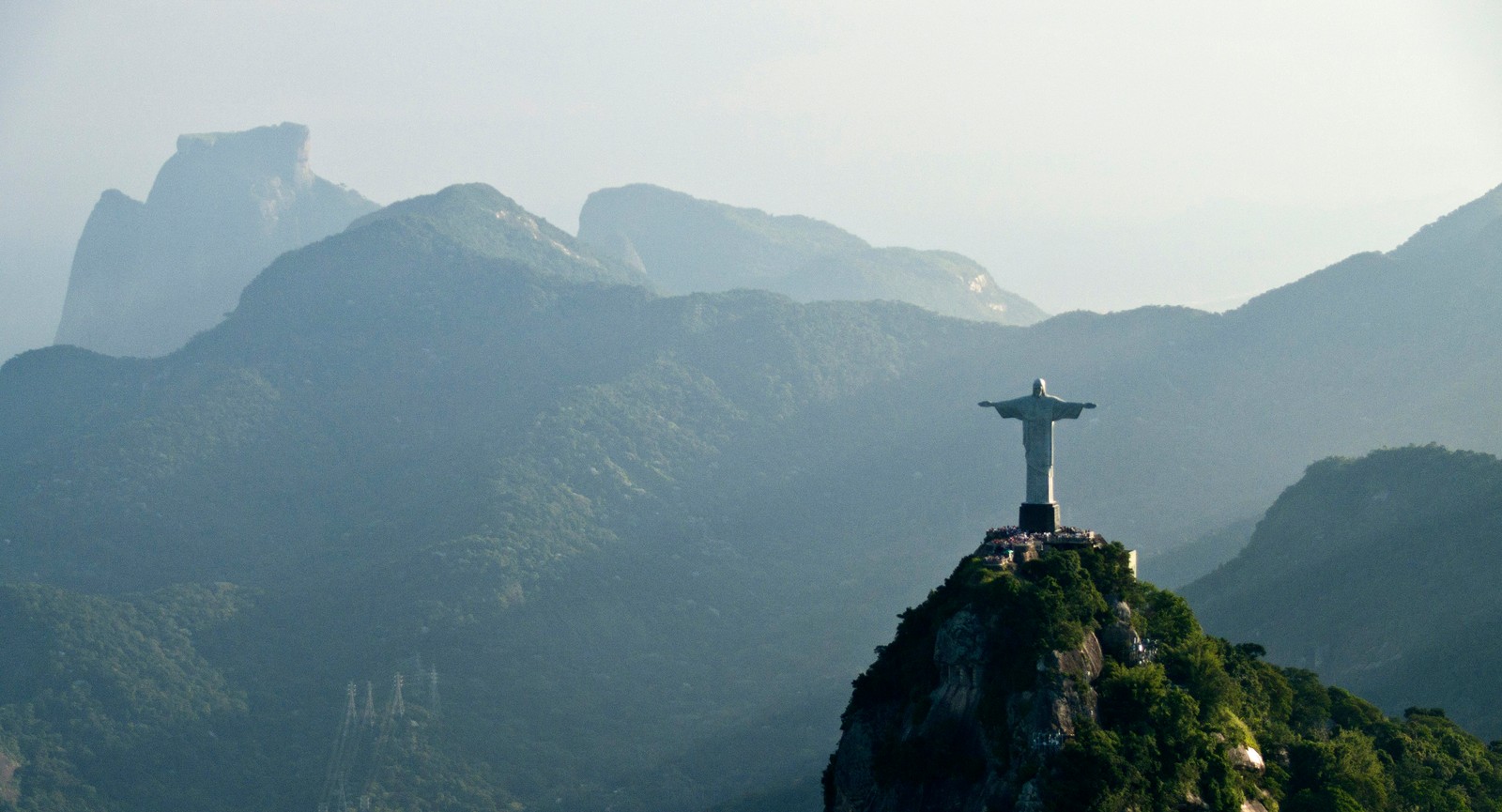
Christ the Redeemer, Brazil
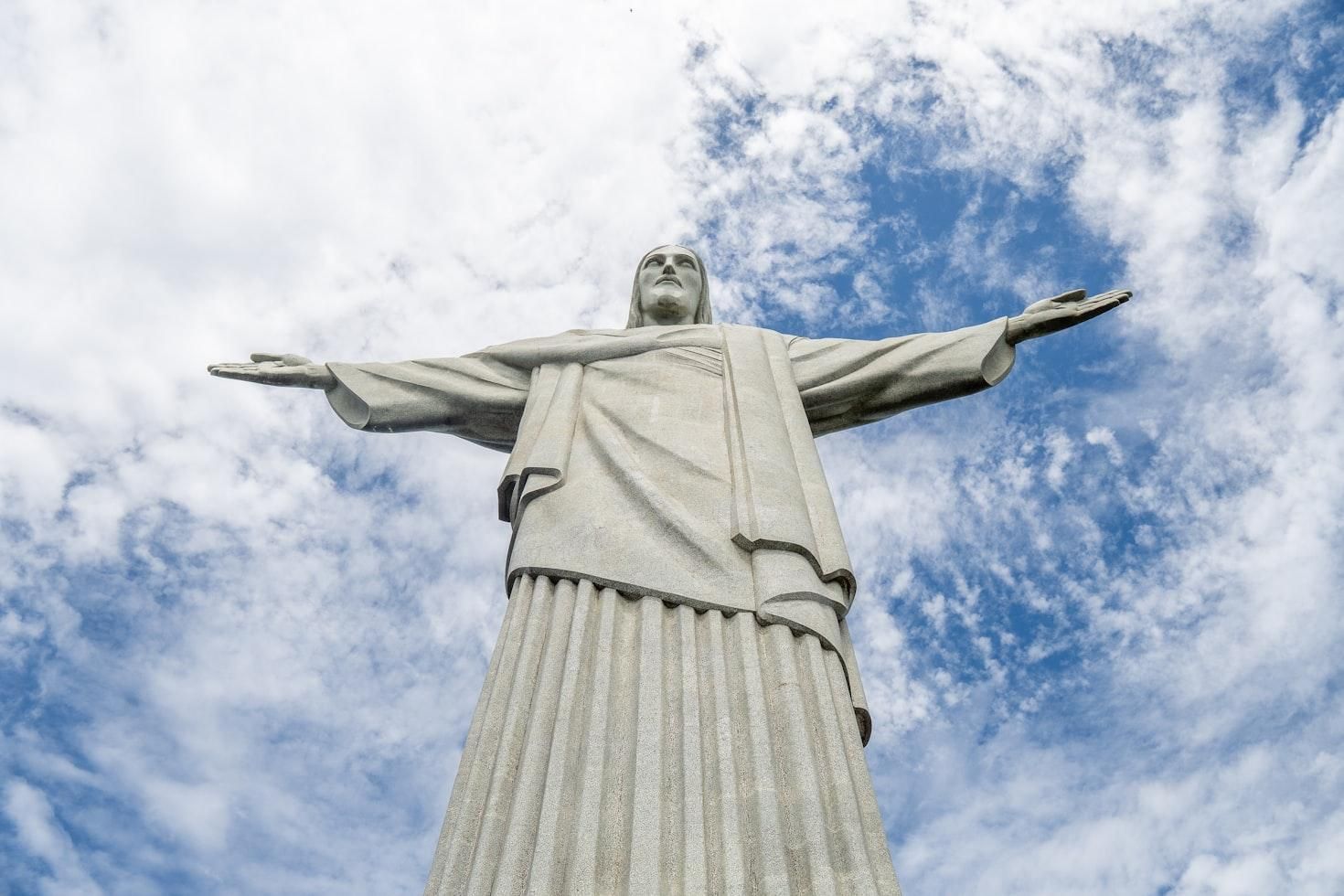 Image: Diego Allen
Perched atop the 2,300-foot Corcovado Mountain, this Art Deco statue of Jesus Christ overlooks the stunning city of Rio de Janeiro. It is not just a religious icon; it is also a symbol of Brazilian hospitality, with arms spread wide to welcome the world.
Once you are in Rio, take the Corcovado Rack Railway (the most scenic route) or an official van from Copacabana or Largo do Machado. Pro Tip: Check the weather before buying your ticket. If it’s cloudy, the statue can be completely engulfed in mist, and you’ll miss the legendary view of Sugarloaf Mountain and Guanabara Bay.
Taj Mahal, India
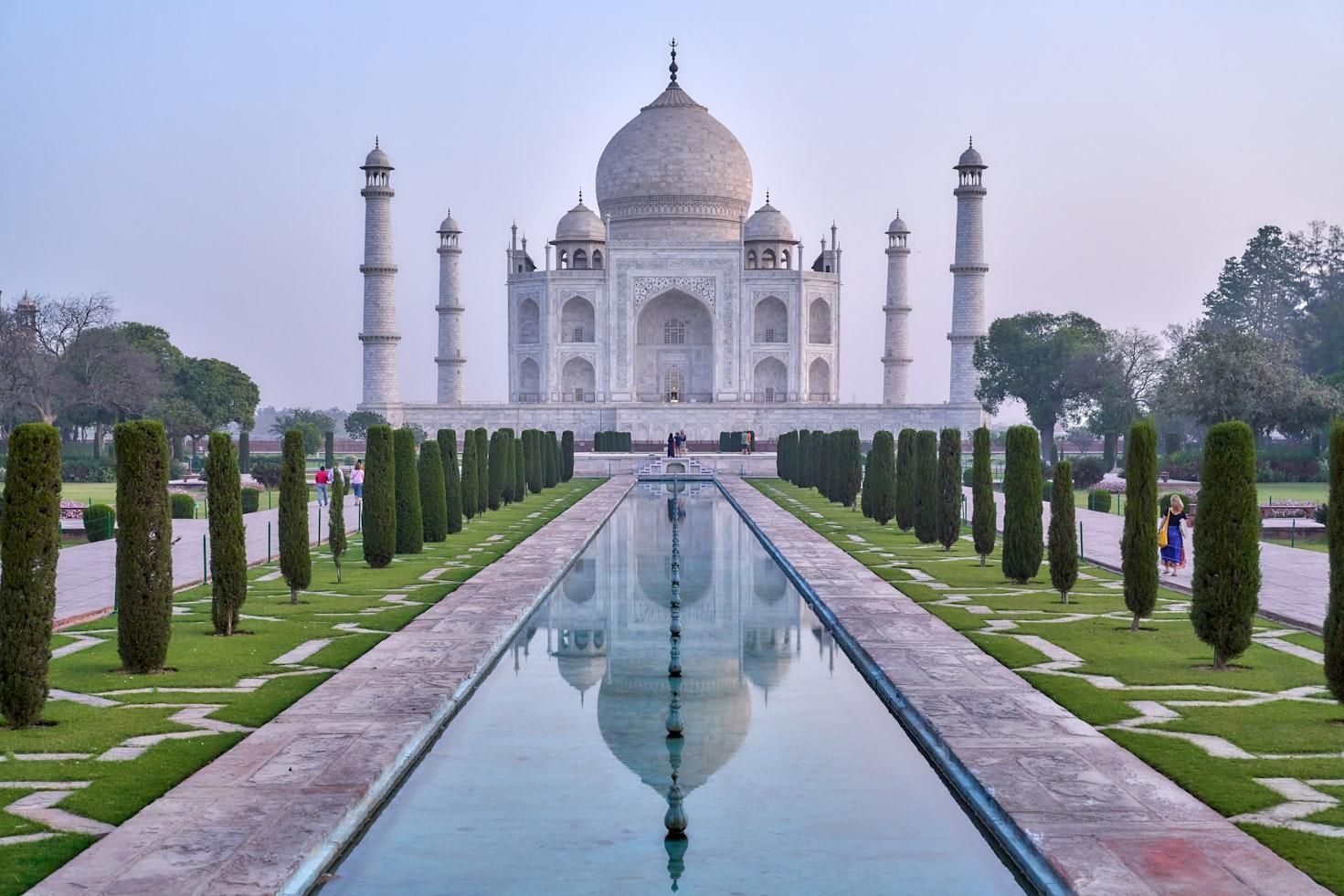 Image: Julian Yu
The Taj Mahal is often called the "crown of palaces." Built by Emperor Shah Jahan in memory of his beloved wife Mumtaz Mahal, this white marble mausoleum in Agra is the ultimate symbol of love. Its perfect symmetry and reflecting pools are truly breathtaking.
The Gatimaan Express is a high-speed train that takes you from Delhi to Agra in just 1 hour and 40 minutes. We recommend arriving at sunrise to see the marble change from soft pink to bright white as the sun climbs the sky. Keep in mind that the Taj Mahal is closed on Fridays for prayers.
Petra, Jordan
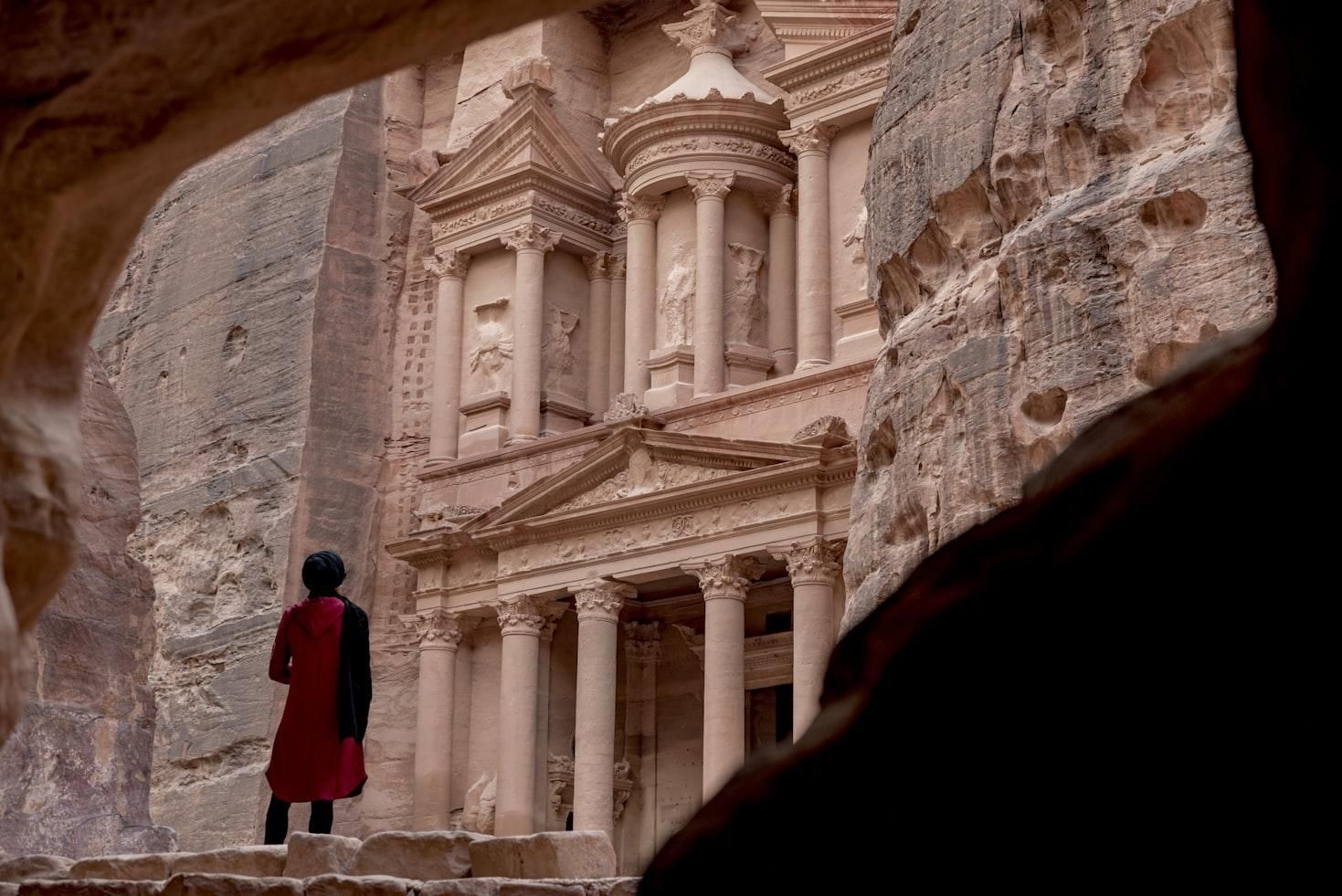 Image: Ahmad Qaisieh
Known as the "Rose City" because of the color of the stone from which it is carved, Petra was the capital of the Nabataean Kingdom. To enter, you must walk through the Siq, a narrow canyon over half a mile long, which eventually opens up to the magnificent Treasury, known as Al-Khazneh.
Most people fly into Amman and take a 3-hour drive or bus south. The town right outside the gates of Petra is Wadi Musa. To gain access, buy a Jordan Pass before you arrive; it covers your visa fee and entry to Petra. Also, don't stop at the Treasury! Hike the 800 steps up to the Monastery for a view that rivals the main entrance.
Machu Picchu, Peru
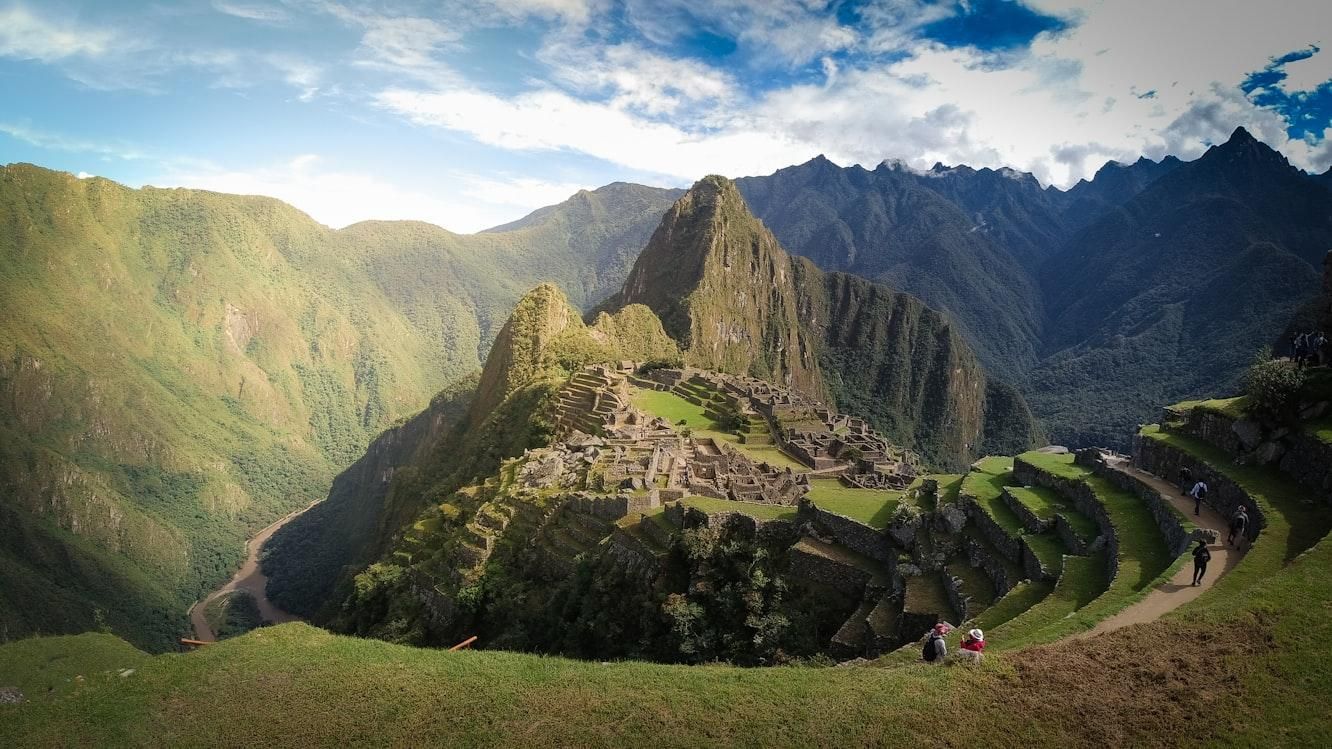 Image: Giorgia Doglioni
Built in the 15th century and later abandoned, this Incan citadel sits high in the Andes Mountains. It remained hidden from the Spanish conquistadors and was only brought to international attention in 1911. Its terraced fields and precise stonework remain remarkably intact.
The best season to visit is from May to September. You can take a 4-day hike on the Inca Trail (a permit is required months in advance) or take the train from Ollantaytambo to Aguas Calientes, followed by a short bus ride. Please note that you must respect the altitude. Spend at least two days in Cusco or the Sacred Valley to acclimate before heading up to the ruins.
The Great Wall of China, China
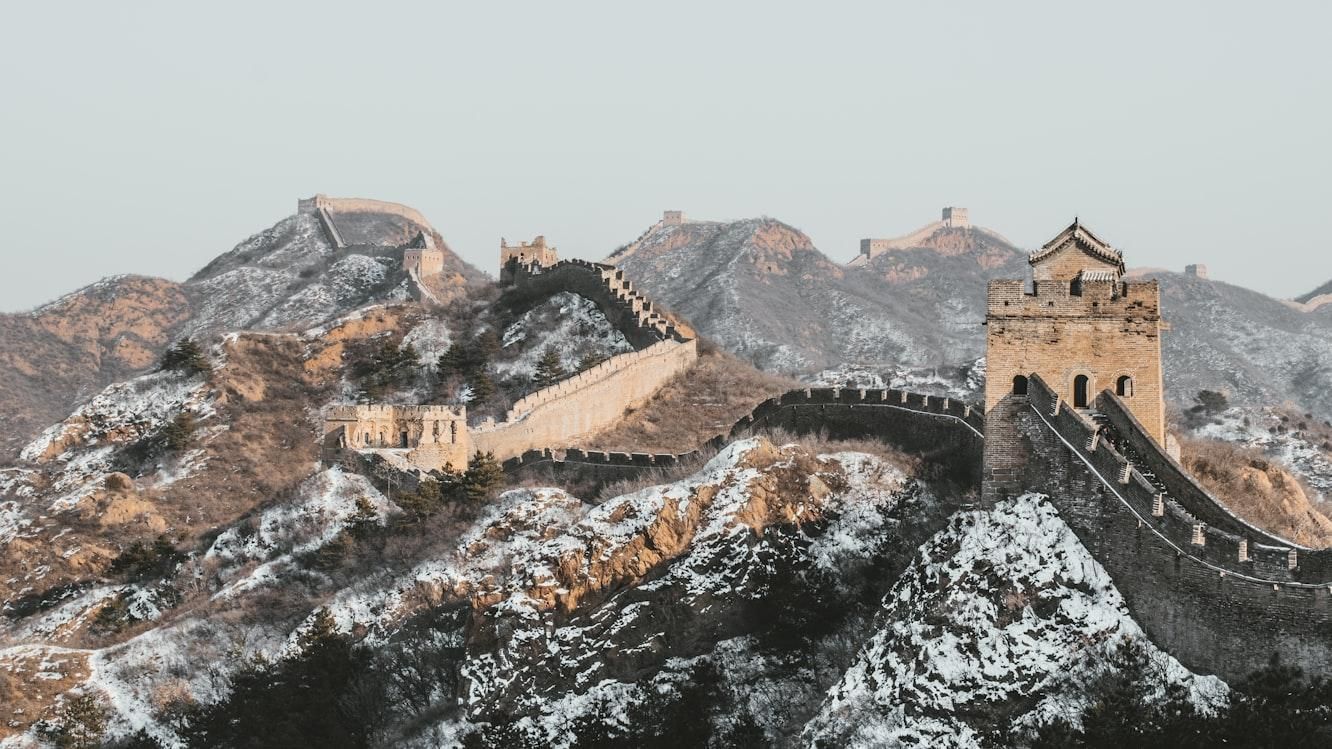 Image: Max van den Oetelaar
Stretching over 13,000 miles, the Great Wall is a series of fortifications built across the historical northern borders of ancient Chinese states. It stands as a testament to the sheer scale of human labor and persistence.
If you dislike heavy crowds, avoid the Badaling section. The Mutianyu section, however, is highly recommended for its restored beauty and cable car access and is about 1.5 hours from Beijing. But if you are feeling adventurous, look into the Jiankou section for a "wild" Wall hike, though beware, it is steep and rugged.
Chichen Itza, Mexico
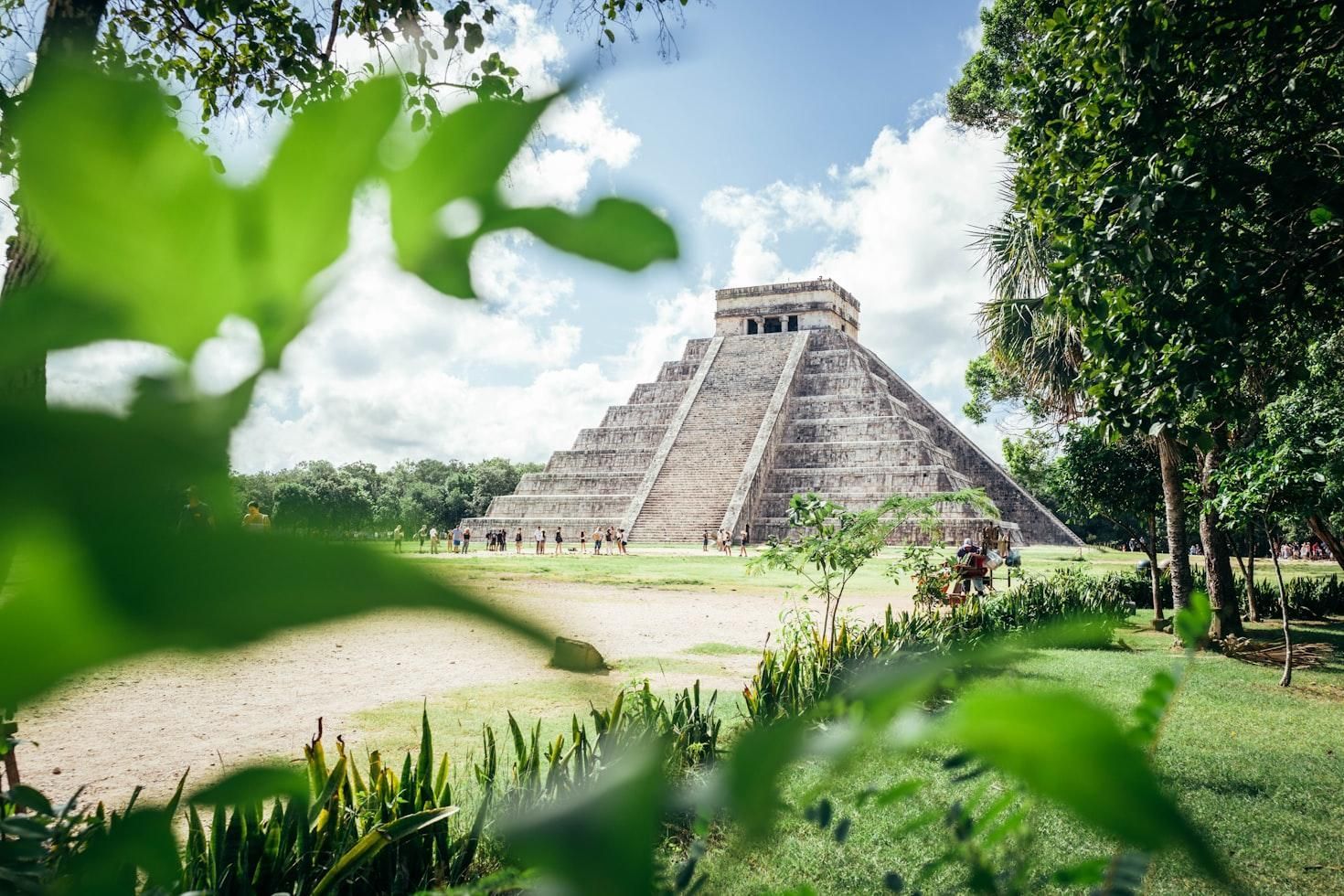 Image: Loris Boulinguez
Located in the heart of the Yucatán Peninsula in modern Mexico, Chichen Itza was a vibrant hub of the Maya civilization. Its centerpiece, the pyramid known as El Castillo (The Temple of Kukulcán), is a masterpiece of astronomical precision. During the spring and autumn equinoxes, the sunlight creates a shadow that looks like a serpent slithering down the stairs.
To visit, you have to travel to Cancun or Mérida. From there, take the Maya Train, the most efficient way to reach the site. Other travelers prefer to take a guided bus tour or rent a car for the roughly 2.5-hour drive from the coast. The best months to visit are from November to April.
Keep wandering
There’s always
more to explore
 General

Ten airports where you will actually want to arrive early
3 min.
Read Now
 History
These 10 mysteries were solved. So why do we still believe them?
6 min.
Read Now

Did Sinatra really sing for the Mafia in Cuba? 10 wild hotel stories
8 min.
Read Now
Was Moby-Dick a real whale? These marine stories have real backgrounds
6 min.
Read Now