
Insider tricks: Ask for this at hotels and see what happens
 General
Traveling tips
Insider tricks: Ask for this at hotels and see what happens
For some travelers, hunting down the best place to stay is part of the joy of planning a trip. For others, the sheer number of options—hotels, apartments, B&Bs, resort packages—makes the whole process feel like a chore. This article enlists tips for both. Read on to find out the basic rules and insider tricks to make the best out of your trip’s accommodation.
First, ask yourself this one question
What will make this particular trip feel right? If you're going for the history and the monuments, being within walking distance of the sites matters far more than a rooftop pool. If food is the point, staying in a neighborhood locals actually eat in beats a hotel in the tourist center. If rest and recovery are what you need, quiet and comfort outweigh location.
Knowing what you value, before you open a single booking site, changes every decision that follows.
Hotel or vacation rental? There's a right answer
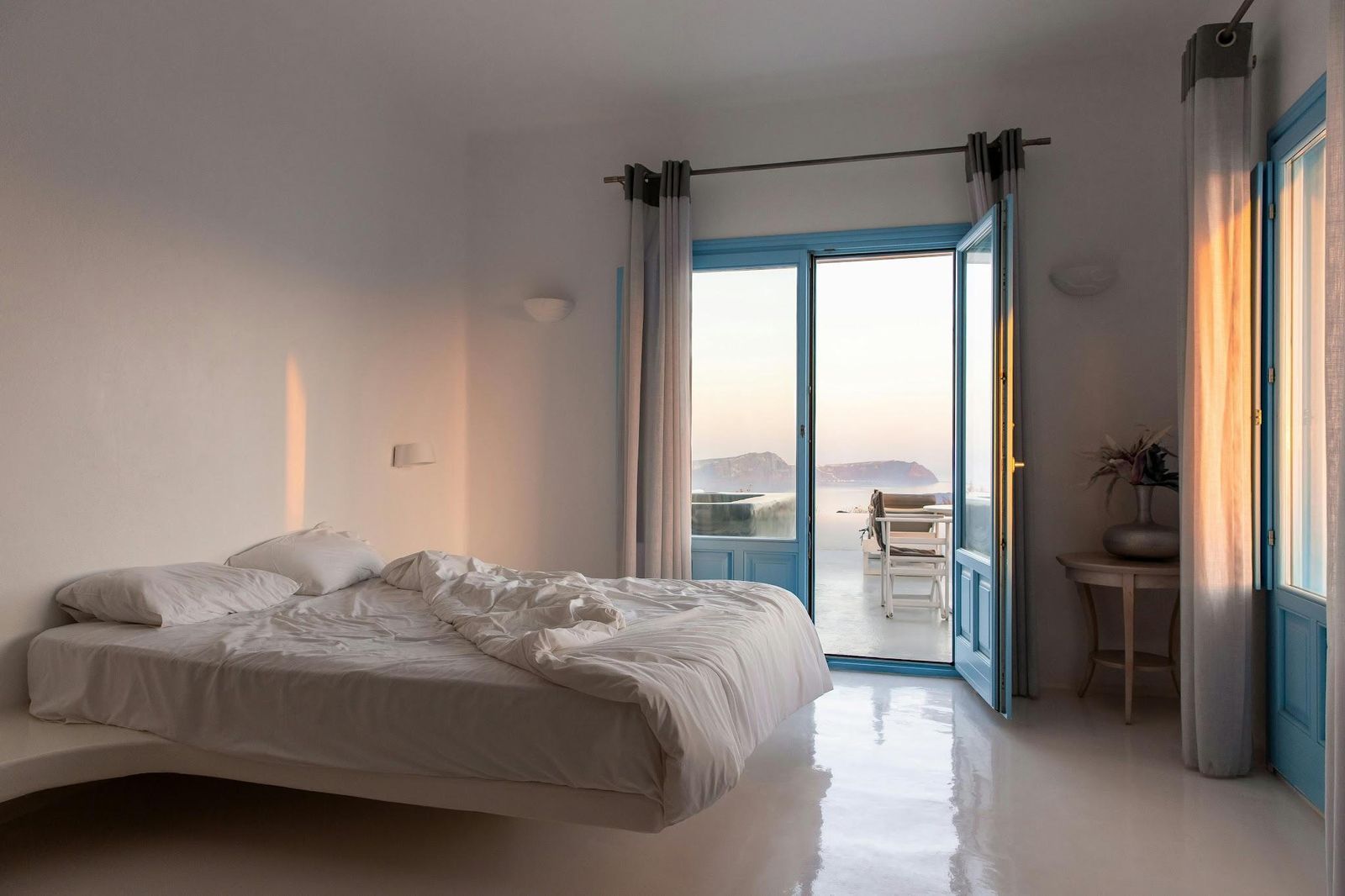
The answer is that the best option depends entirely on how you are traveling. Hotels win for short city stays, solo travelers, and anyone who values security and round-the-clock service.
On the other hand, vacation rentals like Airbnb are better for longer stays (over a week), groups and families splitting the cost, destinations where cooking your own meals saves real money, and travelers who want to feel like residents rather than visitors.
Consider that some big cities like New York, Barcelona, or Tokyo have strict short-term rental laws that limit the vacation rental options.
New up-and-coming options

There are options beyond hotels and Airbnbs. Boutique guesthouses and B&Bs offer genuine local charm. In them, one might find personal hosts, home-cooked breakfast, and neighborhood insights and sincere tips you wouldn’t find in a hotel lobby.
There are also aparthotels, fully serviced apartment-style rooms within a hotel framework, that give you a kitchen and more space while keeping daily housekeeping and a front desk.
How to pick the best area for you
Where you sleep determines what you walk out into every morning. A hotel with a perfect rating in the wrong neighborhood can ruin a trip just as surely as a bad mattress.
A tool that you can use for this is Google Travel’s "Where to Stay" feature, buried inside its hotel search engine. It will produce neighborhood-by-neighborhood overviews for cities around the world, considering things like character, walkability, proximity to transit, and what kind of traveler each area suits best.
Ask this at the front desk
Front desk agents often have more discretion than you’d expect. They can move inventory, block rooms, and even hand you a key to something far better than what you paid for.
To accomplish this, here are some tips: book directly (avoid third-party booking that ranks guests lower in every upgrade queue), check in on a weekday evening, preferably, and mention any celebrations—if there are any—like birthdays or anniversaries.
Don’t forget to ask directly: "Is there anything on the property most guests don't know about?" Hotels usually have amenities like terraces, spa access, or borrowable items that never appear on their website and you can take advantage of.
Get the most out of your vacation rental
Before booking, message the host directly. Not only will it help you screen for responsiveness, but it will also allow you to ask the host for local tips that no guidebook offers. Ask about long-stay discounts, since many hosts will offer up to 30% discount for stays of a week or more, but won’t directly advertise it.
Read the house rules carefully before committing; you don't want to find out later about the super-demanding cleaning expectations or time-consuming check-in logistics.
Book directly, whenever possible

Certain sites are excellent for comparing prices and researching options. Finding properties, comparing rates, and reading reviews, all in one place. But once you have done that, you might consider moving on to the accommodation’s official website to make the reservation.
Why? Because these sites take up to 30% of the commission from the hotels and apartments, which means prices might be inflated there, or those accommodations will rank you lower in the list of available perks. Guests who book direct are flagged as preferred in virtually every hotel's internal system.
Tap locals and past visitors

Always remember that no review site replaces a conversation with someone who has just come back. Reach out to those acquaintances or friends who will be more than glad to give you tips. If you don’t know anyone who was recently at your destination, you can find them online.
Reddit's city-specific communities (r/Paris, r/Rome, r/Tokyo, and hundreds of others) are full of travelers asking and answering exactly the kind of specific "where should I stay" questions. Post one describing your priorities, and you'll often have a dozen detailed answers within hours, from people who were there last month. Facebook travel groups are equally effective.
Check out the reviews, but wisely

You need to bear some things in mind when reading reviews. Don’t directly trust a place’s overall star rating without reading the text. Pay attention to the dates when reviews were posted; a property under new management 3 years ago would mean a different place.
If possible, filter the reviews to match your own traveling conditions: solo travelers, couples, mobility considerations, etc. Also, pay close attention to how management responds to negative reviews: this will tell you a lot about their attitude before you arrive.
Timing matters: Mind when you book

For hotels, the 4-to-8-week window before arrival tends to hit the sweet spot between room availability and competitive pricing. For vacation rentals, booking early is almost always better because the best listings disappear first, and the ones left at the last minute are rarely the ones you want.
One final trick: If you’ve already booked a place with free cancellation, it’s worth checking the price again every few weeks. Sometimes prices fluctuate, and rebooking at a lower rate and canceling the original is entirely legitimate.
These 11 U.S. airports and train stations are worth a visit
 Landmarks
Even if you are not travelling
These 11 U.S. airports and train stations are worth a visit
Some American train stations and airports are much more than transit points. They are architectural landmarks and pieces of history that are very much worth a visit, even if you are not traveling anywhere. From magnificent halls to mid-century modern terminals, these places are a reward in themselves for passengers who take a moment to slow down and look around. If you live anywhere near one of these places, you have probably already experienced what we are talking about.
Grand Central Terminal (New York, NY)
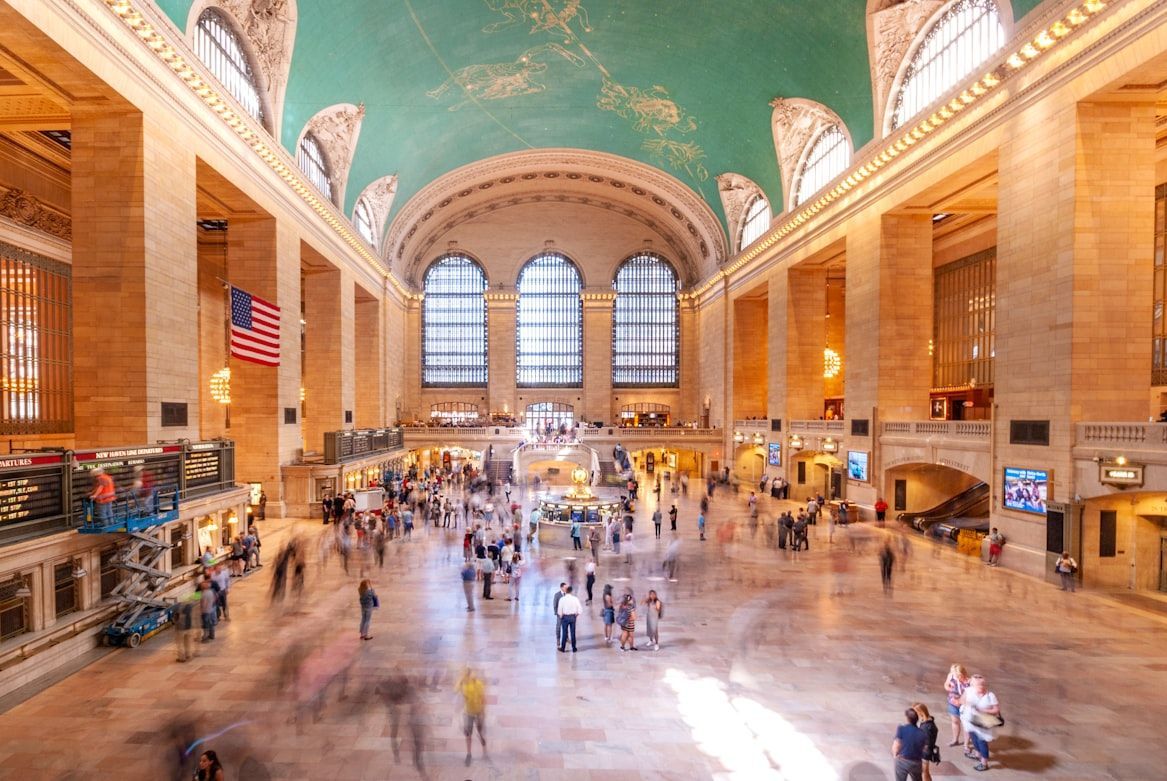 Image: David Vives
Opened in 1913, Grand Central is as much a civic monument as it is a train station. Its vast Main Concourse, crowned by a celestial ceiling painted with constellations, has become one of America’s most recognizable interior spaces.
Beyond the trains, visitors can admire the marble staircases, the iconic four-faced historic clock, and hidden details like the Whispering Gallery.
Daniel K. Inouye International Airport (Honolulu, Hawaii)
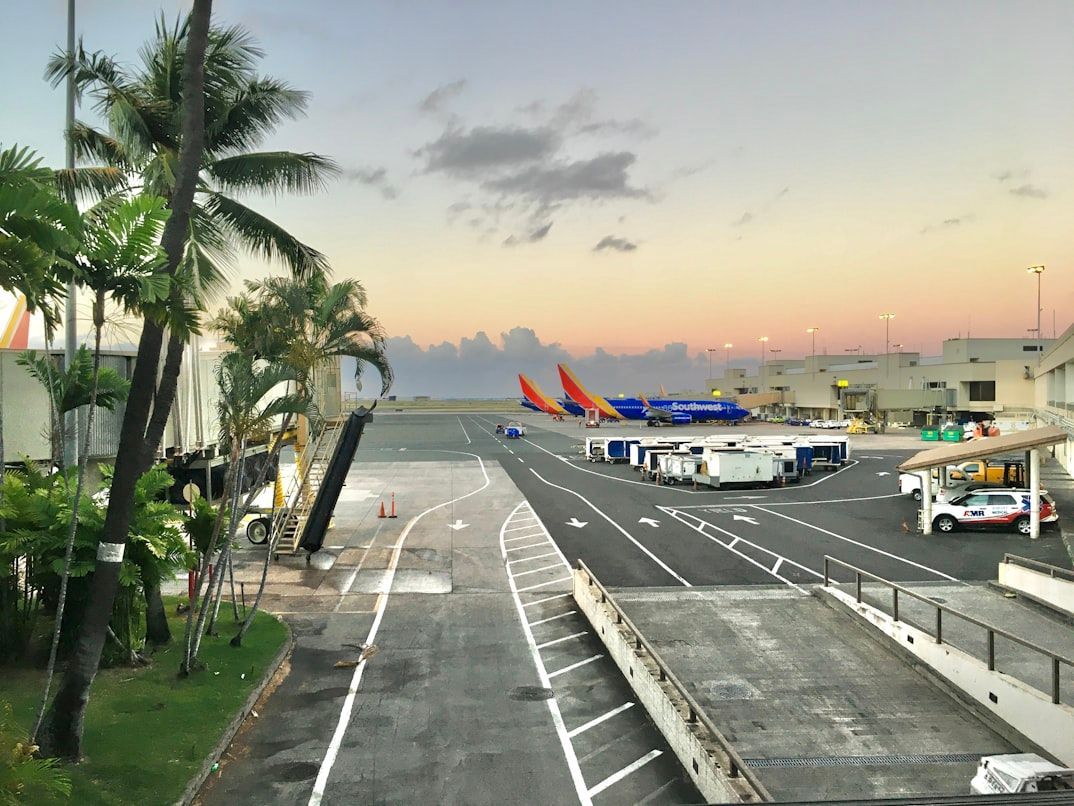 Image: Charlie Schroeder
Daniel K. Inouye International Airport, also known as the Honolulu International Airport, offers an open-air design uncommon in mainland US airports. Tropical gardens, breezeways, and Hawaiian art create a relaxed atmosphere that reflects island life.
For many visitors, it feels like the vacation begins the moment they arrive. The airport’s layout embraces the local climate and culture rather than shutting them out.
Union Station (Washington, D.C.)
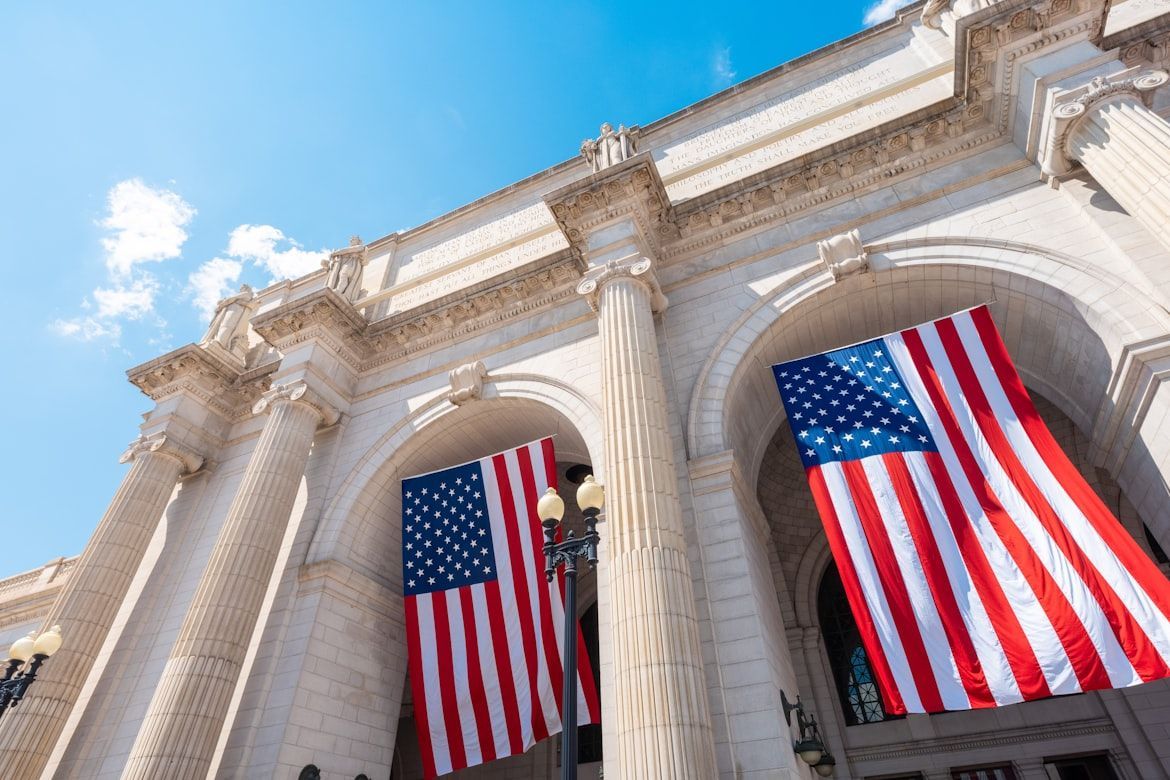 Image: Andy Feliciotti
Union Station opened in 1907 as a monumental gateway to the nation’s capital. Its massive Great Hall, with gold-leaf ceilings and classical arches, was designed to impress visitors arriving by rail. For decades, it symbolized Washington’s role as a crossroads of American travel.
Today, the station blends history with modern life, housing shops, exhibitions, and restaurants beneath its grand vaults. Many visitors stop by simply to admire the architecture, even if they don’t have a train to catch.
Jackson Hole Airport (Jackson Hole, Wyoming)
 Image: David Syphers
Jackson Hole Airport is unique for its location within Grand Teton National Park. The small terminal uses rustic materials like wood and stone, echoing the surrounding mountains.
With sweeping views of the Tetons visible from the runway, arrivals and departures feel like part of a scenic experience. It’s often cited as one of America’s most beautiful airports.
Chicago Union Station (Chicago, Illinois)
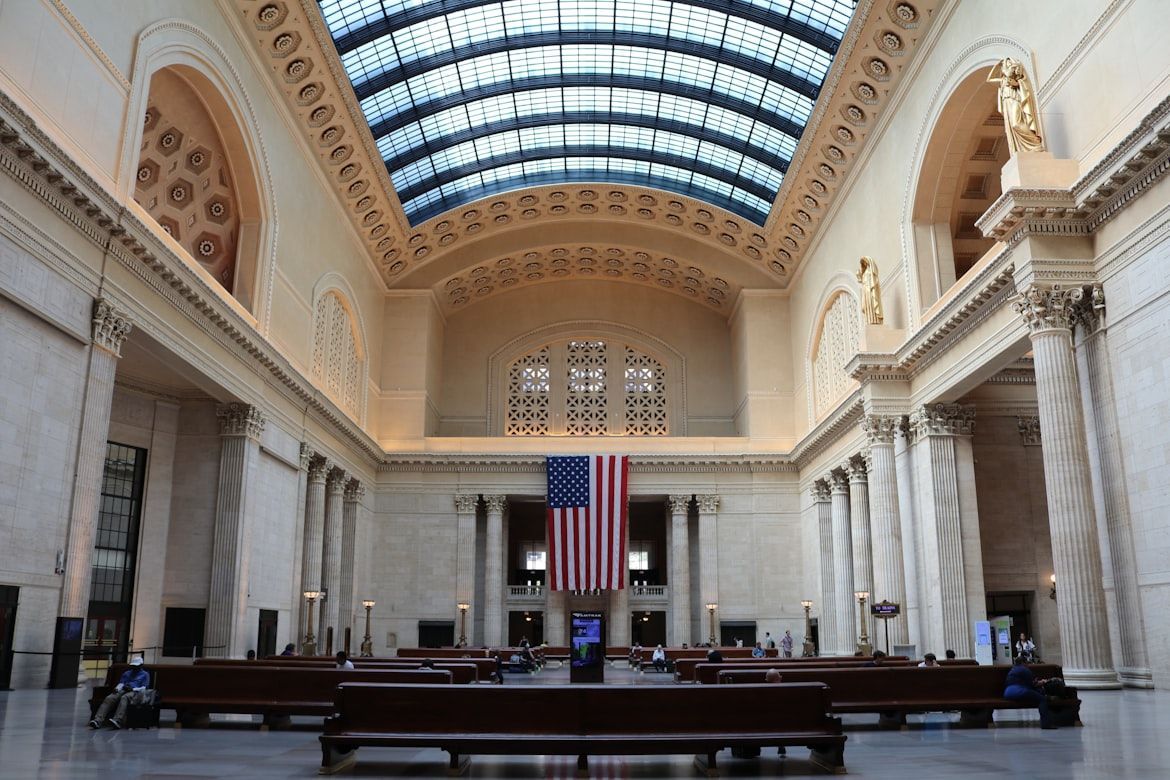 Image: Hudson Thomas
Chicago Union Station’s Great Hall is one of the finest examples of Beaux-Arts design in the Midwest. Completed in 1925, its massive skylight floods the room with natural light, drawing attention to its marble columns and elegant proportions.
The station remains a busy transportation hub while also serving as a quiet architectural escape from the surrounding city. For visitors, it offers a chance to experience the classic American railroad greatness that is still in use.
Salt Lake City International Airport (Salt Lake City, Utah)
 Image: Heber Davis
Salt Lake City’s rebuilt airport blends modern design with references to Utah’s dramatic landscapes. Clean lines, natural light, and public art create a sense of openness rarely found in large airports.
For travelers passing through, the airport provides a calm and visually pleasing environment. Its thoughtful layout and contemporary design make it a surprisingly enjoyable place to spend time.
Cincinnati Union Terminal (Cincinnati, Ohio)
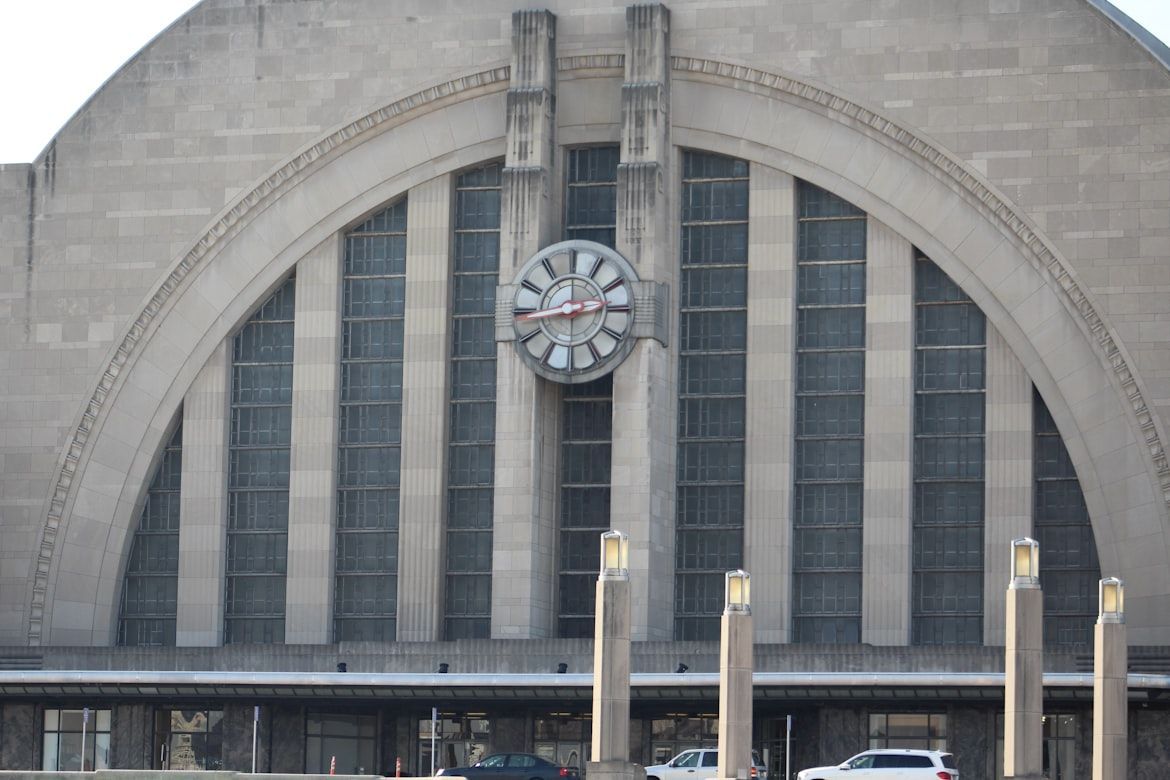 Image: Yaw Afari
This striking Art Deco landmark opened in 1933 and looks more like a museum than a train station. Its sweeping semi-dome, colorful mosaics, and bold geometric lines reflect the optimism of early-20th-century American design.
Although rail service today is limited, the building remains a cultural center, housing museums and rotating exhibits. Visitors can explore its incredible interiors and experience one of the finest Art Deco spaces in the country.
Portland International Airport (Portland, Oregon)
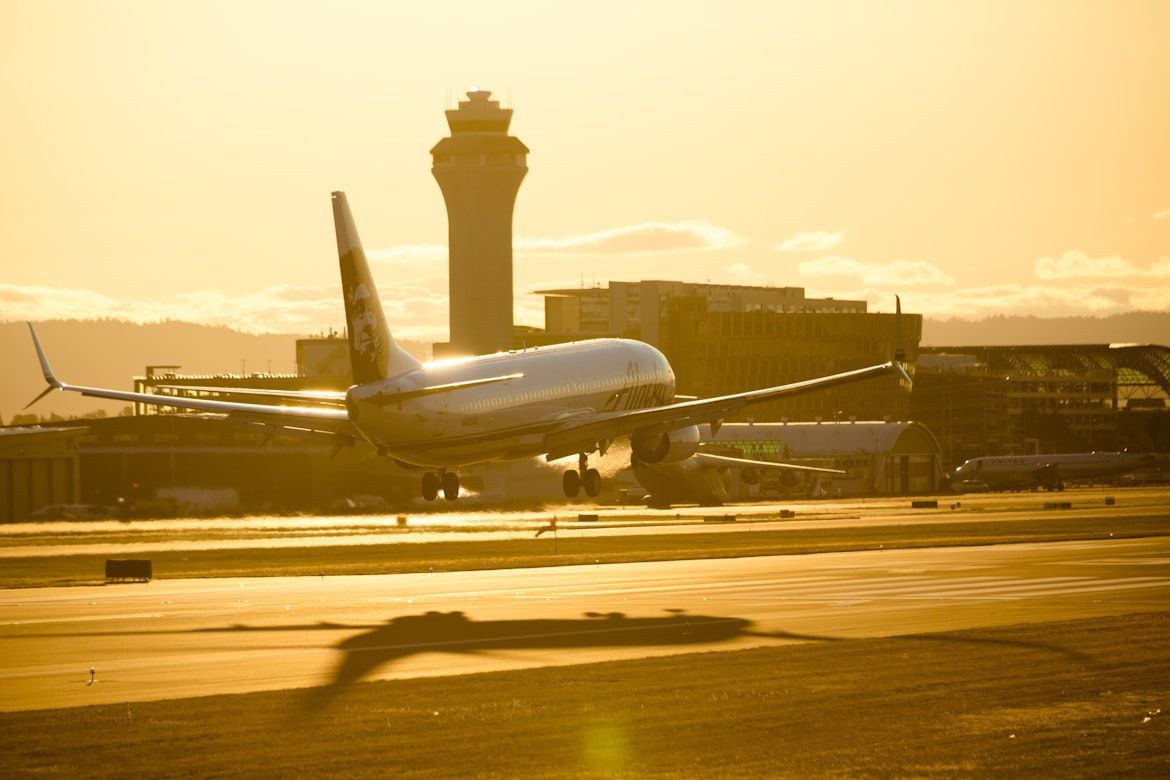 Image: Avel Chuklanov
Portland International Airport is frequently praised for its relaxed atmosphere and strong regional character. Recent renovations emphasize natural wood, open spaces, and artwork inspired by the Pacific Northwest.
Known for its friendliness and easy navigation, PDX feels more like a community space than a stressful transit point.
30th Street Station (Philadelphia, Pennsylvania)
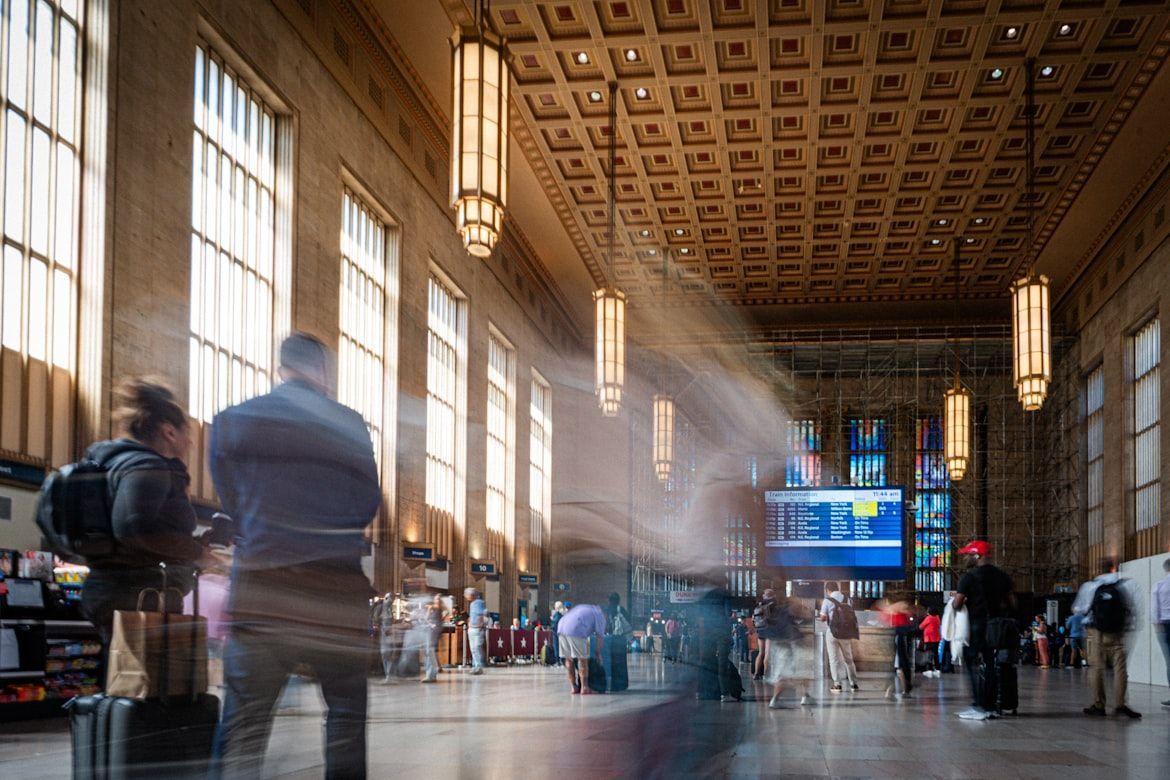 Image: Nils Huenerfuerst
Philadelphia’s 30th Street Station is a monumental blend of Beaux-Arts and Art Deco architecture. Completed in 1933, it features massive columns and a cavernous waiting room that makes the place almost seem like a cathedral.
Still serving Amtrak and regional rail, the station rewards visitors who pause to look upward and take in its details. Its scale and symmetry make it one of the most impressive train stations in the United States.
Dulles International Airport Main Terminal (Dulles, Virginia)
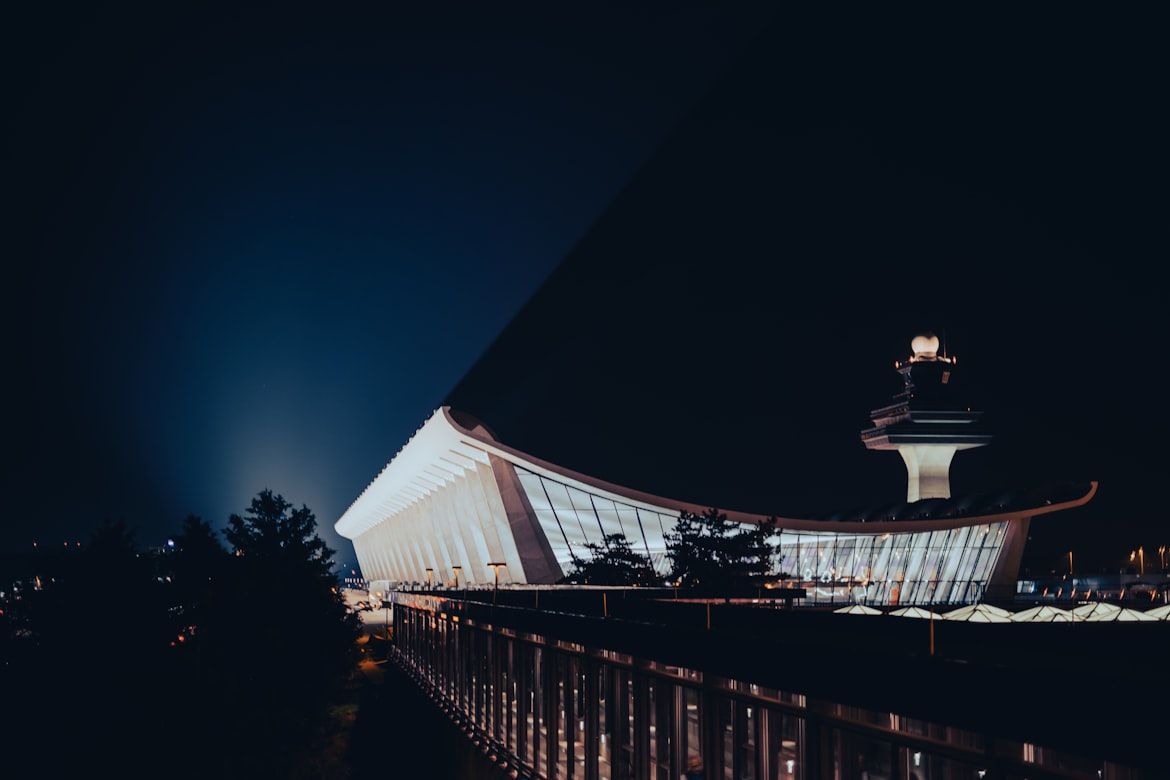 Image: Cyrus Crossan
The main terminal at Dulles International Airport is a creation of Eero Saarinen, known for its elegant roofline that appears to float above the building. Opened in 1962, it redefined how airports could look and feel.
Its airy interior and dramatic angles make it a favorite among architecture enthusiasts. For travelers, Dulles offers a reminder that even modern transportation spaces can be beautifully designed.
College Park Airport (College Park, Maryland)
 Image: Metin Ozer
Established in 1909, College Park Airport is recognized as the oldest continually operating airport in the world. Early aviation pioneers trained here, and the site played a significant role in the beginnings of powered flight in the US.
Today, a small museum on the grounds tells the story of those early pioneers. Visitors can stand where aviation history was made.
Keep wandering
There’s always
more to explore

These surprises catch the most experienced travelers off guard
4 min.
Read Now
10 air passenger rights airlines hope you never find out about
5 min.
Read Now

The one thing your National Park pass won't cover: Mount Rushmore
6 min.
Read Now

Tired of tourist traps? 10 unconventional U.S. travel adventures
4 min.
Read Now