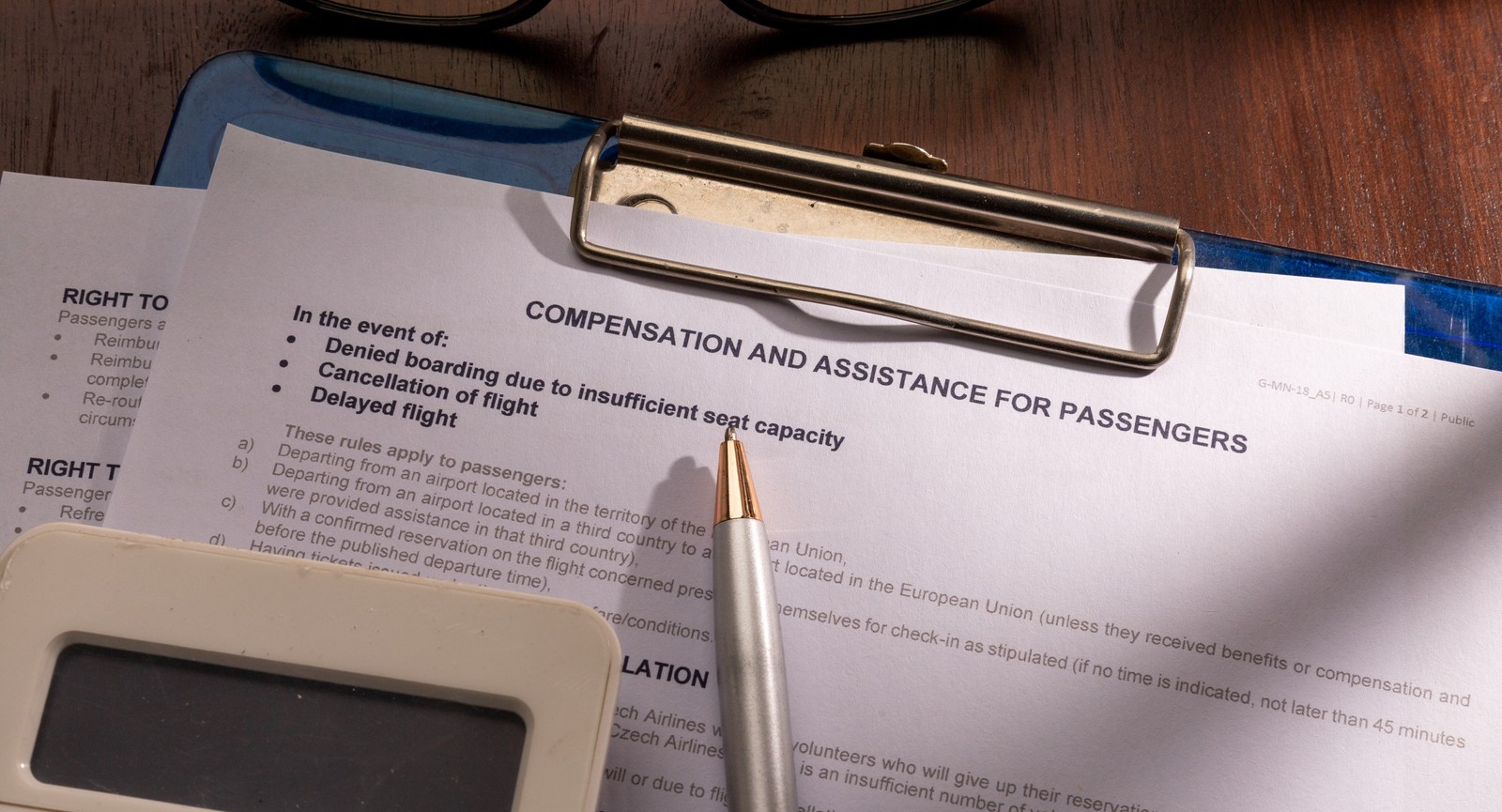
10 air passenger rights airlines hope you never find out about
 General
10 air passenger rights airlines hope you never find out about
Navigating the complexities of air travel often leaves passengers feeling at the mercy of airline policies, flight delays, and unexpected disruptions. However, international aviation regulations grant air travelers extensive protections. Despite these safeguards, millions of travelers fail to claim the assistance or monetary compensation they are owed simply because they are unaware of the rules. Keep reading to learn ten critical rights that every traveler should know before arriving at the airport terminal.
Right to information if the delay is at least 2 hours

When a flight suffers a delay of two hours or more, the operating airline is legally obligated to provide passengers with clear, written documentation detailing their customer rights. This notice must include the criteria for receiving assistance, meals, and potential financial compensation.
Airlines can’t leave travelers waiting at the boarding gate without updating them on the situation. If a delay reaches the two-hour mark, passengers have the right to request news from airport staff regarding the expected time of departure and the underlying cause of the disruption.
Right to reimbursement for delays of more than 5 hours

When a delay goes beyond five hours, the flight disruption is legally considered a severe impact on the traveler’s itinerary. At this point, passengers are no longer required to wait for the aircraft to depart.
If you choose not to travel after a five-hour delay, you have the right to claim a full refund for the unused ticket within seven days. Furthermore, if the delay occurs during a connecting flight and the purpose of your journey suffers, the airline must provide a free return flight to your original point of departure.
Right of care

If a flight delay extends beyond a specific time threshold—typically two hours for short flights and four hours for long flights—passengers can automatically claim their right of care.
Under this protection, the airline must provide: food and drinks (vouchers or complimentary meals and refreshments proportional to the waiting time); communication access (telephone calls or Wi-Fi); overnight hotel stay (if the departure time is pushed to the following day, the carrier must arrange and pay for accommodation, as well as complimentary transportation between the airport and the hotel).
Right to financial compensation

Beyond basic care and refunds, passengers are often entitled to direct monetary compensation if their flight arrives at the final destination three hours or more later than scheduled, or if the flight is canceled on short notice.
Unless the disruption was caused by "extraordinary circumstances" outside the carrier’s control (such as severe weather, air traffic control restrictions, or security risks), fixed compensation ranges from $270 to $650, depending on the total flight distance. Operational technical issues and airline staff shortages do not count as extraordinary circumstances, meaning the company remains liable for payment.
Protection against schedule changes notified under two weeks

Airlines frequently adjust their flight schedules months in advance. However, if an airline changes your flight time or cancels your original booking with less than 14 days’ notice prior to the departure date, specific protections apply.
If the new schedule alters your arrival or departure time significantly, you don’t have to accept the change. You have the right to choose between: rebooking onto an alternative flight under comparable conditions; receiving a full monetary refund for the ticket; or claiming financial compensation if the alternative flight time differs significantly from your original booking.
Guaranteed check-in and ticket issuance up to 45 minutes prior

Although airlines recommend arriving two to three hours before departure, formal regulations dictate that check-in desks and ticket counters must accept passengers who arrive up to 45 minutes prior to the scheduled departure time.
If a passenger presents themselves at the airport counter or online portal at least 45 minutes before departure with valid travel documents, the airline is obligated to process the check-in and issue a boarding pass. Refusing check-in to a passenger who meets this deadline without a valid reason constitutes improper denied boarding.
Protection against involuntary denied boarding (overbooking)

Airlines often overbook flights to compensate for no-show passengers. However, if every passenger with a ticket arrives and the airline denies boarding involuntarily, affected travelers are protected by strict rules.
First, the airline must ask if any volunteers are willing to surrender their seats in exchange for benefits. If you are denied boarding against your will despite arriving at the gate on time, you are entitled to: cash compensation; choose between a full refund or immediate rebooking on the next available flight; full right of care (meals, hotel, transit) while waiting for the alternative flight.
Compensation for delayed baggage

If your checked luggage fails to arrive at your destination, the airline is responsible for covering the costs of any necessary purchases.
Passengers are entitled to buy basic essentials—such as toiletries, underwear, a change of clothes, and phone chargers—until their bag is delivered. To claim these expenses, you have to file a Property Irregularity Report (PIR) at the airport baggage service desk immediately before leaving the airport. Remember to keep all receipts and submit a written claim to the airline within 21 days of receiving the delayed bag.
Compensation for lost baggage

Under the International Montreal Convention, checked baggage that remains missing for more than 21 days is officially declared lost.
Once a bag is presumed lost, the airline must compensate the passenger for the total value of the lost suitcase and its contents, roughly $1,700 to $1,800 USD per passenger. To maximize your payout, maintain a detailed packing list and retain receipts or proof of value for expensive items.
Travel rights for pregnant women up to 32 weeks

A widespread myth suggests that pregnant travelers must present a doctor’s letter during any stage of pregnancy. In reality, standard international aviation guidelines allow pregnant women to fly up to 32 weeks of gestation without a medical certificate.
Though individual airline policies vary between 28 and 36 weeks, expectant mothers under 32 weeks can’t be denied boarding solely due to pregnancy unless clear safety or health complications are evident at check-in.

Entry Denied: Travel documents most Americans forget until it's too late
Airport prevention strategies
Entry Denied: Travel documents most Americans forget until it's too late
As you get ready to travel, it is easy to focus on the big things: flights, hotels, and what to pack. But the small documents can cause some of the biggest problems. Checking your passport expiration date, entry requirements, and medication prescriptions before you leave can save you a lot of stress at the airport. Here are ten travel documents you won’t want to forget.
Your passport expiration date
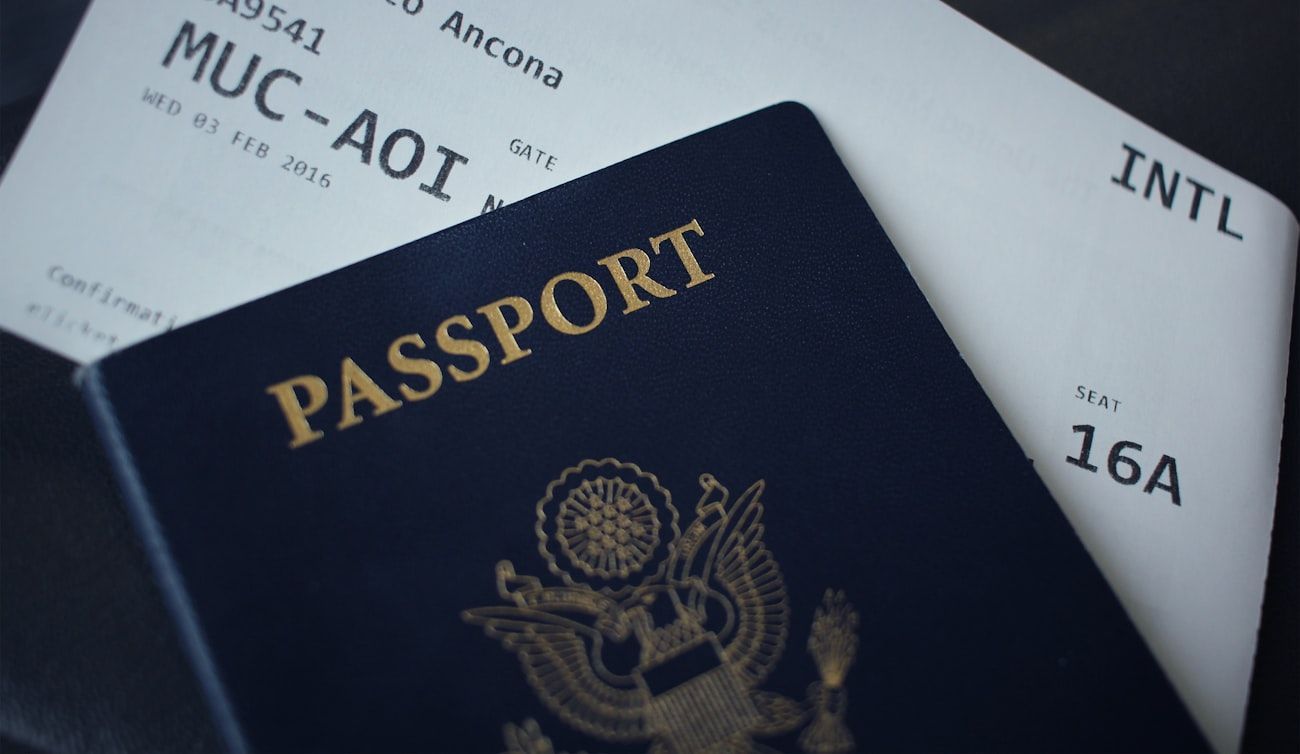
Some travel problems are easy to avoid if you catch them on time. Check your passport’s expiration date as soon as you start planning your travel. Some countries, especially in Europe, may require your passport to be valid for at least 6 months after your travel dates. In most cases, adult passports last 10 years, but children’s passports expire after only 5 years, so it is best to be aware.
Entry requirements besides the visa
Some trips require a few extra papers besides a visa. Depending on the country, you may need an electronic travel authorization, blank passport pages, proof of a return ticket, health documents, or entry forms.
The easiest place to start is Travel.State.gov, where travelers can search each destination and check its entry, exit, and visa requirements. It is worth doing this before you leave, because some places may also ask where you are staying or whether you have enough money for the trip.
Medication paperwork

This is one of the easiest travel details to take for granted. Some common U.S. medications, including certain ADHD drugs, pain medicines, sleep aids, decongestants, and CBD products, may be restricted or even illegal in other countries.
Keep medicine in its original labeled package, carry a copy of the prescription, and bring a doctor’s note when needed. Otherwise, you may have to leave it at the airport, even if it is legal back home.
Kids authorizations

No one wants to arrive at the airport and find out their child needed one more document to travel. If a child is traveling without one or both parents, check the destination country’s embassy or consulate before the trip.
You may need custody documents or a notarized permission letter from the other parent, usually prepared with a notary and signed before travel. This can apply even when one parent is on the trip, so it is better to ask early than find out at the airport.
Travel insurance

Travel insurance is one of those things you hope you won’t need, but you'll be glad to have in case you need it. The U.S. government doesn’t pay medical bills or unexpected travel costs for Americans abroad, and Medicare or Medicaid, U.S. government health insurance programs, will probably not cover care outside the country.
So, the best advice would be to check your health plan and consider travel medical insurance, emergency evacuation coverage, and even international car insurance if you plan to drive. And don’t forget to read the policy carefully, so you know what is actually covered.
International Driving Permit

A U.S. driver’s license does not work the same way everywhere. Some countries may require an International Driving Permit, especially if you’re planning to rent a car. This document doesn’t replace your actual license, but it helps explain and certify your license information in other languages. Countries like Mexico and Canada don’t ask for it, but others like Austria and Spain do.
Make a copy of your documents

Originals may seem enough, but travel documents are worth backing up in more than one way. Make copies of your passport, visas, insurance details, and reservations, and keep one set away from the originals. Also, leave another set with someone you trust back home, just in case something gets lost or stolen. Photos on your phone can help too, but a paper backup can save you when your battery dies or Wi-Fi is not working.
Have hotel and address info nearby

When you land, officials may ask more than just how long you are staying. You may need to give the address of your hotel, rental, or the person you are visiting. Keep your booking confirmation and full address easy to find, either printed or saved on your phone. It is a small detail, but it can make the arrival process much smoother.
Vaccination records on date

Are your vaccinations up to date? Vaccination records are really easy to forget, but some countries can ask for proof of certain vaccines, such as yellow fever.
The CDC, the Centers for Disease Control and Prevention, says some destinations require this proof from all arriving travelers, including places like Ghana, Kenya, Uganda, Bolivia, and French Guiana. This proof may need to appear on an International Certificate of Vaccination, so it is better to be informed before starting your trip.
Pet travel paperwork

If you are traveling with your pet, do not leave the paperwork for the week before your trip. The U.S. Department of Agriculture, USDA, says each destination can have different pet entry rules, including vaccines, tests, treatments, and a USDA-endorsed health certificate. A regular vet visit may not be enough, so contact a USDA-accredited veterinarian early.
Keep wandering
There’s always
more to explore
The real reason why TSA agents empty your bottle of water
6 min.
Read Now

The day the music died: The song that said goodbye to early rock 'n' roll
6 min.
Read Now

Drive-in movies were invented for this surprisingly personal reason
7 min.
Read Now
 Culture

11 movies that made millions want to pack their bags
6 min.
Read Now