Should you leave an extra 10%? The hidden rules behind tipping worldwide
 Culture
Money talks
Should you leave an extra 10%? The hidden rules behind tipping worldwide
Who wouldn’t want a little extra money in recognition for good service? Well, as it turns out, not all people! In the U.S., tipping feels like second nature. But step outside the country, and that well-meaning habit can turn awkward or even insulting. Let’s look at how tipping follows cultural rules shaped by history and local values!
United States: Tipping is deeply ingrained
 Image: Emilio Takas
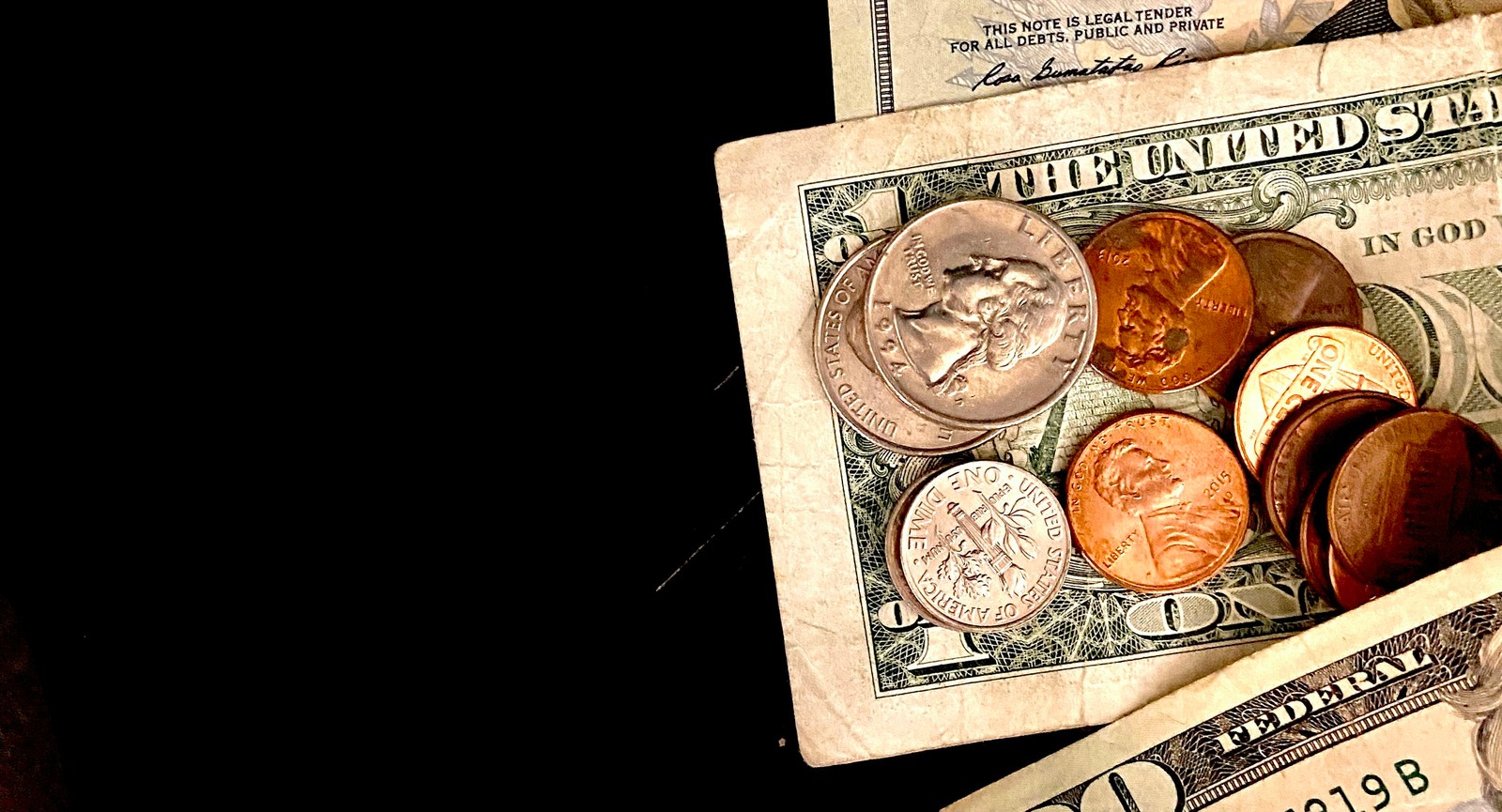
In the U.S., tipping is one of the most pronounced service customs. Tips of 15–20 % in restaurants are widely expected.
The ritual extends to taxis, bar staff, hotel porters, housekeeping, and more. Leaving little or no tip can be seen as extremely rude, since it suggests the service was truly poor.
Japan: It can be confusing or even rude!
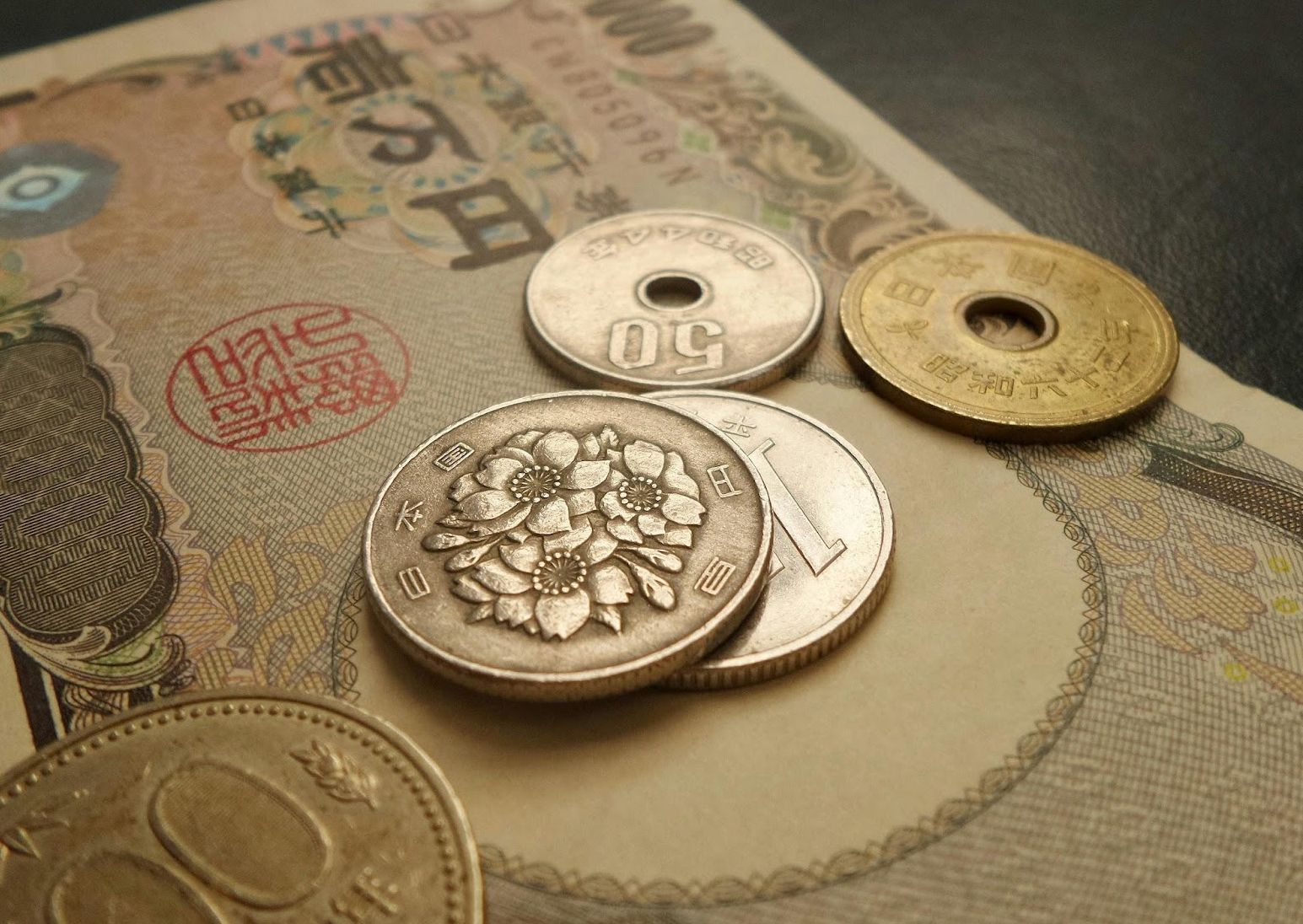 Image: Possessed Photography
In Japan, leaving a tip is decidedly not part of the culture. It can even offend people! That’s because excellent service is expected as standard, and workers take pride in doing their job well. Extra money would be a bit condescending!
In fact, if you leave tips at casual cafés or traditional restaurants, staff sometimes chase you down just to return them!
France: You can tip, but modestly
 Image: Roman Wimmers
In France, restaurant bills usually say service compris ("service included"), meaning a service charge is already baked into the price.
On special occasions or for truly exceptional service, leaving an extra 5–10 % or simply rounding up the bill is appreciated, but massive tips would surprise many French servers.
Italy: A little change is fine
 Image: Christian Dubovan
In Italy, even small tips are rare, but welcome! Locals often leave round-up change or a euro or two at cafés or gelaterias. Anything larger for exceptional service might catch them off guard.
Beyond that, you may see a coperto (cover charge) on your bill. That’s a small fee that isn’t a tip but rather covers bread and table service.
Germany: Be sure to hand it directly to servers
 Image: John Vid
What stands out in Germany is the interaction. Tipping is a matter of rounding up or adding a modest 5-10 % in restaurants, but rather than leaving cash on the table, Germans often tell the waiter the total they want to pay. For example, handing over €28 for a €25 bill.
United Kingdom: Only when service isn’t included
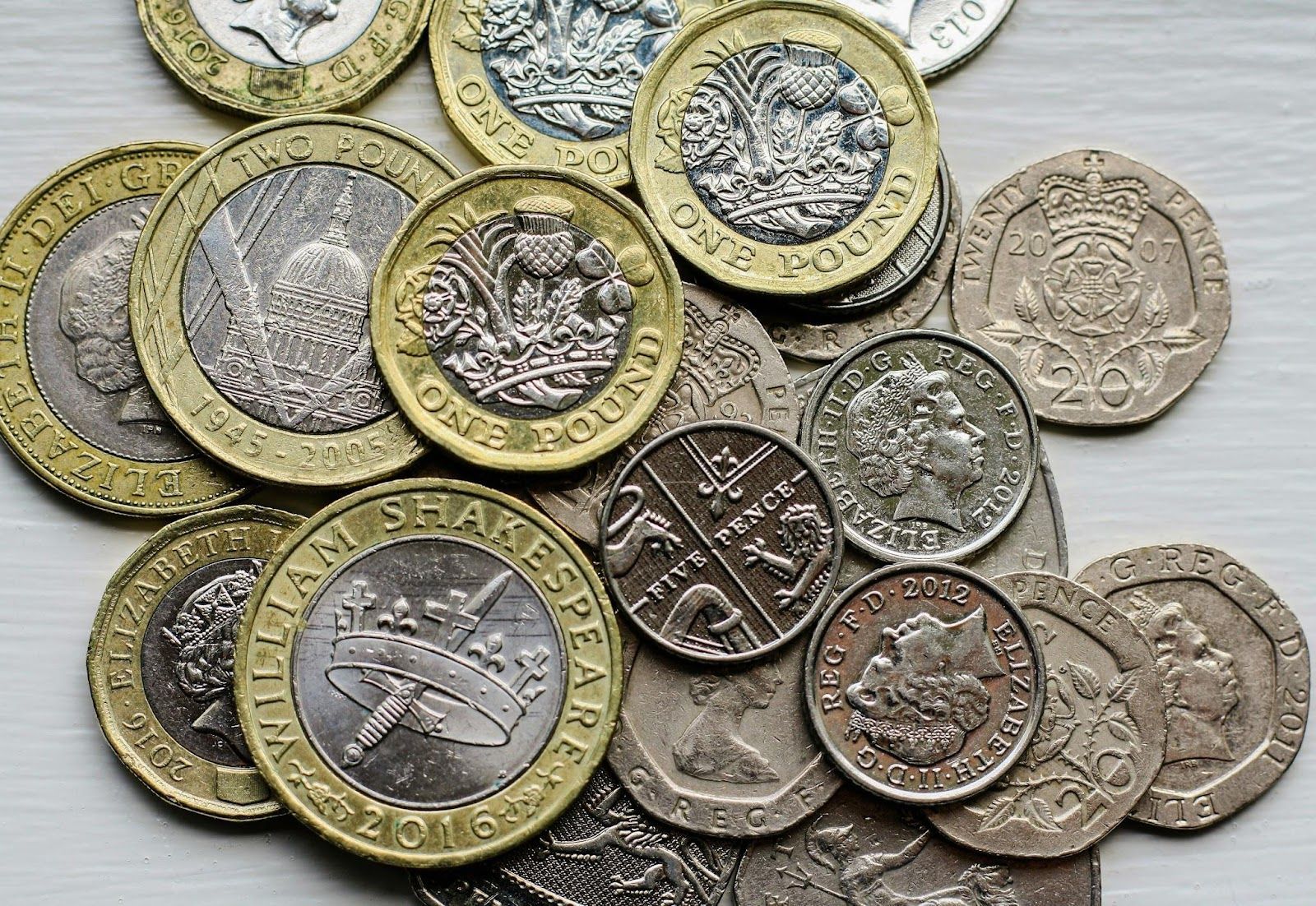 Image: Sarah Agnew
In the UK, tipping norms depend on the context. In many restaurants, a service charge (often around 10%) may be added automatically; if so, you don’t need to give more.
In pubs and casual spots, tipping is far less common, and bartenders don’t usually expect anything extra.
Australia & New Zealand: Usually goes for exceptional service
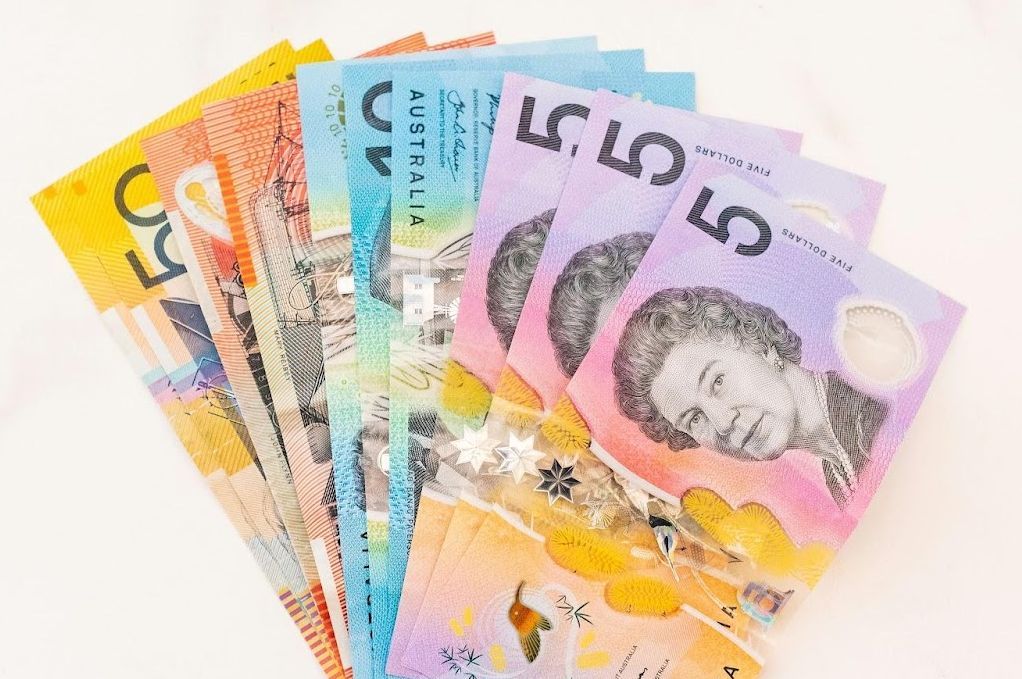 Image: Melissa Walker Horn
Down under, a little extra something is optional and often reserved for truly outstanding service. In restaurants, 5-10 % might be left for extraordinary meals; elsewhere, rounding up a taxi fare or leaving a small amount for hotel staff is appreciated, not expected.
China: Tipping is rare but slowly changing in big cities
 Image: Mitchell Luo
Tipping has long been uncommon in China. In most of the country, leaving extra money on the table isn’t seen as normal. That said, Western influence and booming tourism are beginning to shift things!
In upscale restaurants, five-star hotels, and tour settings, particularly in megacities like Beijing and Shanghai, a small tip might be expected, but in most establishments, it still isn’t the norm.
Brazil: Service is often included
 Image: Eduardo Soares
Many restaurants in Brazil include a 10 % service charge on the bill. Locals may leave a small tip beyond that for excellent service, and tour guides receive modest tips for a job well done. But, beyond that, tips aren't universally expected.
Mexico: "Propina" is expected
 Image: Marco Antonio Casique Reyes
In Mexico, tipping (or propina) is commonly expected by most services. It doesn’t have to be much, but you would be kind to give small amounts to staff, from waiters and bellboys to housekeeping employees.
India: It’s now modest, but growing
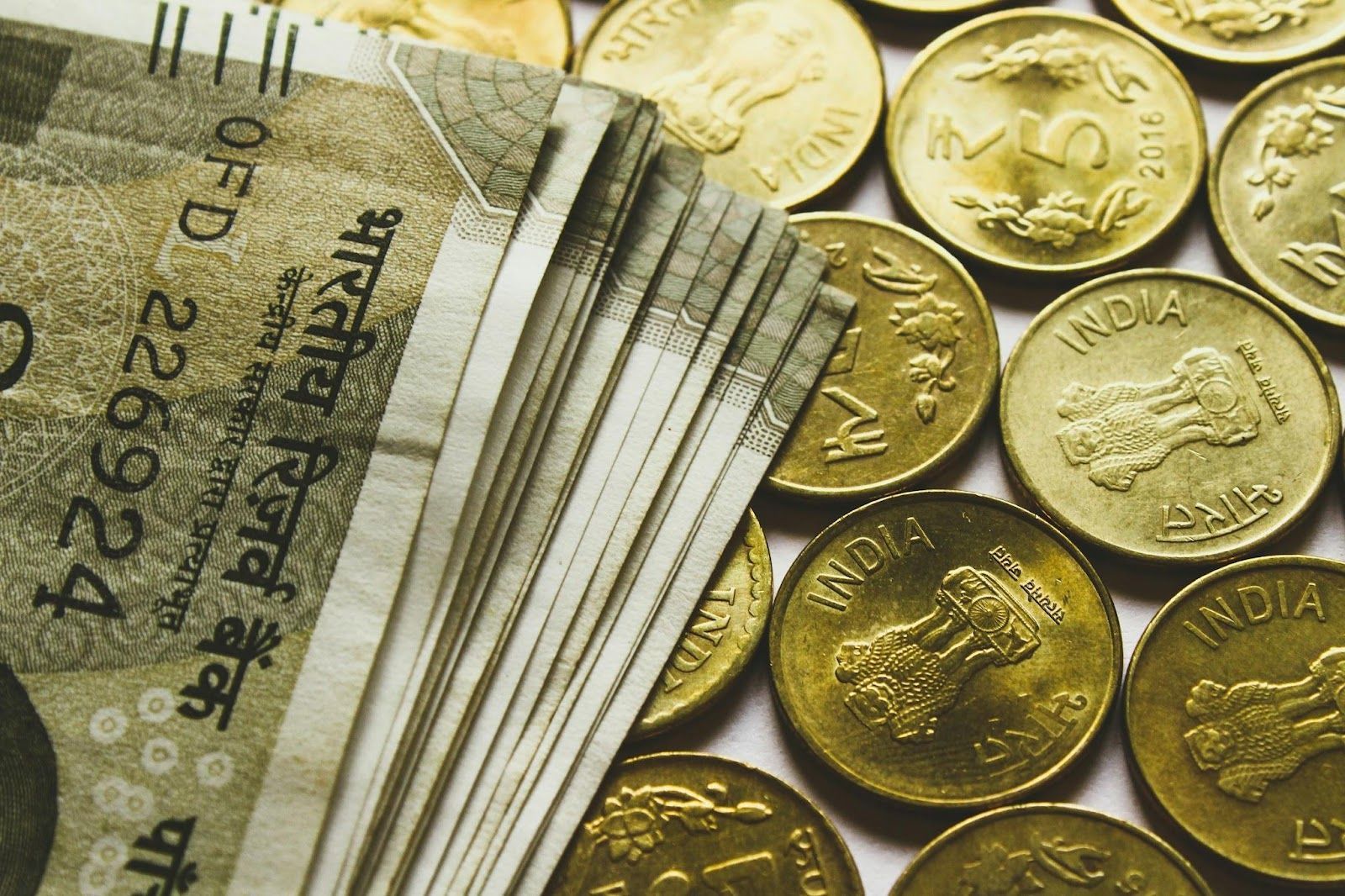 Image: rupixen
India’s tipping scene seems to combine tradition and tourism influence. In tourist areas, tipping has grown more expected, while more informal local spots may see casual rounding up of the bill.
These Blue Ridge overlooks will derail your entire road trip
 Geography
The best scenic overlooks along the Blue Ridge Parkway
Blue Ridge Parkway overlooks that make you pull over every mile
They call it "America's Favorite Drive" for good reason: 469 miles of stunning mountain views that make you question whether you'll ever actually reach your destination. With more than 200 overlooks tempting you to stop every few minutes, here are ten that absolutely deserve your brake pedal's attention.
Humpback Rocks Overlook (Milepost 6)
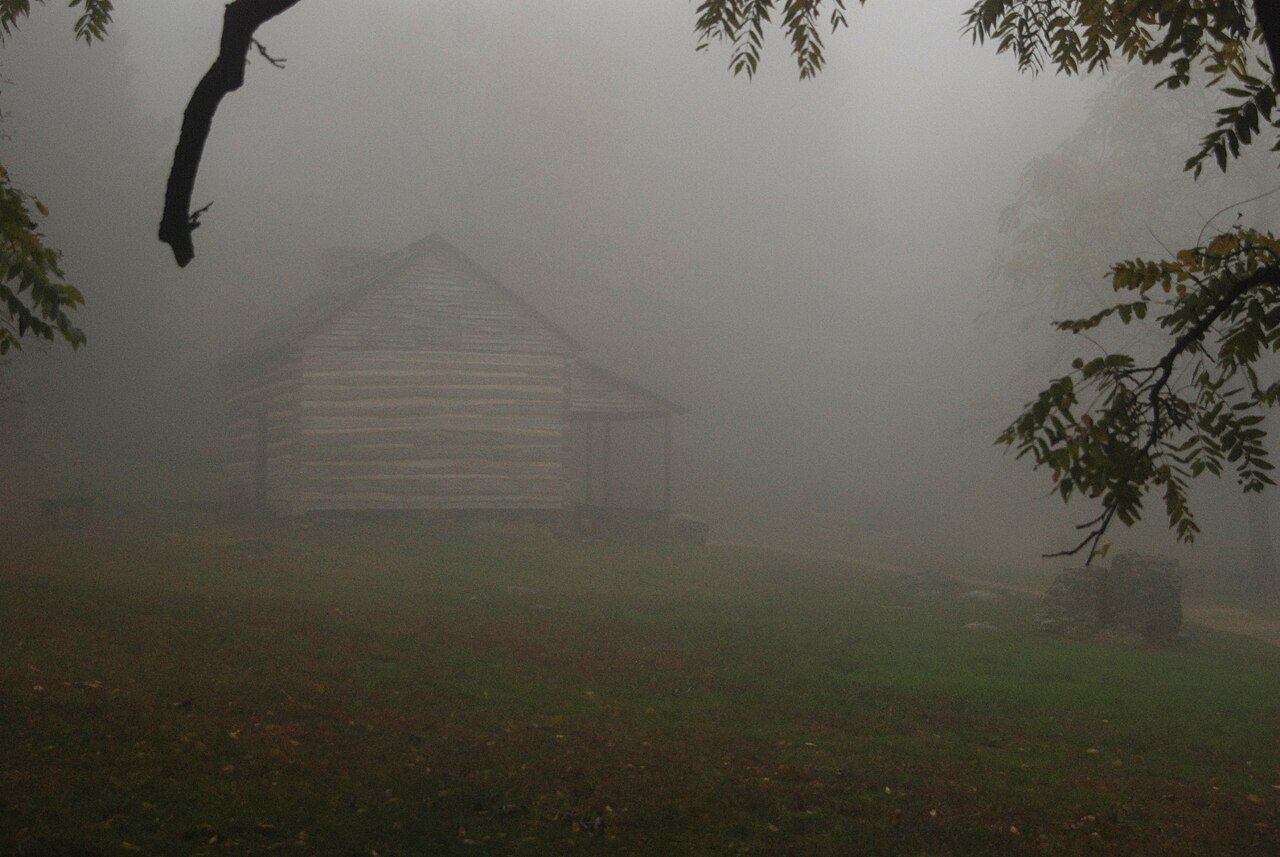 Image: olekinderhook, CC BY 3.0 <https://creativecommons.org/licenses/by/3.0>, via Wikimedia Commons
The overlook itself offers sweeping views of the Shenandoah Valley, but the real payoff comes if you tackle the steep trail to the actual rocks—a workout that'll remind you exactly how out of shape winter left you.
The 360-degree panorama from the top rewards your huffing and puffing with views stretching across multiple mountain ranges. On clear days, you can see forever. On foggy mornings, you'll feel like you've climbed into a cloud, which is equally magical, if less photogenic.
Thunder Ridge Overlook (Milepost 74.7)
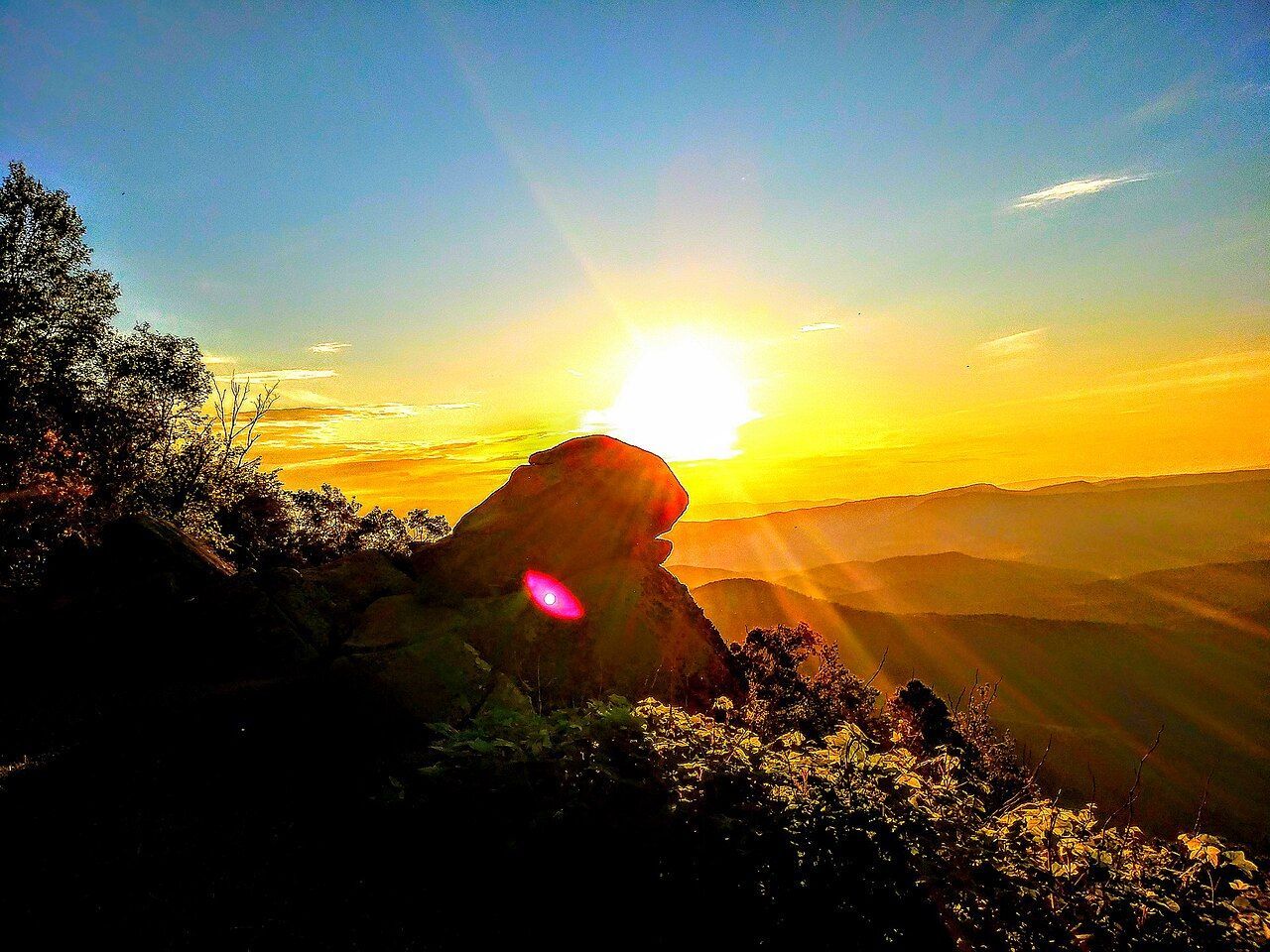 Image: Karyngardner85, CC BY-SA 4.0 <https://creativecommons.org/licenses/by-sa/4.0>, via Wikimedia Commons
Sometimes an overlook requires a little effort, and Thunder Ridge delivers both the effort and the payoff. A short quarter-mile trail loops you to viewing areas where the mountains stack up like waves frozen mid-crash. The name isn't just for show: afternoon thunderstorms love this ridge, adding drama to an already theatrical landscape.
The elevation here hits 3,485 feet, high enough that you'll feel it in your ears and your camera roll. Spring wildflowers carpet the trail, while fall transforms the view into a postcard-perfect sea of color.
Roanoke Mountain Overlook (Milepost 120.3)
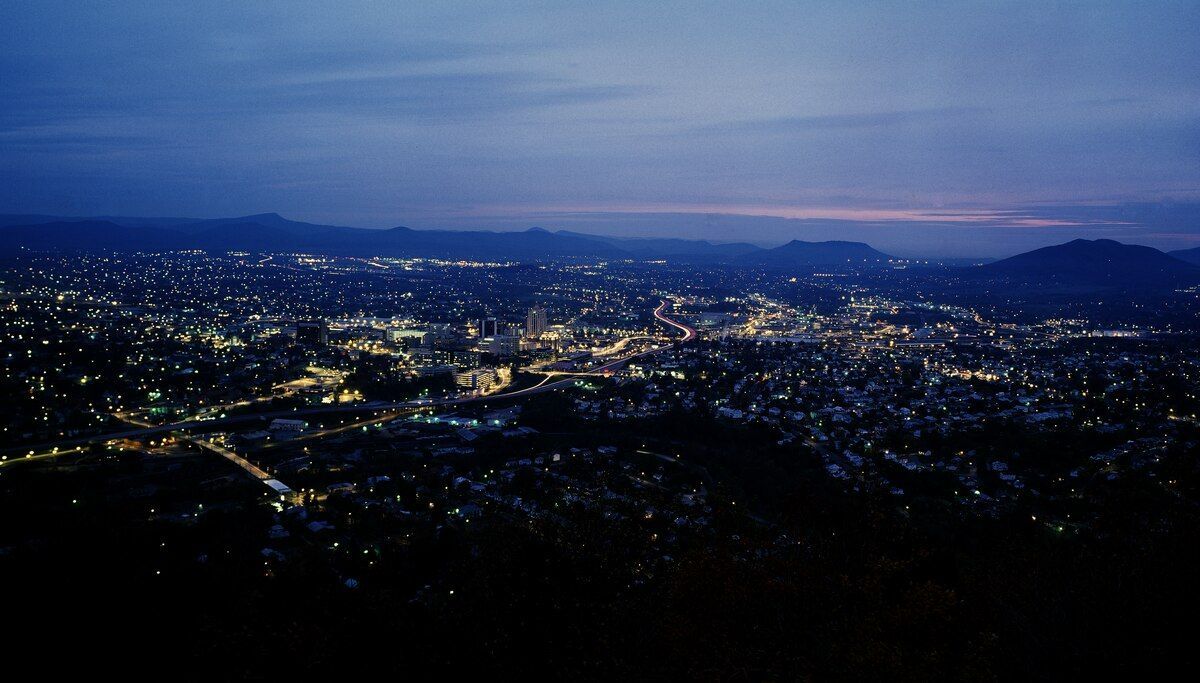 Image: Carol M. Highsmith, Public domain, via Wikimedia Commons
This one's sneaky—the main parkway overlook is nice, but the real treasure requires taking a separate four-mile loop road to the summit. Two overlooks at the top face east and west, making this a sunrise-or-sunset, pick-your-poison situation. Pro tip: the road is now closed to vehicles, so bring your bike or walking shoes.
The views from up here make the two-mile climb worth every step. Looking east, you'll catch the Roanoke Valley spread out below. Looking west, it's all mountains, all the time.
Mabry Mill (Milepost 176.1)
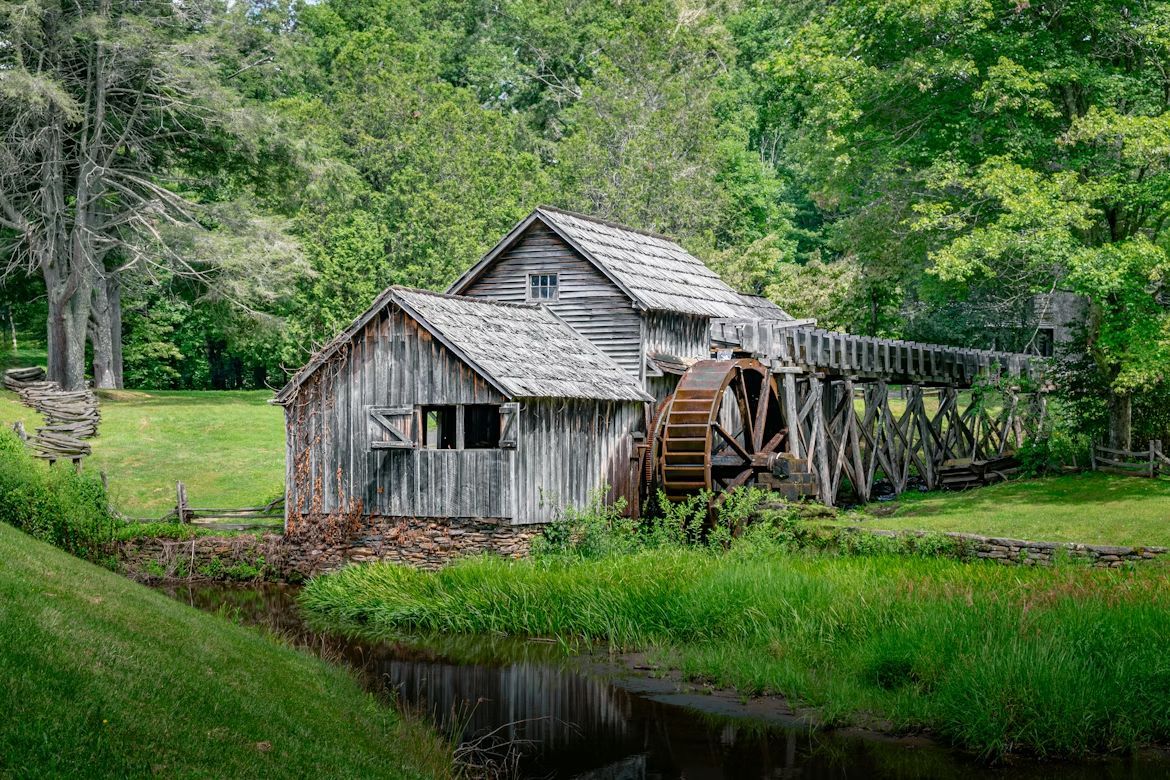 Image: Daniel Shapiro
Built in 1910, the mill and its water wheel create a scene so picturesque it almost seems fake. Arrive in the early morning, when mist hovers over the water, or in the fall, when the surrounding trees explode in color.
The mill still operates, demonstrating old-time skills like blacksmithing and woodworking. It's crowded for good reason: this might be the most photographed spot on the entire Parkway, and once you see it, you'll understand why.
Price Lake Overlook (Milepost 296.7)
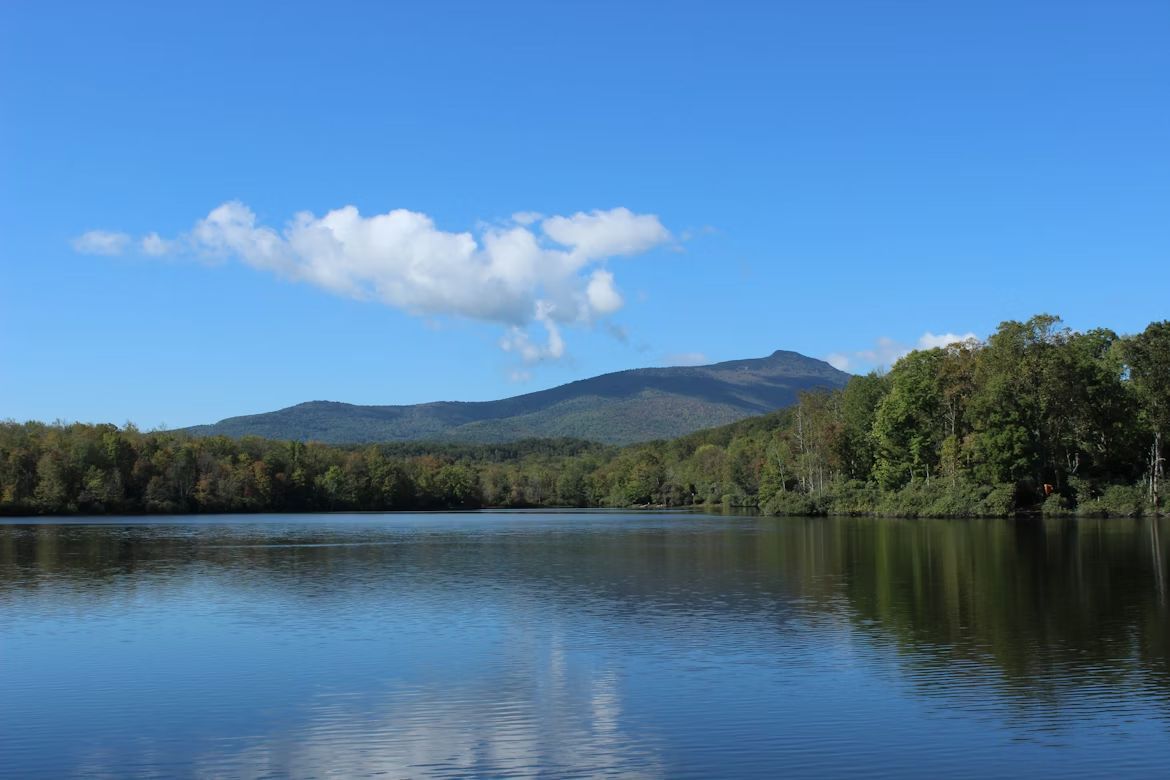 Image: Don Shetterly
The overlook gives you the big picture, but the 2.7-mile loop trail around the shoreline offers constantly changing perspectives. Rent a kayak if you're feeling ambitious—no swimming allowed, but paddling works just fine.
The lake reflects whatever mood the sky is in, from mirror-calm mornings to moody overcast afternoons. Wildflowers bloom along the trail in spring and summer, while fall turns the surrounding forest into a riot of reds and golds. It's an easy walk that feels miles away from anything resembling civilization.
Linn Cove Viaduct (Milepost 304.4)
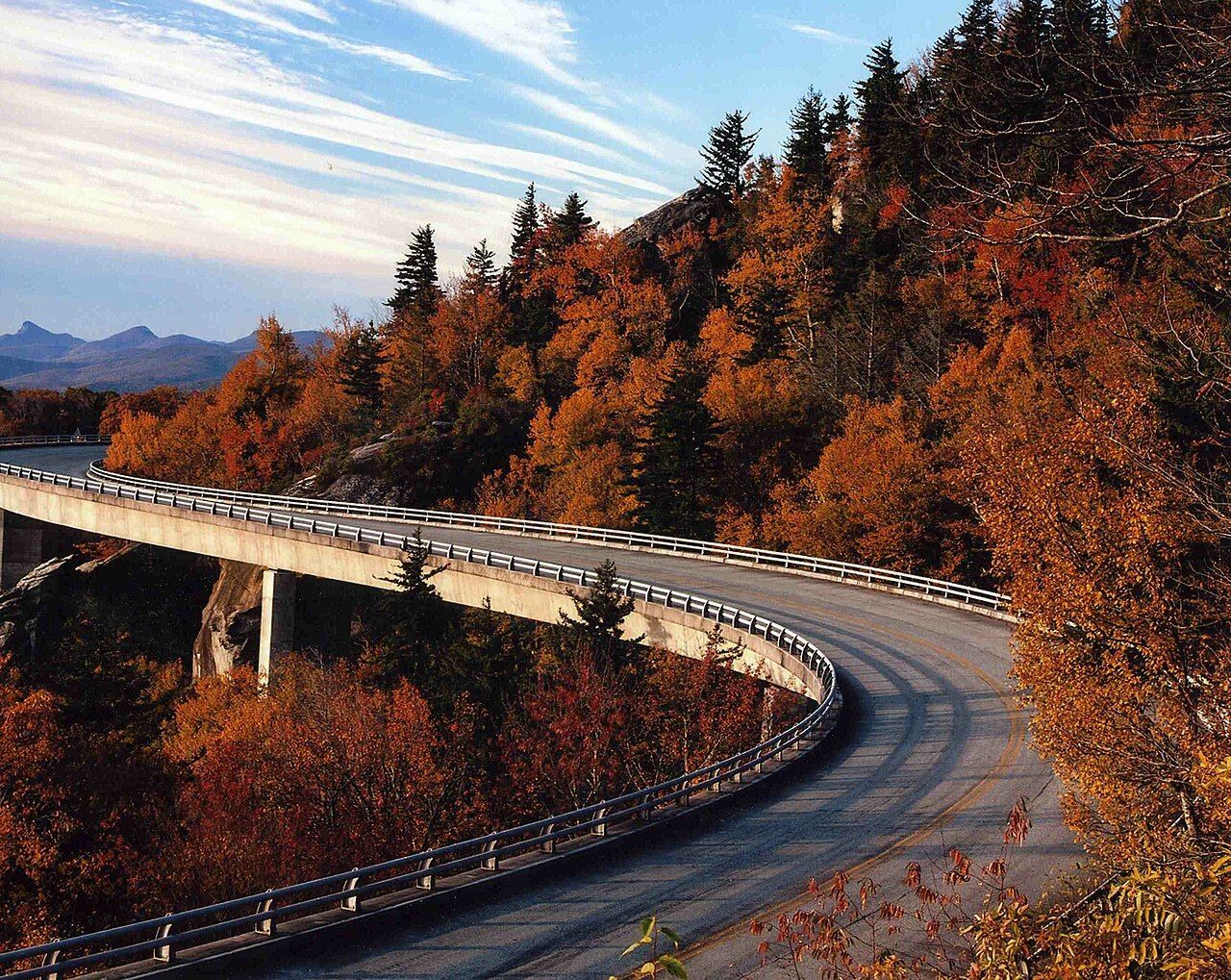 Image: Goins, CC BY 2.0 <https://creativecommons.org/licenses/by/2.0>, via Wikimedia Commons
The viaduct curves around Grandfather Mountain like a concrete ribbon, completed in 1987 as the final piece of the Parkway. Multiple overlooks and the Tanawha Trail offer different perspectives on this S-curved wonder, which somehow looks delicate despite weighing thousands of tons.
The best view comes from hiking a short section of the Tanawha Trail to see the viaduct from below, where you can appreciate how it seems to float above the mountainside. It's especially stunning when fog rolls through, making the road disappear into the clouds.
Rough Ridge Overlook (Milepost 302.8)
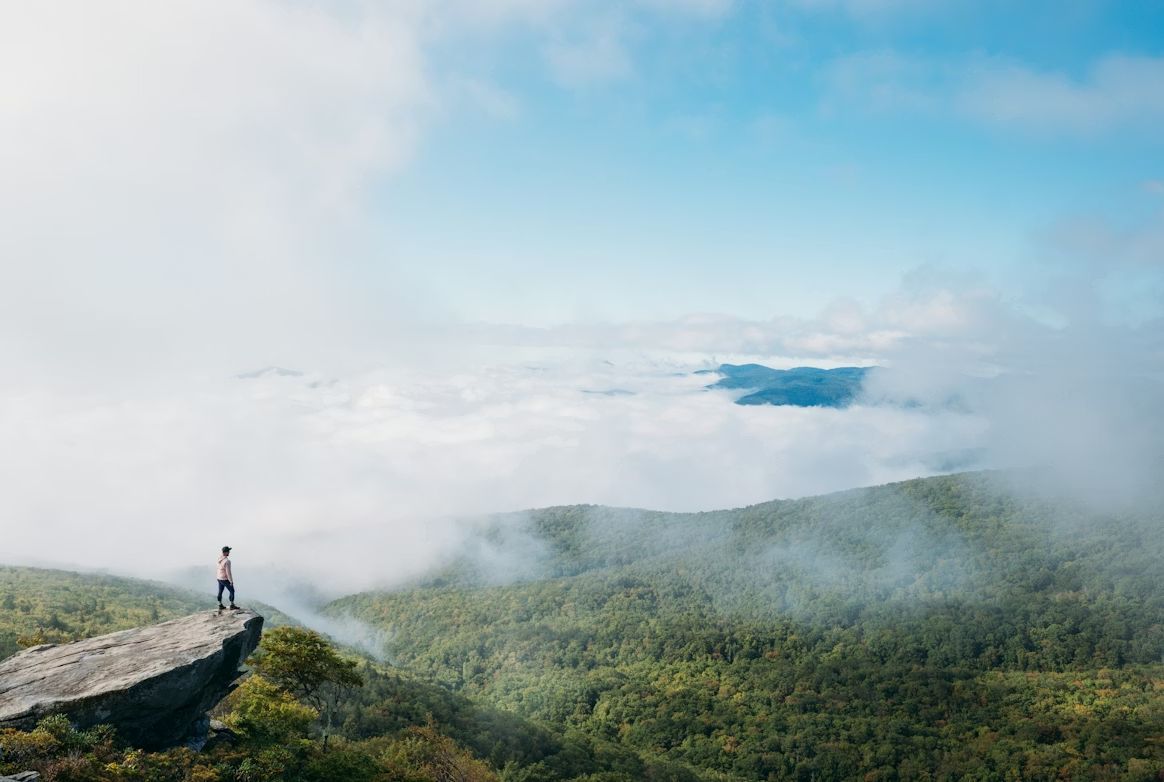 Image: MJ Tangonan
A quick half-mile uphill hike delivers you to wooden boardwalks and viewing platforms that feel like they're suspended in midair. The panoramic views take in Grandfather Mountain, the Linn Cove Viaduct, and layer upon layer of mountains fading into the blue distance.
Fall brings leaf-peepers by the busload, and you'll understand why when the entire landscape transforms into a patchwork quilt of colors. Arrive early or late to avoid the crowds, or embrace the chaos and make friends with fellow view admirers.
Devil's Courthouse (Milepost 422.4)
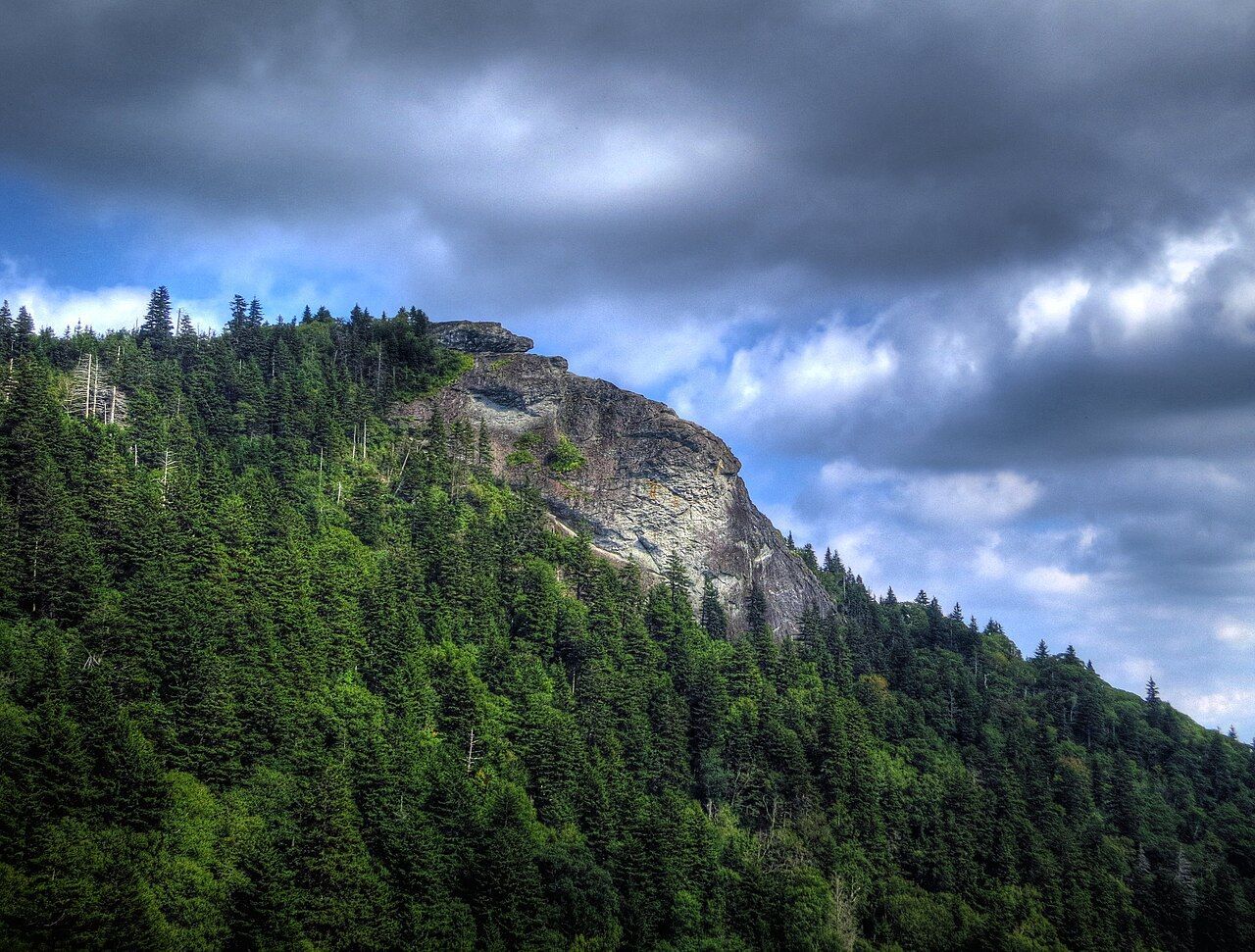 Image: Kadoka1, CC BY-SA 3.0 <https://creativecommons.org/licenses/by-sa/3.0>, via Wikimedia Commons
Legend says the Cherokee devil Judaculla held court in a cave beneath this cliff, which explains the name and adds some supernatural spice to your overlook stop. The paved half-mile trail to the summit gains about 150 feet in elevation—not terrible unless you're already winded from eating too many BBQ samples in Asheville.
At 5,720 feet, the views can span multiple states on clear days. The rocky outcrop at the top feels appropriately dramatic for a place named after a devil's courtroom. Sunset here is spectacular, but bring a flashlight for the walk back down, unless you want to test whether Judaculla actually hangs out here after dark.
Waterrock Knob (Milepost 451.2)
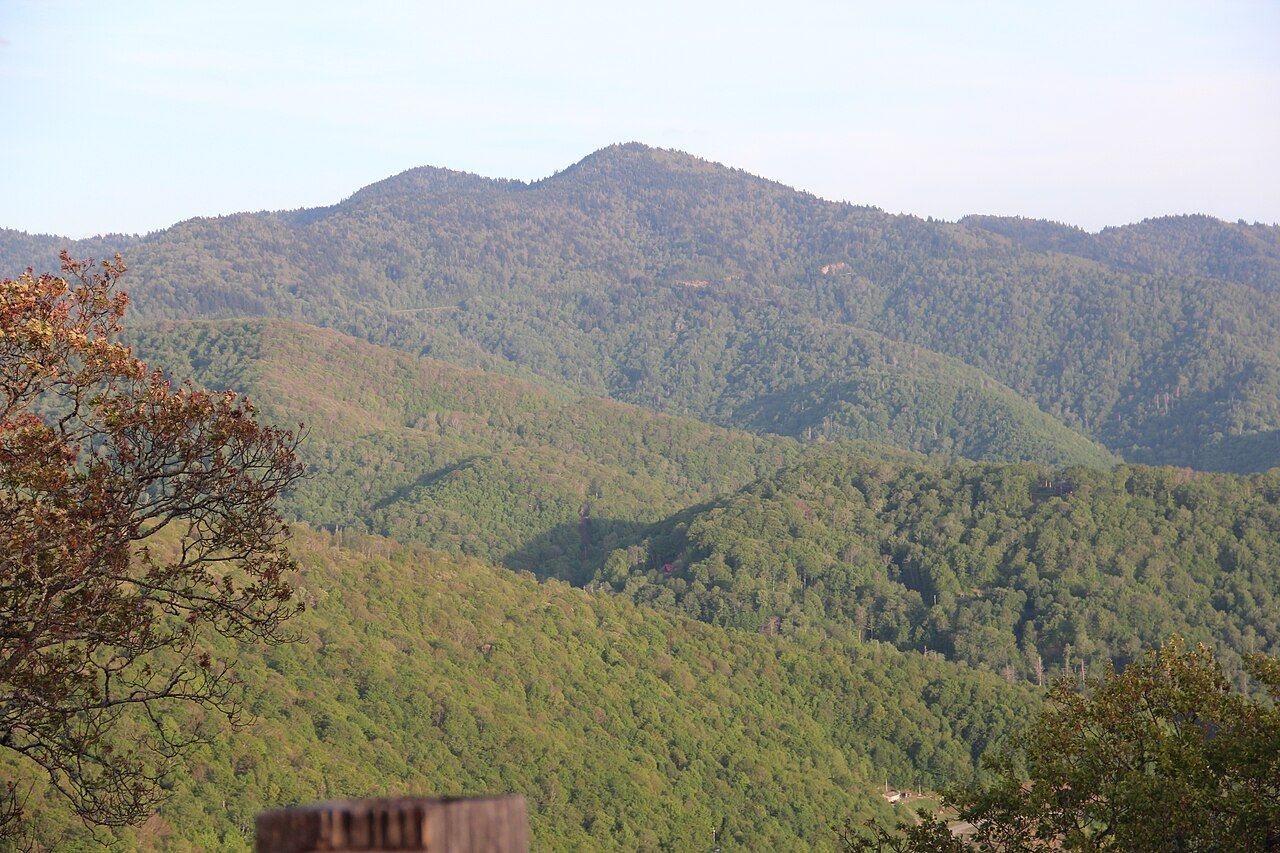 Image: Thomson200, CC0, via Wikimedia Commons
At 6,292 feet, this is one of the highest overlooks on the Parkway, and the view lets you know it. A steep but paved trail climbs to the summit, where panoramic views of the Great Smoky Mountains can stretch up to 50 miles on clear days.
The visitor center at the base offers exhibits about mountain culture and restrooms, both useful amenities at this elevation. Sunrise and sunset photographers love this spot, turning the parking lot into a tripod convention. The temperature drops noticeably up here, so bring a jacket even in summer, or you'll be that person shivering in shorts.
Graveyard Fields (Milepost 418.8)
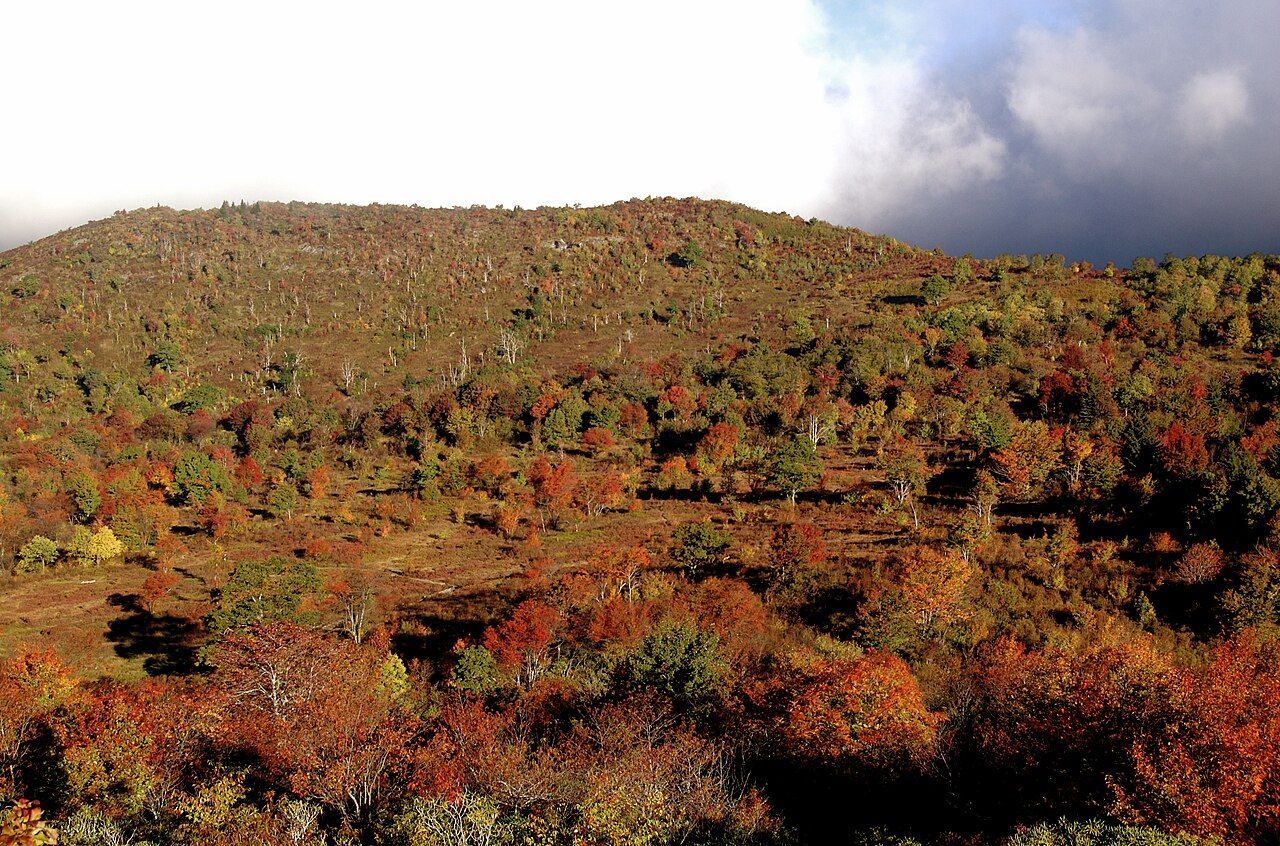 Image: Tsimmons at English Wikipedia, CC BY 3.0 <https://creativecommons.org/licenses/by/3.0>, via Wikimedia Commons
Unlike most overlooks that show you distant mountain ranges, Graveyard Fields looks down into a peculiar valley named for the tree stumps that once resembled gravestones after a massive fire. A popular loop trail descends into the fields and visits waterfalls, making this a hike-and-overlook combo that kills two scenic birds with one stop.
The area blooms with wildflowers in summer and explodes with blueberries in late summer. Fall brings vibrant colors to the low shrubs and grasses, creating a tapestry that's completely different from the forested overlooks.
Keep wandering
There’s always
more to explore
 General
10 travel 'rules' you can finally stop following
5 min.
Read Now
 Landmarks

In these places, you'd better think twice before snapping that picture
5 min.
Read Now
Which driving habits waste the most fuel? 12 fuel-saving tips explained
7 min.
Read Now
Secrets about New York City most Americans don't know
4 min.
Read Now