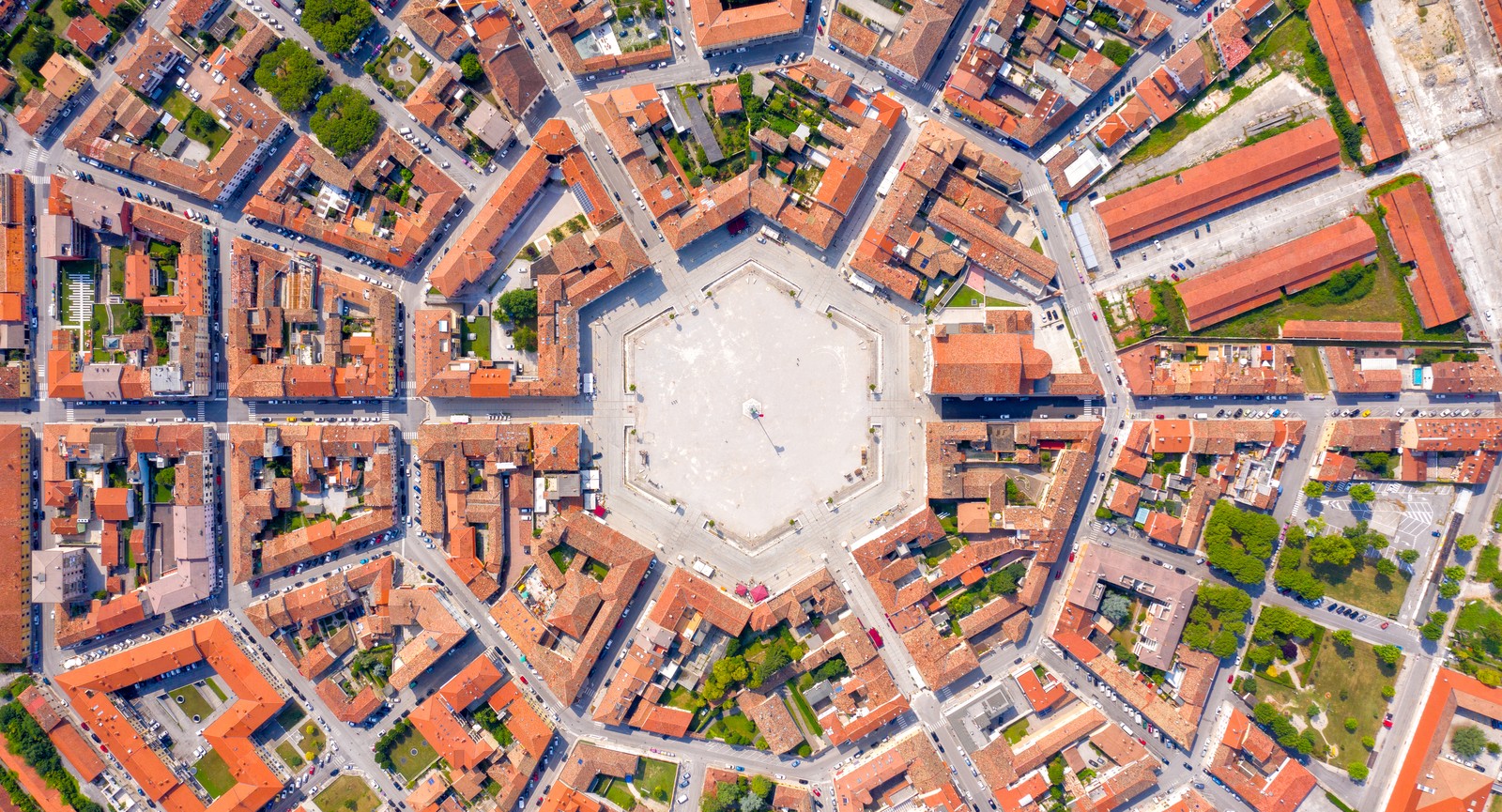
Ten amazing sights you can only fully appreciate from above
 Landmarks
Bird’s-eye point of view
Ten amazing sights you can only fully appreciate from above
When we explore the world on foot, our view is limited to what’s right in front of us. But once you take to the skies, Earth reveals an entirely different perspective. From ancient geoglyphs to mazes and agricultural wonders, some of the most mind-blowing sights are invisible from ground level. Let’s take a bird’s-eye tour of 10 incredible sceneries whose true potential can only be appreciated from above.
Nazca Lines, Peru
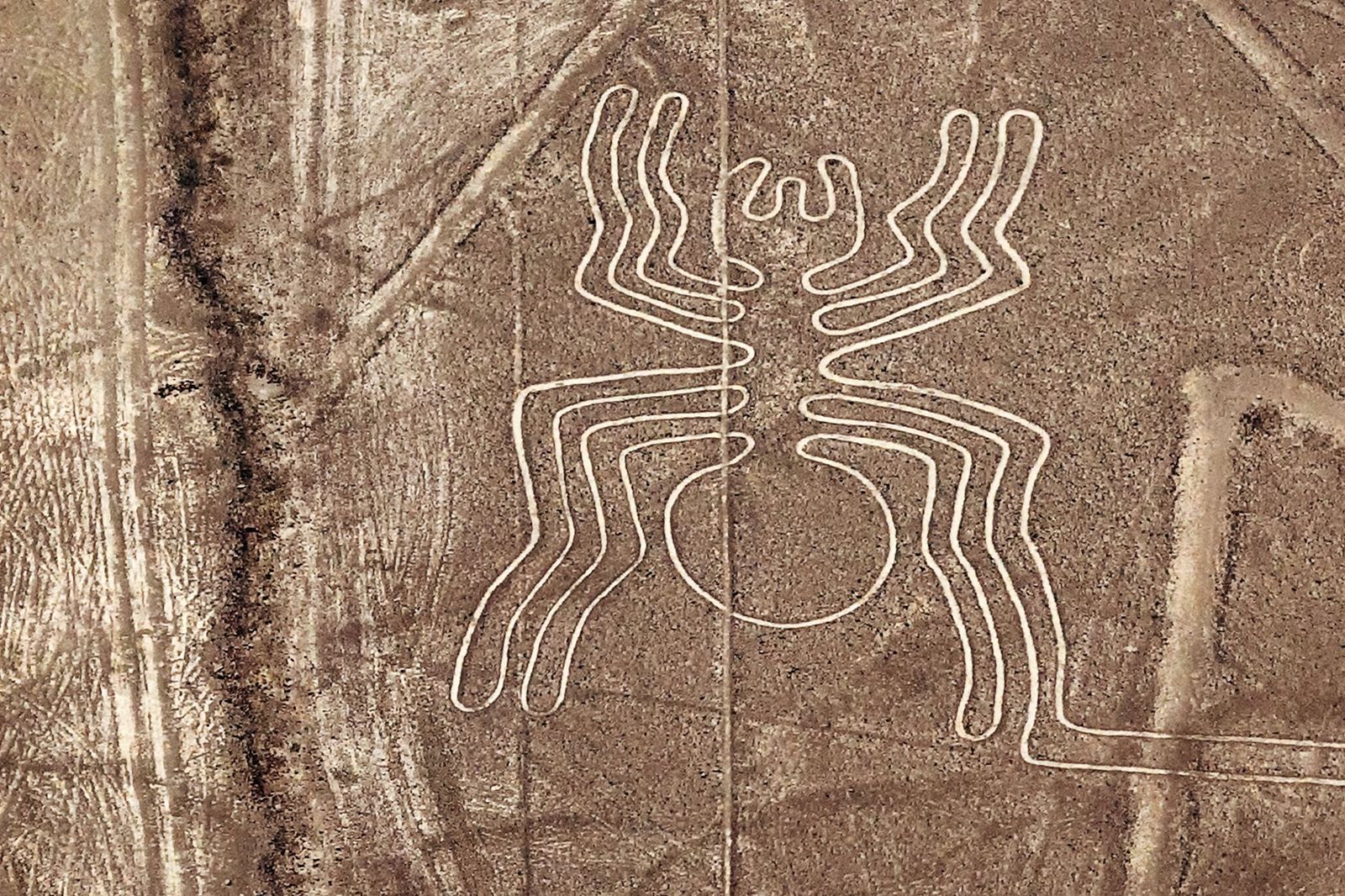
Walking across the plains of southern Peru, you might think you are stepping on ordinary desert gravel. But up in the air, the arid landscape transforms into a canvas of prehistoric art known as the Nazca Lines.
Created by the ancient Nazca culture 2,000 years ago, these big geoglyphs depict geometric lines, giant hummingbirds, spiders, and monkeys. Because the designs span hundreds of feet across, it’s impossible to see them from the ground; they reveal their shapes only to pilots and drone cameras. Archaeologists believe these drawings were carved into the desert floor as offerings during religious rituals to pray to the gods for rain and crop fertility.
Circular crops, Colorado, USA
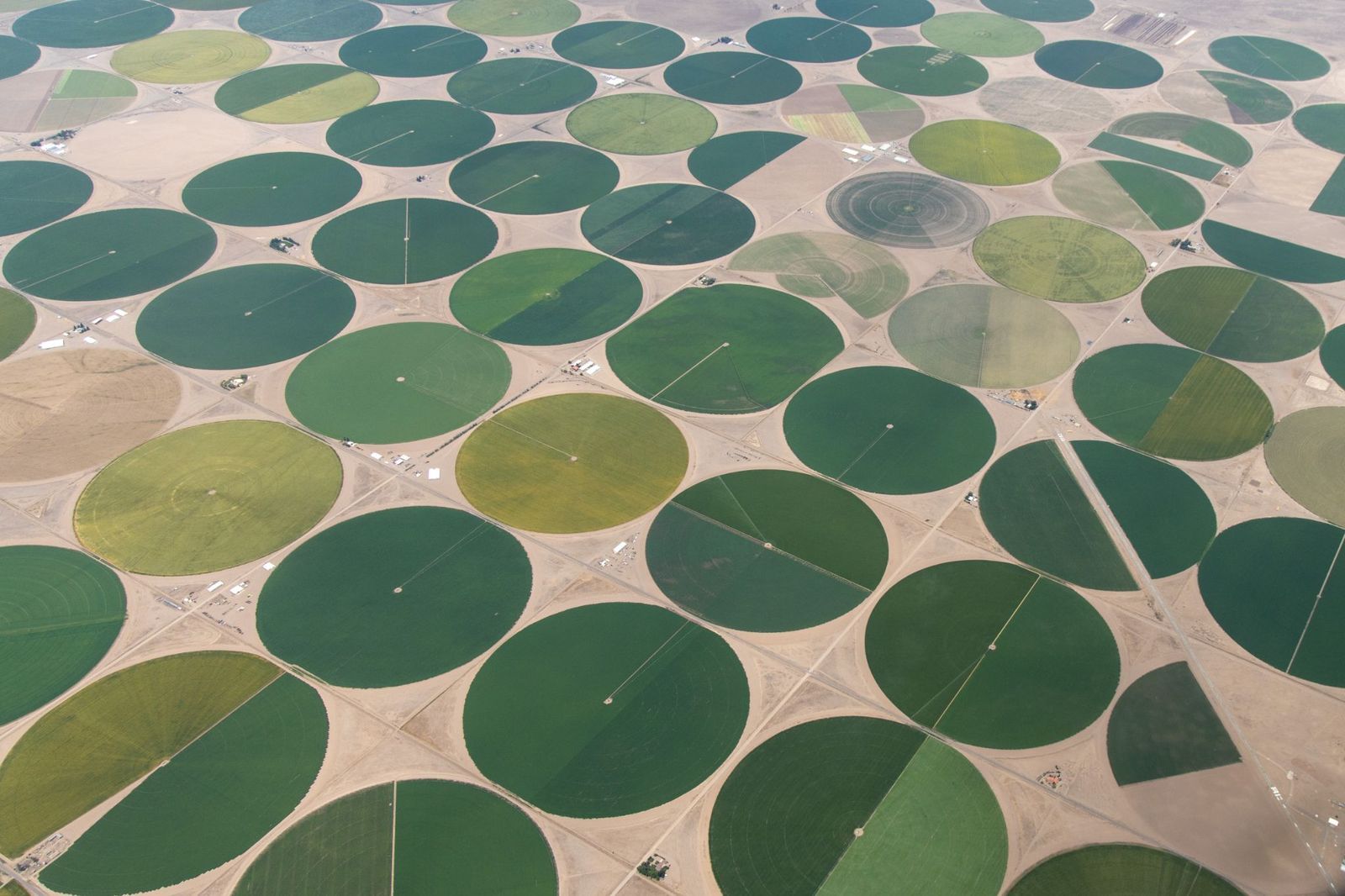
If you fly over the plains of Colorado, you might be able to see green polka dots scattered across the landscape. These circular patterns are actually agricultural fields created through a clever technique called center-pivot irrigation.
This method consists of a line of wheeled sprinklers that slowly rotate around a central water source, spraying crops in a perfect circle. The result is not only a clever farming technique but also creates stunning aerial views.
Lotus Temple, New Delhi, India
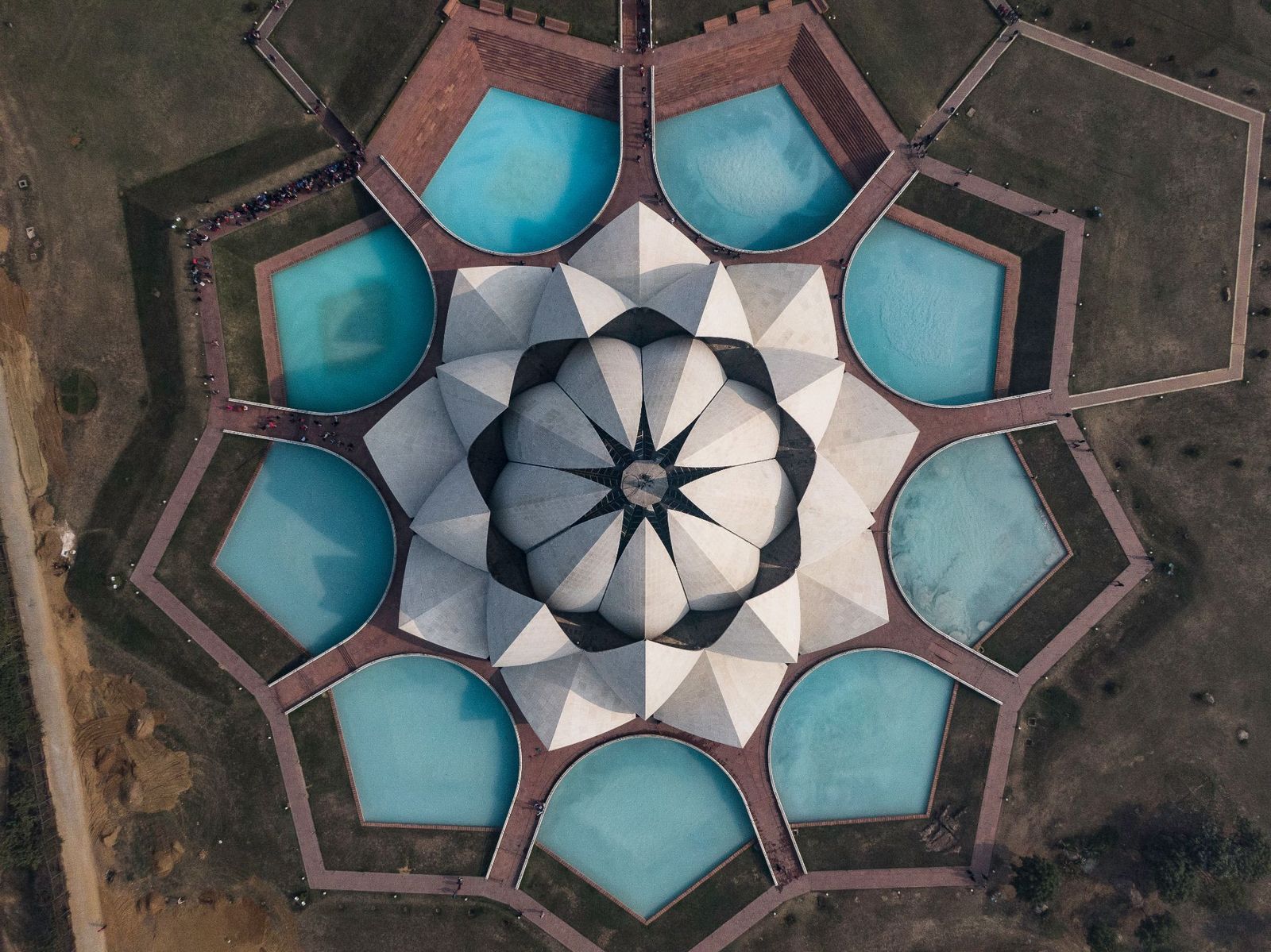
New Delhi’s Lotus Temple is an architectural masterpiece designed to resemble a blooming white flower. Composed of 27 marble "petals" arranged in clusters, the Baháʼí House of Worship looks stunning to visitors walking through its manicured gardens.
Yet, an aerial perspective unlocks a whole new level. From above, you can see the nine sacred pools surrounding the structure, reflecting the petals and laying out a precise design that honors the spiritual significance of the number nine.
Masone Labyrinth, Fontanellato, Italy
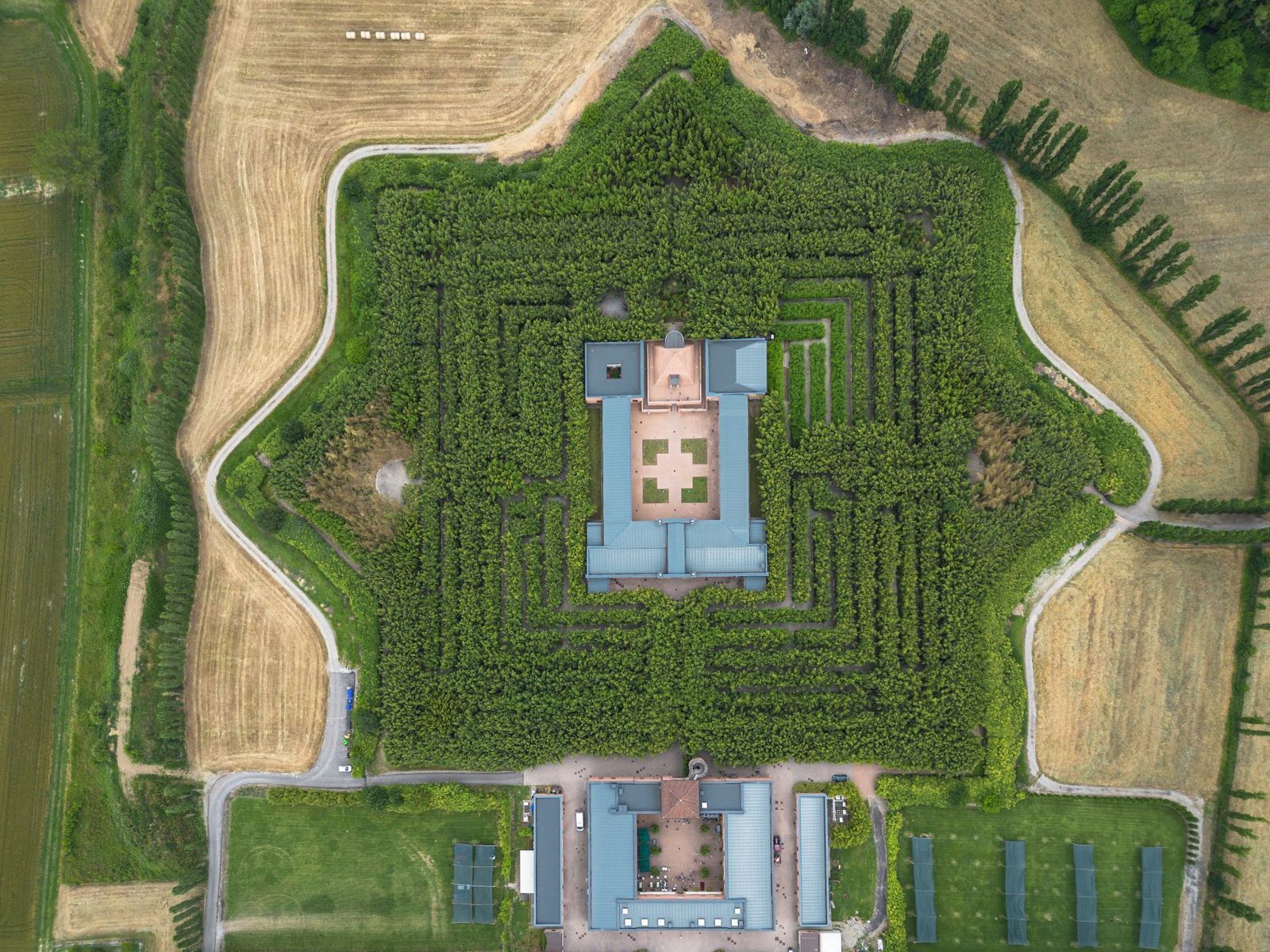
Italy is famous for its Renaissance architecture, but hidden in the town of Fontanellato, near Parma, is a modern marvel of botanical design: the Masone Labyrinth. Spanning 20 acres, it holds the title of the world’s largest bamboo maze, built using hundreds of thousands of bamboo plants.
If you wander its leafy pathways, the labyrinth can be confusing. However, an overhead view reveals its breathtaking design. The forest is laid out in a precise, geometric eight-pointed star shape, centered around a golden pyramid.
Palm Jumeirah, Dubai
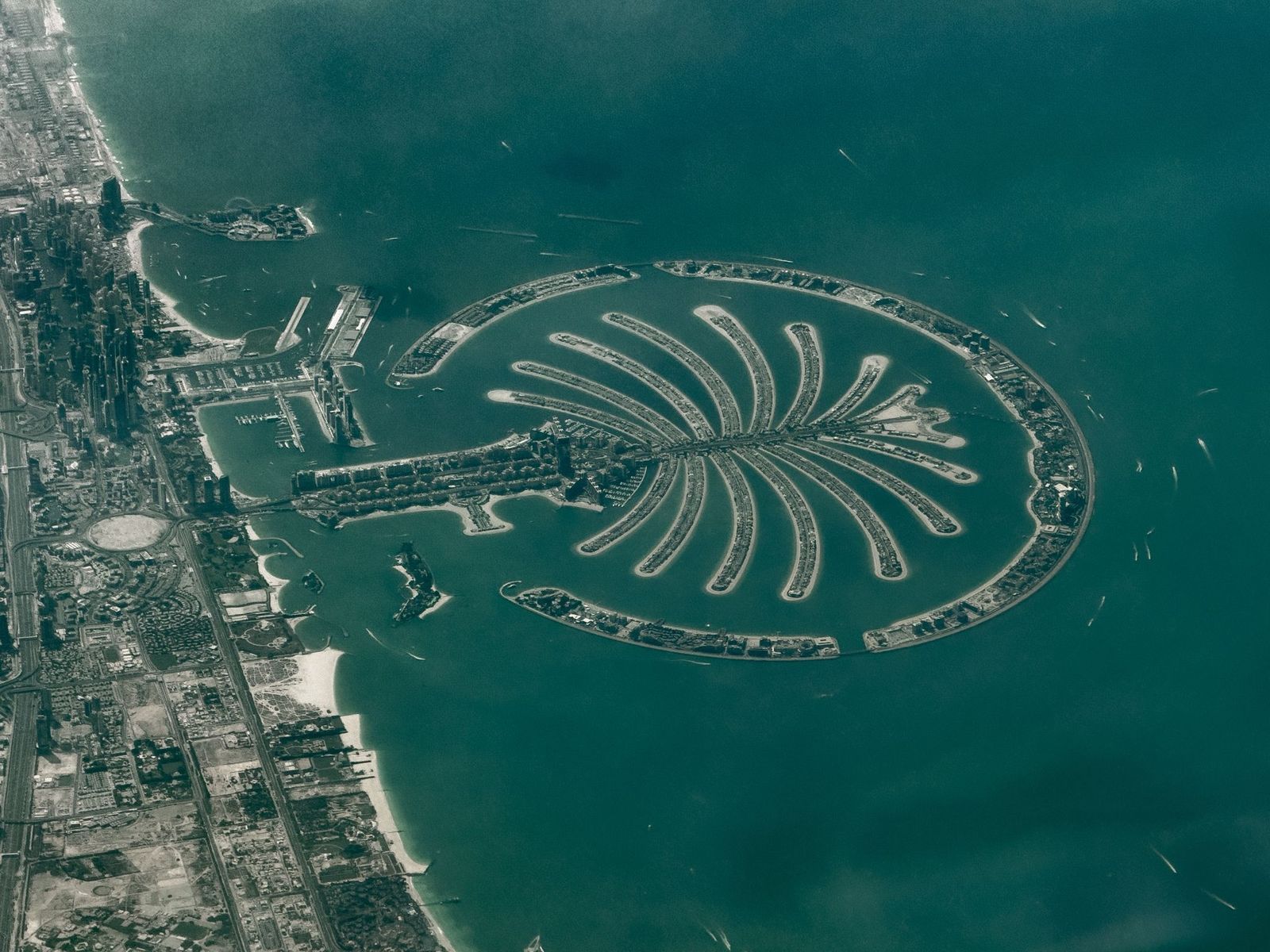
Built from millions of cubic yards of sand dug from the Persian Gulf floor, this artificial island complex in Dubai is home to multi-million-dollar villas and luxury hotels.
From the ground, Palm Jumeirah feels like any other upscale neighborhood. But from the sky, the project’s striking design is revealed: the entire development is shaped like a palm tree.
Uffington White Horse, Oxfordshire, England, UK
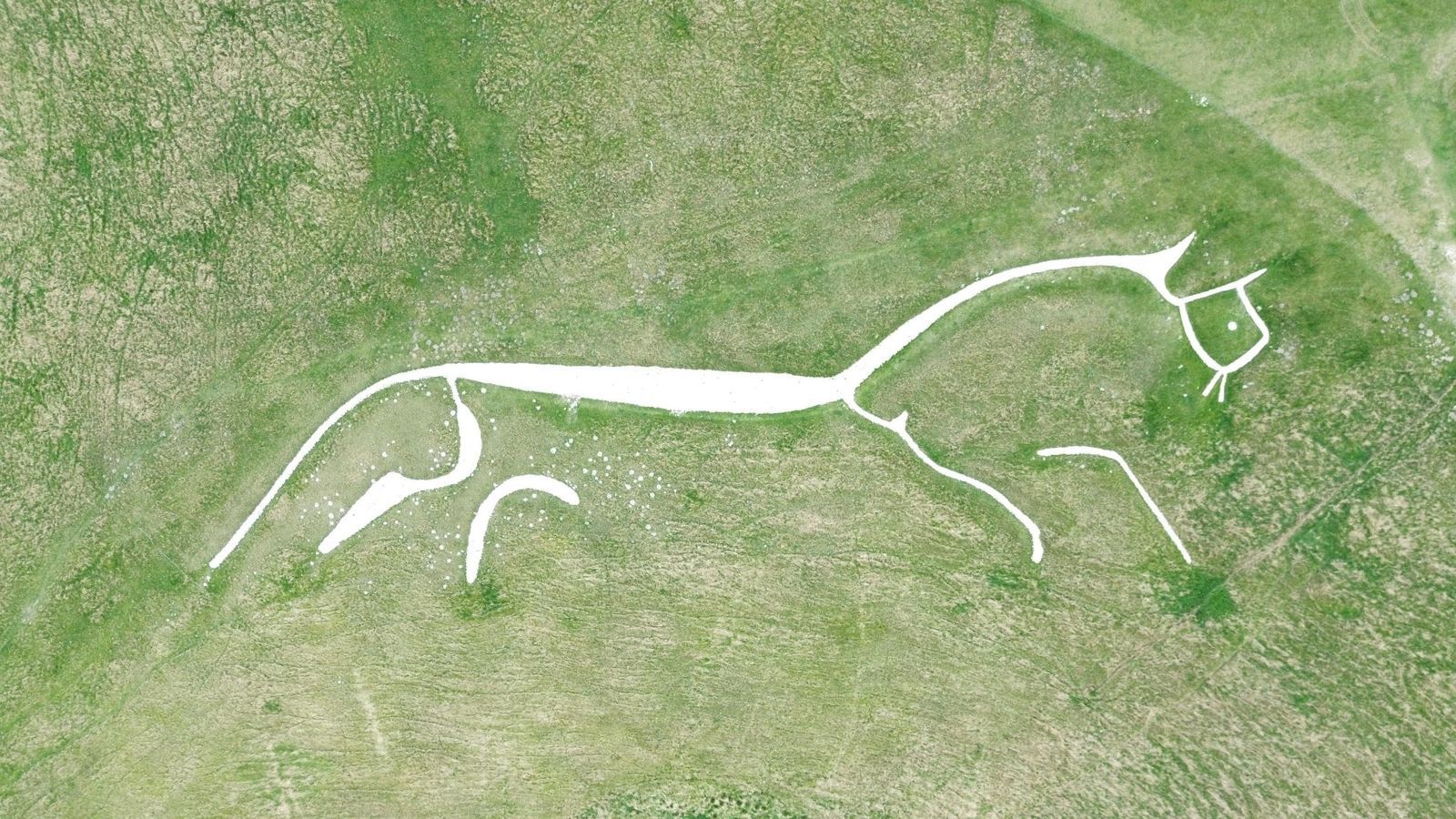
Carved into the chalk hills of Oxfordshire, the Uffington White Horse is a prehistoric piece that has baffled historians for centuries. Believed to date back 3,000 years to the Bronze Age, the figure measures 374 feet long.
If you stand next to it, it looks like nothing more than a random white chalk ditch. But when viewed from the sky, the lines form a horse galloping across the English countryside.
Galesnjak, Croatia
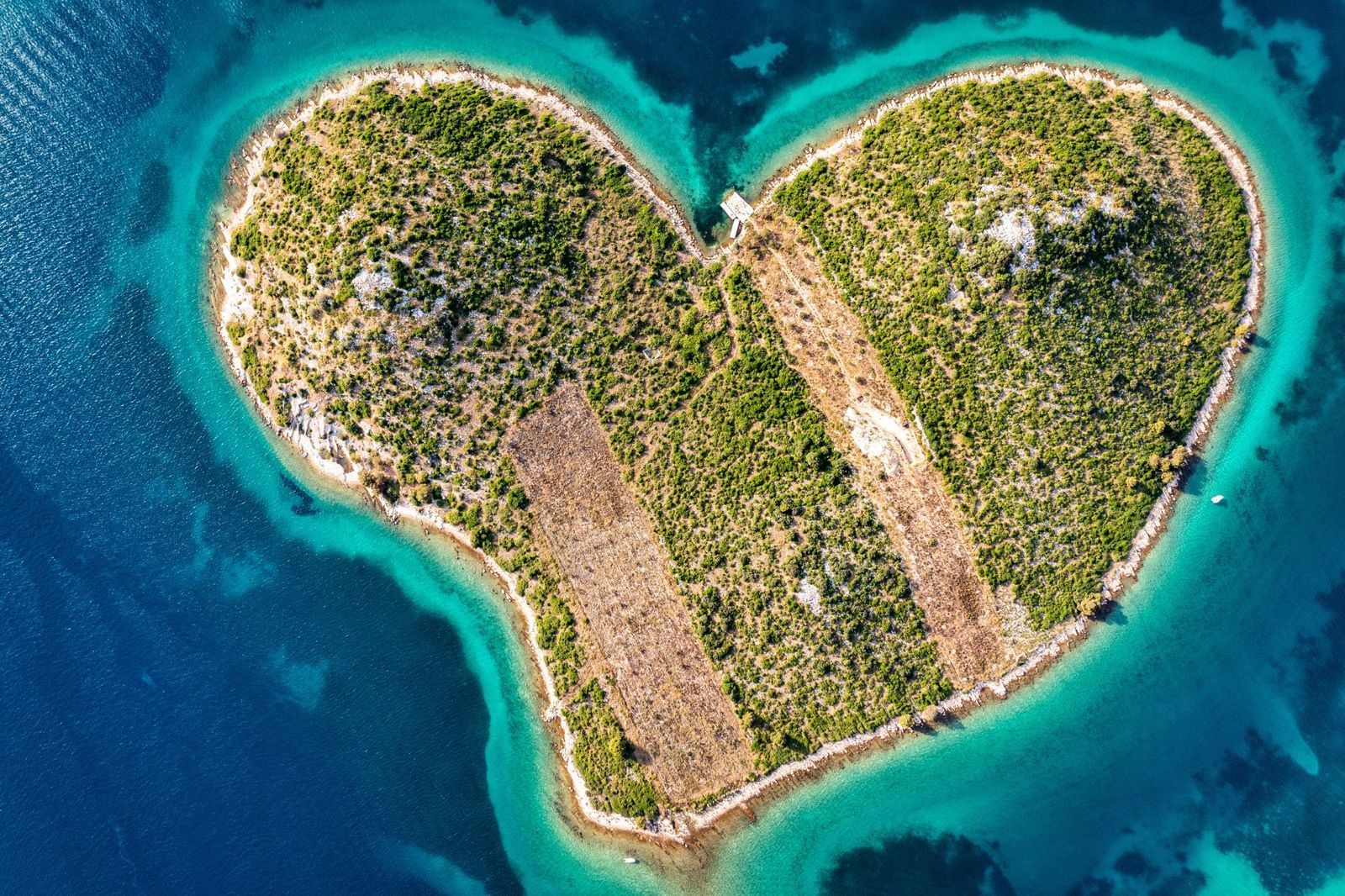
Off the coast of Croatia sits an uninhabited island that has captured the internet’s imagination: Galesnjak, affectionately nicknamed "Lover's Island." Measuring only about 164 feet wide, this landmass is full of ancient olive trees and prehistoric burial mounds. For years, nobody paid attention to what was considered just an ordinary lump in the Adriatic Sea.
It wasn’t until satellite mapping and modern aerial photography that the world noticed its perfectly defined heart shape, turning it into an accidental romantic icon.
Our Lady of Almudena Cemetery, Madrid, Spain
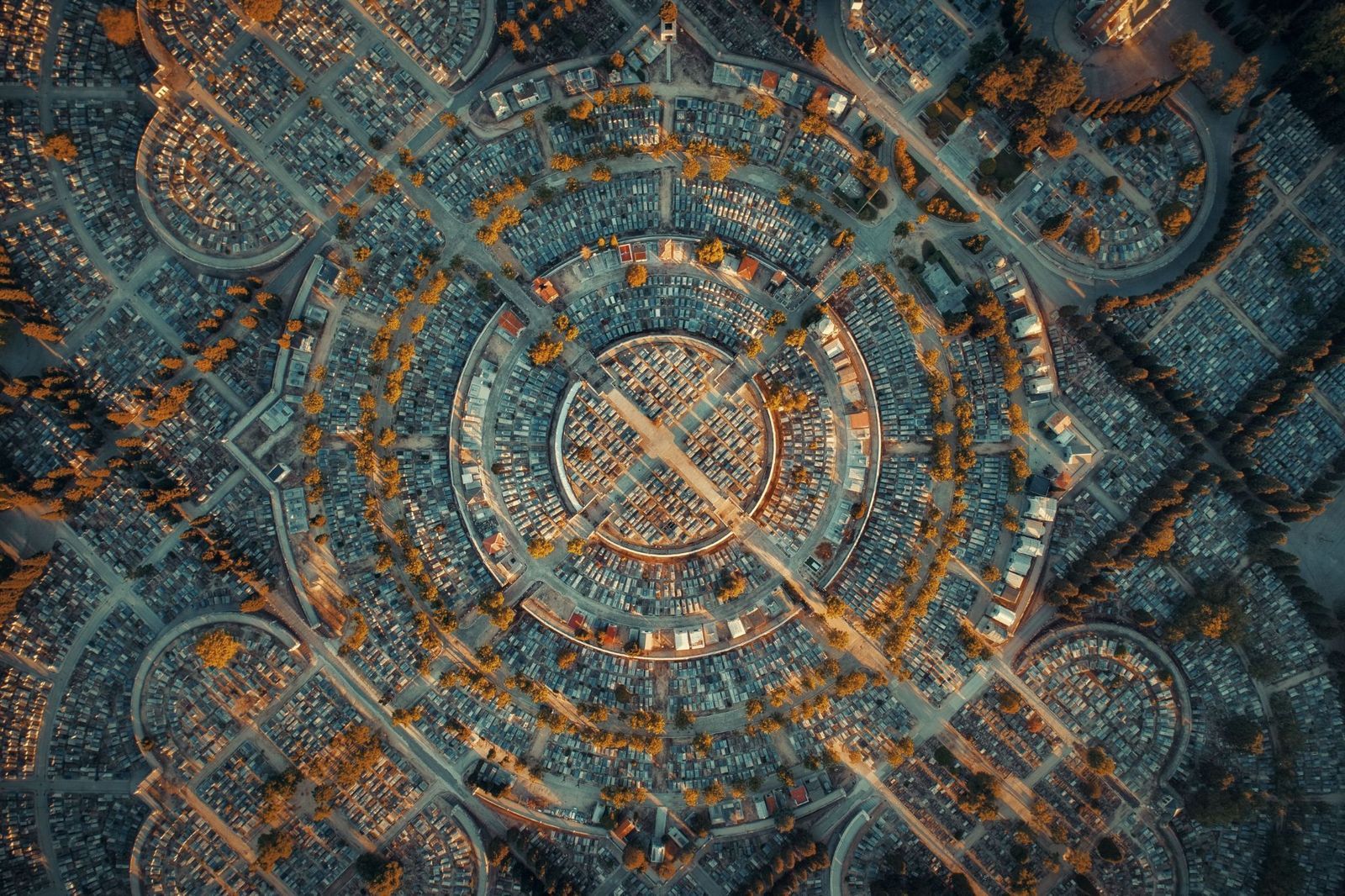
In Madrid’s Our Lady of Almudena Cemetery, there are around five million people resting. From ground level, it looks like a traditional European burial ground filled with marble headstones, winding pathways, and towering trees.
Yet, an aerial view exposes the clever urban planning and spatial artistry. The cemetery features concentric circles and intricate geometric patterns that resemble symbols from a deck of playing cards.
Fort Jefferson, Dry Tortugas National Park, Florida, USA
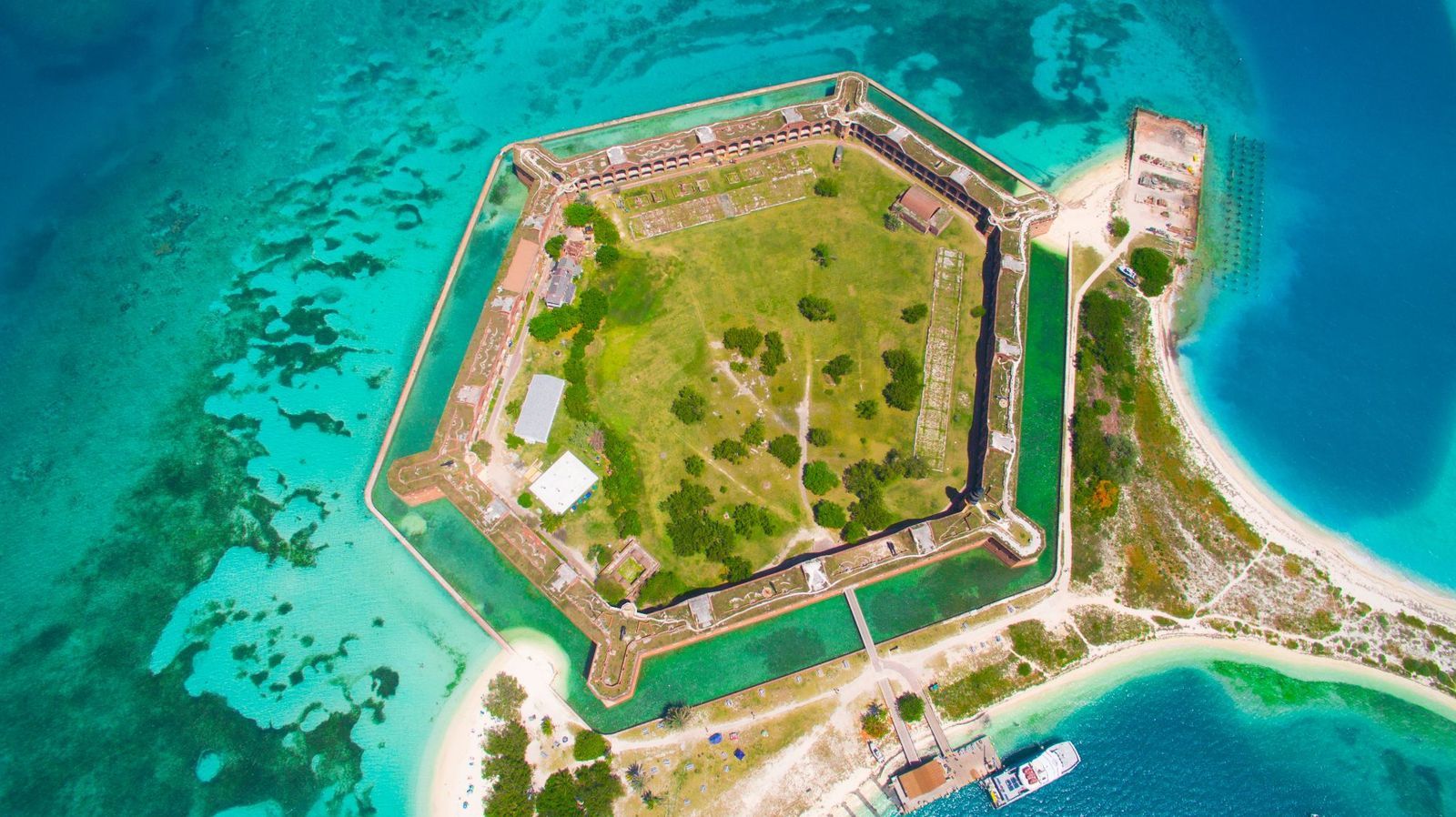
In the Gulf of Mexico/America sits Fort Jefferson, a 19th-century military fortress built on the remote Dry Tortugas Islands. Made up of over 16 million bricks, the fort served as a Union prison during the American Civil War.
Exploring its stone archways on foot is interesting enough, but an aerial photograph reveals the building’s symmetrical hexagonal shape standing in contrast against the bright blue sea.
Pineapple Garden Maze, Hawaii, USA
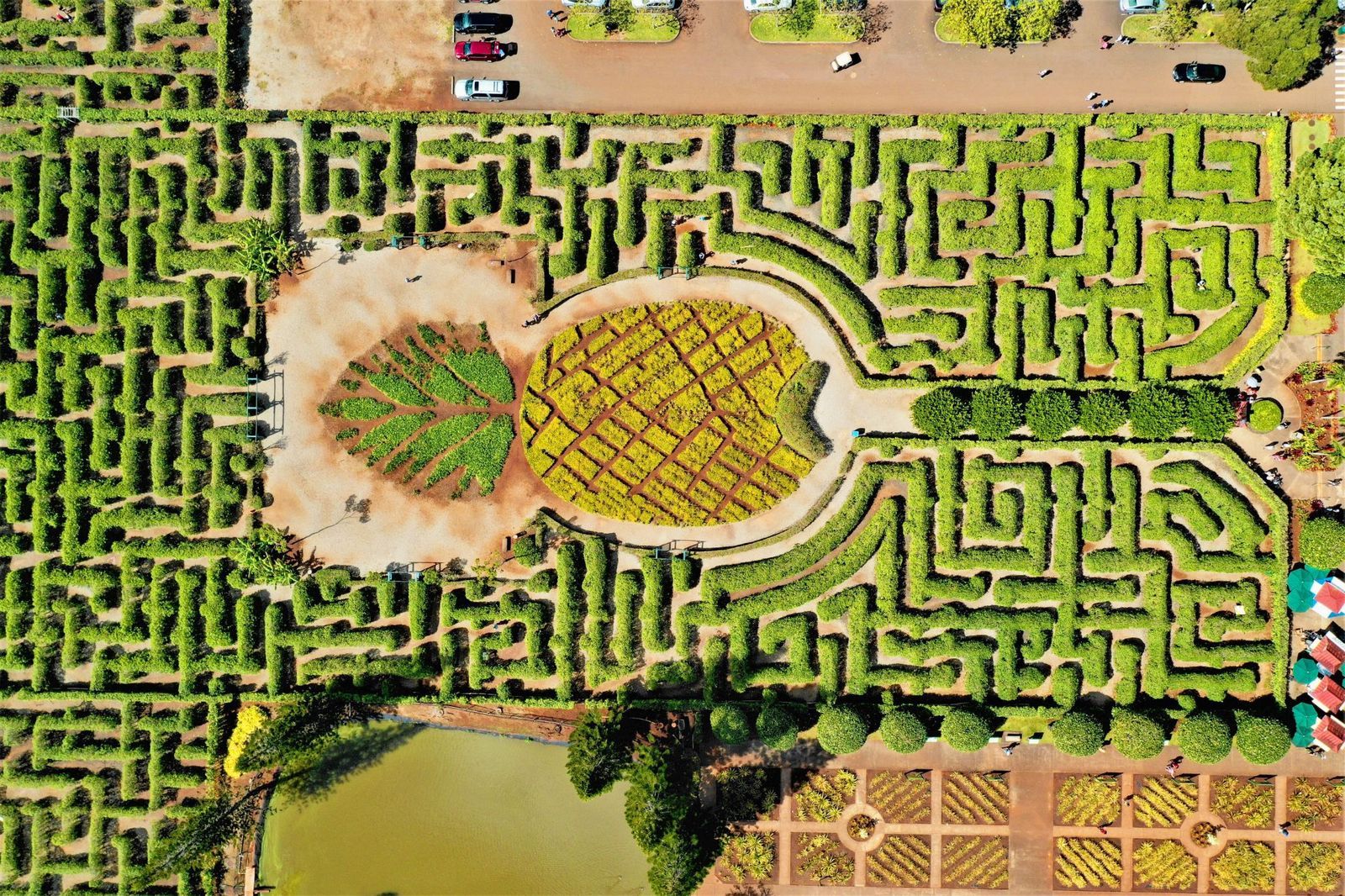
Oahu's famous Dole Plantation is home to one of the largest botanical mazes in the world. With over three acres, the Pineapple Garden Maze is made from thousands of native Hawaiian plants.
Visitors love walking through its corridors, but getting lost on foot hides the labyrinth’s most charming secret. Only from an airplane or drone can you appreciate the giant shape carved into the center of the structure; yes, you’ve guessed it: a smiling pineapple with spiny skin and a leafy crown.
The rooftop sign welcomes you to Cleveland; the plane lands in Milwaukee
Quirks in U.S. airports
Beware: At Chicago's O'Hare Airport, not all employees are humans
Some airports have art installations, others have confusing signs. There are even some whose staff is not human at all. You’ve probably rushed through airports without noticing what’s right in front of you. A sleeping man, a flock of goats, and even a gate to Narnia. Some airports are hiding some genuinely strange secrets in plain sight, and once you see them, you’ll never forget about them. Here are 10 of the best airport quirks.
The seasonal groundkeepers
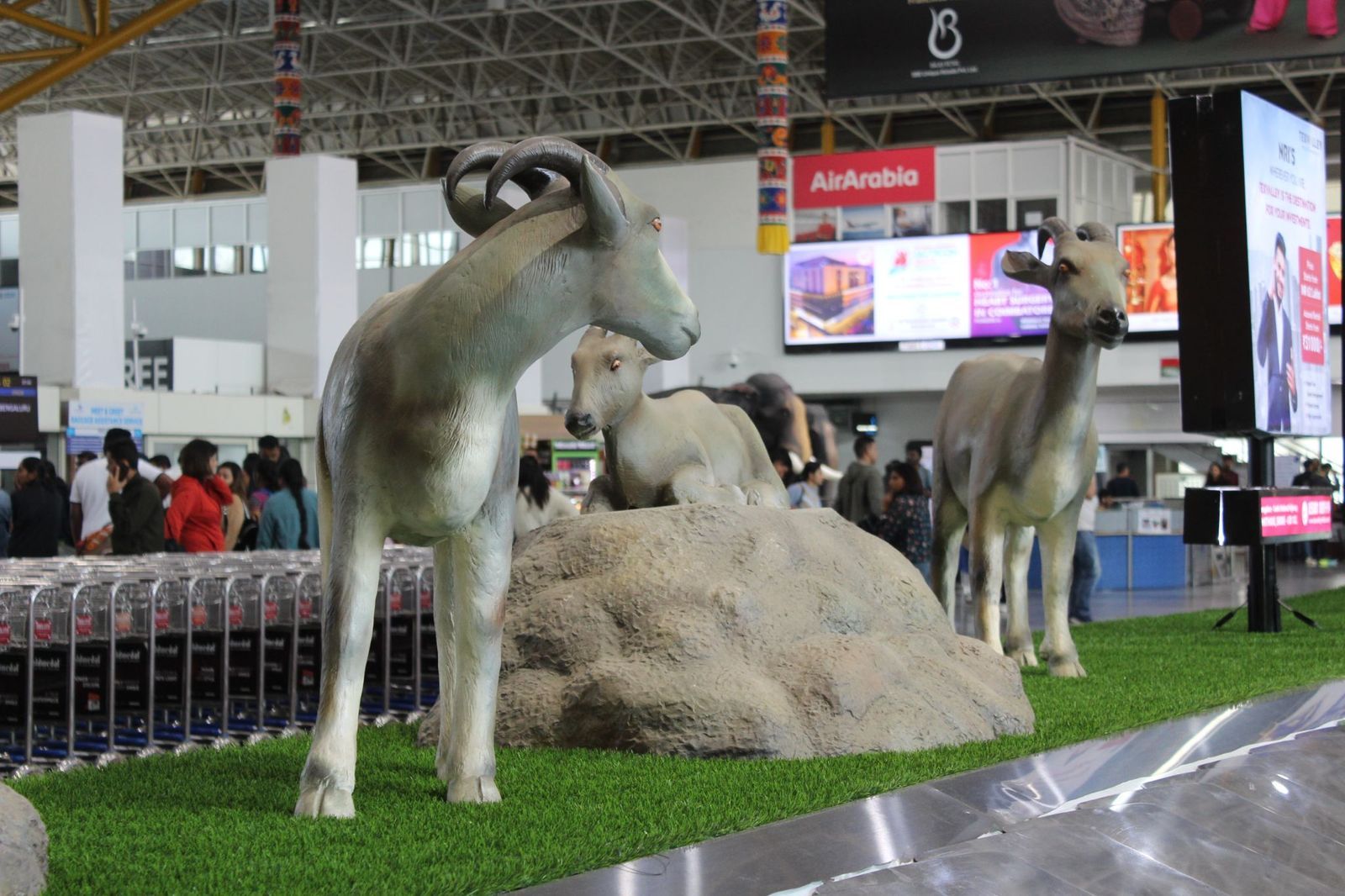
Chicago O’Hare International Airport is one of the busiest in the country, so it might be surprising to learn that human employees simply weren’t enough.
Since 20515, the airport has brought in a rotating crew of goats, sheep, and even a donkey each summer to handle the landscaping and maintenance of the grass near the runways. The animals work through overgrown vegetation in areas that are tricky and expensive to mow with regular equipment, and their grazing habits help control weeds without pesticides. Airport staff has grown fond of the herd, and the program has become such a hit that travelers now specifically look for the animals from the windows of taxiing planes.
The therapy llamas

Long lines, delayed flights, and cramped gates can easily wear on your nerves, which is exactly the problem Portland International Airport set out to solve in an unexpected way.
About twice a month, the airport welcomes a visiting herd of llamas and alpacas whose entire job is to help travelers relax. They join PDX’s existing roster of emotional support dogs, wandering the terminals so passengers can stop and pet them between flights. The program became so popular that passengers going through it actually timed their trips only to catch the llamas on duty. Few things break the tension of a delayed flight quite like an alpaca strolling past your gate.
The Cleveland sign
You fasten your belt and get ready for descent. When you look out the window, you read a sign that says "Welcome to Cleveland," which lines up almost perfectly with the flight path into runway 19. There’s nothing weird about that. Not until you remember you were heading for Milwaukee.
On a rooftop near Milwaukee Mitchell International Airport, the welcome sign has been confusing passengers for decades. It has nothing to do with the airport itself; the sign was painted by Mark Gubin in 1978 on the roof of his studio. He said there was no real purpose behind it beyond a bit ot harmless mischief. The prank worked exactly as he hoped, as more than one passenger panicked, convinced they somehow boarded the wrong plane and ended up in Ohio instead of Wisconsin. Gubin still owns the building and the sign, which, nearly five decades later, continues to receive attention.
Gate to Emerald City and more
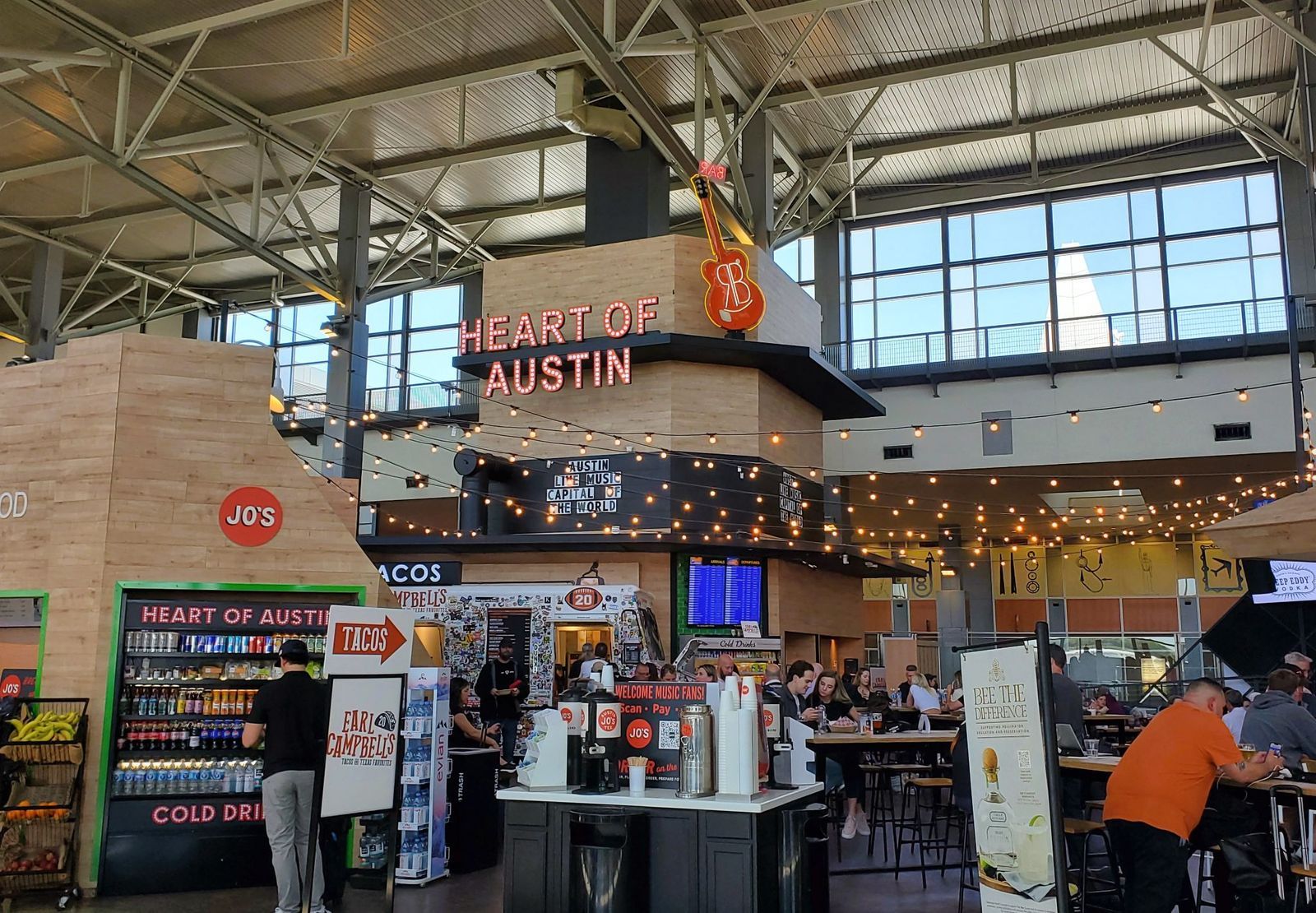
If you find yourself walking between gates 12 and 14 at Austin-Bergstrom International Airport, look closely, and you may notice something odd about the numbering. Tucked between them is a sign for the infinity gate, a lounge that doesn’t appear on any boarding pass.
The sign lists destinations like Narnia, Hogwarts, Panem, Middle-earth, the Emerald City, and the Hundred Acre Wood, pulled from beloved books, movies, and games that generations of travelers grew up with. The art installation was created by artist Janet Zweig in 2021, who called the piece "Interimaginary Departures" and designed it to mimic a real gate down to a working flight board.
The traveler

While you rush through Orlando International Airport, there’s a passenger slumped over his luggage, completely asleep, and he’s been there since 1985.
He’s not a person; he’s just a hyperrealistic sculpture called "The Traveler," created by American artist Duane Hanson, who built his reputation making eerily lifelike figures of everyday people using polyester resin, fiberglass, and real clothing. Hanson made two versions of this sleeping traveler. Orland’s version, dressed for a normal flight, sits behind glass in the Terminal A concourse. The second one, made two years later, shows the same pose but with his shirt hanging open.
The snake sanctuary
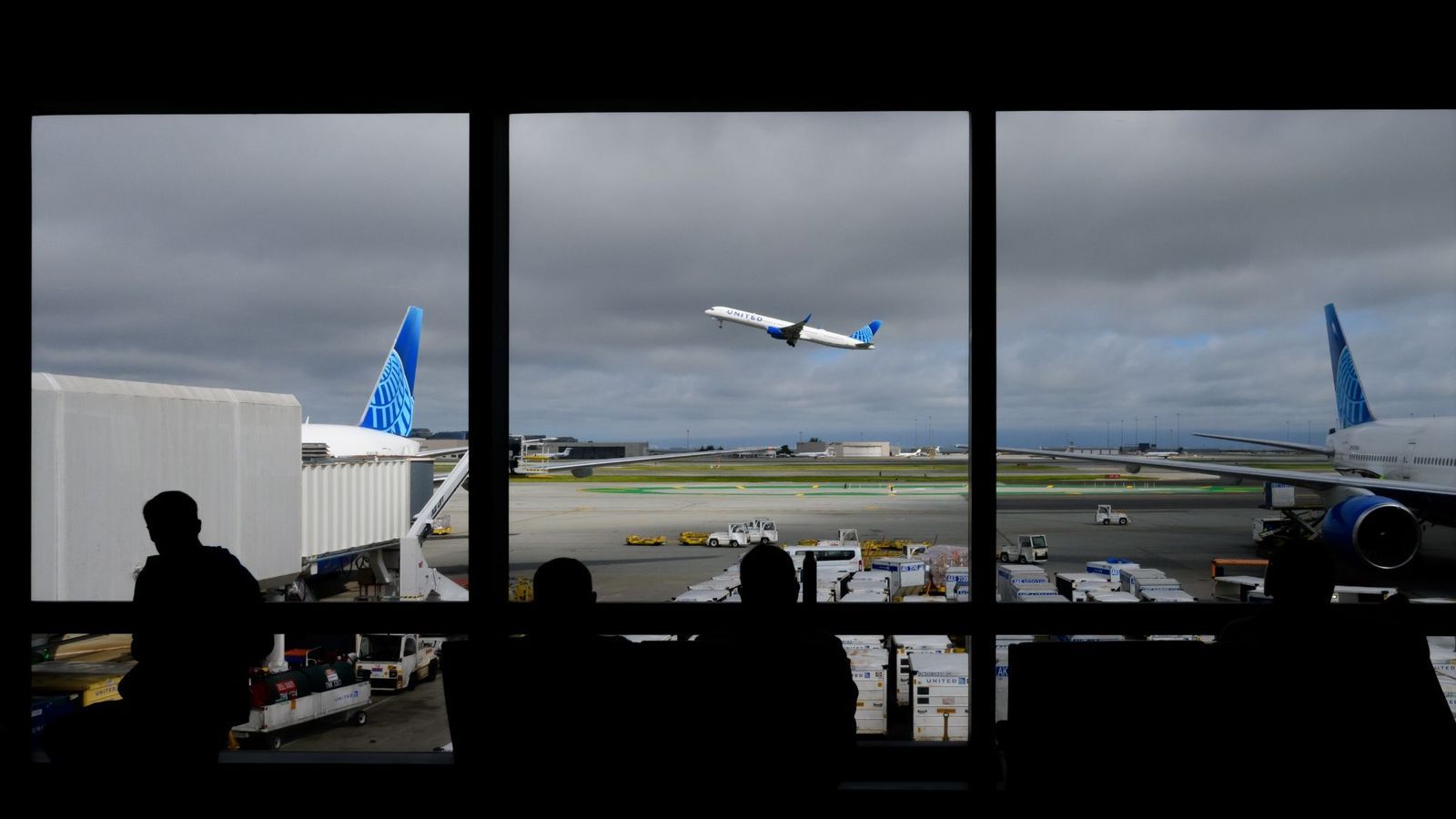
Passengers flying into San Francisco International Airport never think twice about the land they glide over on approach. But that 180-acre stretch happens to be home to one of the rarest reptiles in the country.
It is the largest known population of the San Francisco garter snake, a strikingly colored and highly endangered species found almost nowhere else in the world. The airport has worked with wildlife agencies to protect the habitat even as the surrounding area grew into one of the busiest transit hubs in the nation.
The recombobulation area
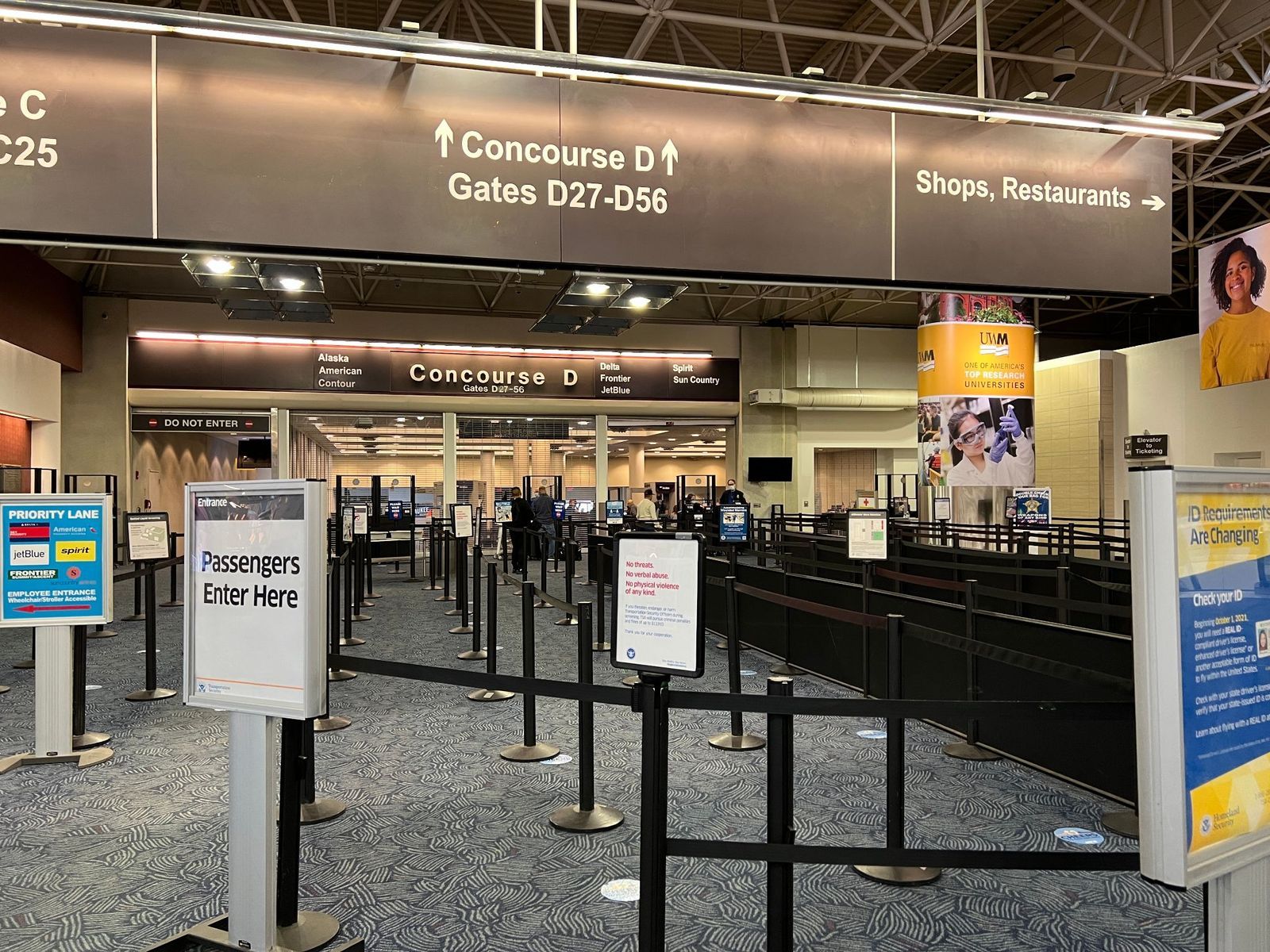
Annoying as it is, TSA agents may occasionally ask you to take off your shoes and belt as you go through the security checkpoint. The chaos comes afterwards. Shoes half on, belt in one hand, laptop sliding out of his bag, all while trying to keep the line moving.
Milwaukee Mitchell International Airport decided that the moment required a specific place. Right past the checkpoint, there’s a sign designating the Recombobulation Area, a spot specifically meant for travelers to put themselves back together after screening. It was created in 2008 by former airport executive Barry Bateman, who coined the word "recombobulation" as the playful opposite of "discombobulation," and it quickly became a local point of pride. Milwaukee remains the only airport in the world to officially name and mark this particular airport scene.
The peace sign
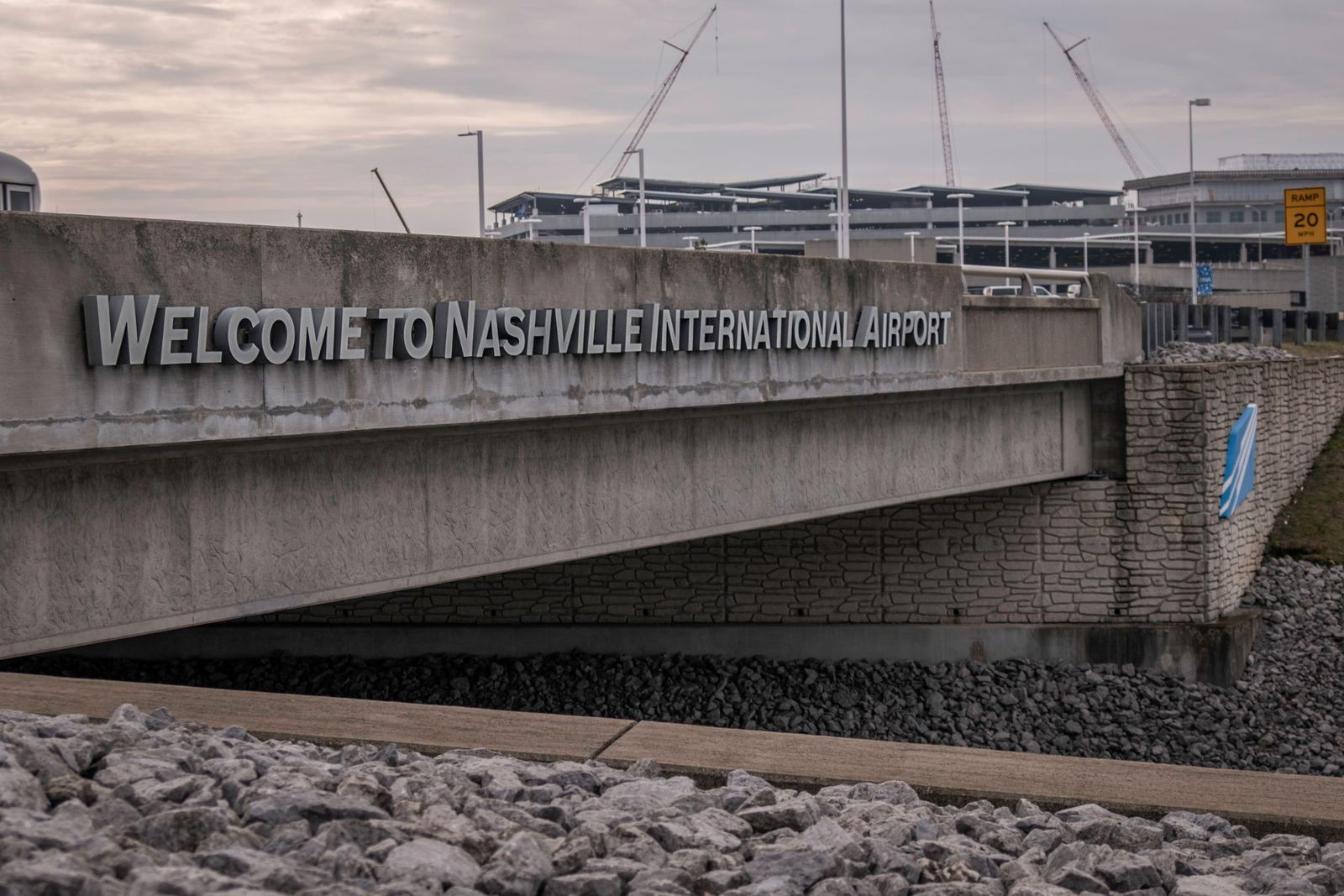
In the Southeast corner of Nashville International Airport, there’s a piece of art that most passengers only see from the sky. Earl Tuggle, a groundskeeper who described himself as an "old hippie," decided, seemingly on a whim, to mow a 400-foot-wide peace sign into the grass alongside the runway.
It started as a one-time idea, but it quickly turned into a tradition that has been kept up for 14 years, carefully fropping around the massive shape every time he mows. Passengers with a window seat can enjoy it during takeoff and landing, and it’s always a surprise for a new visitor who happens to be looking down just at the right moment.
Blucifer
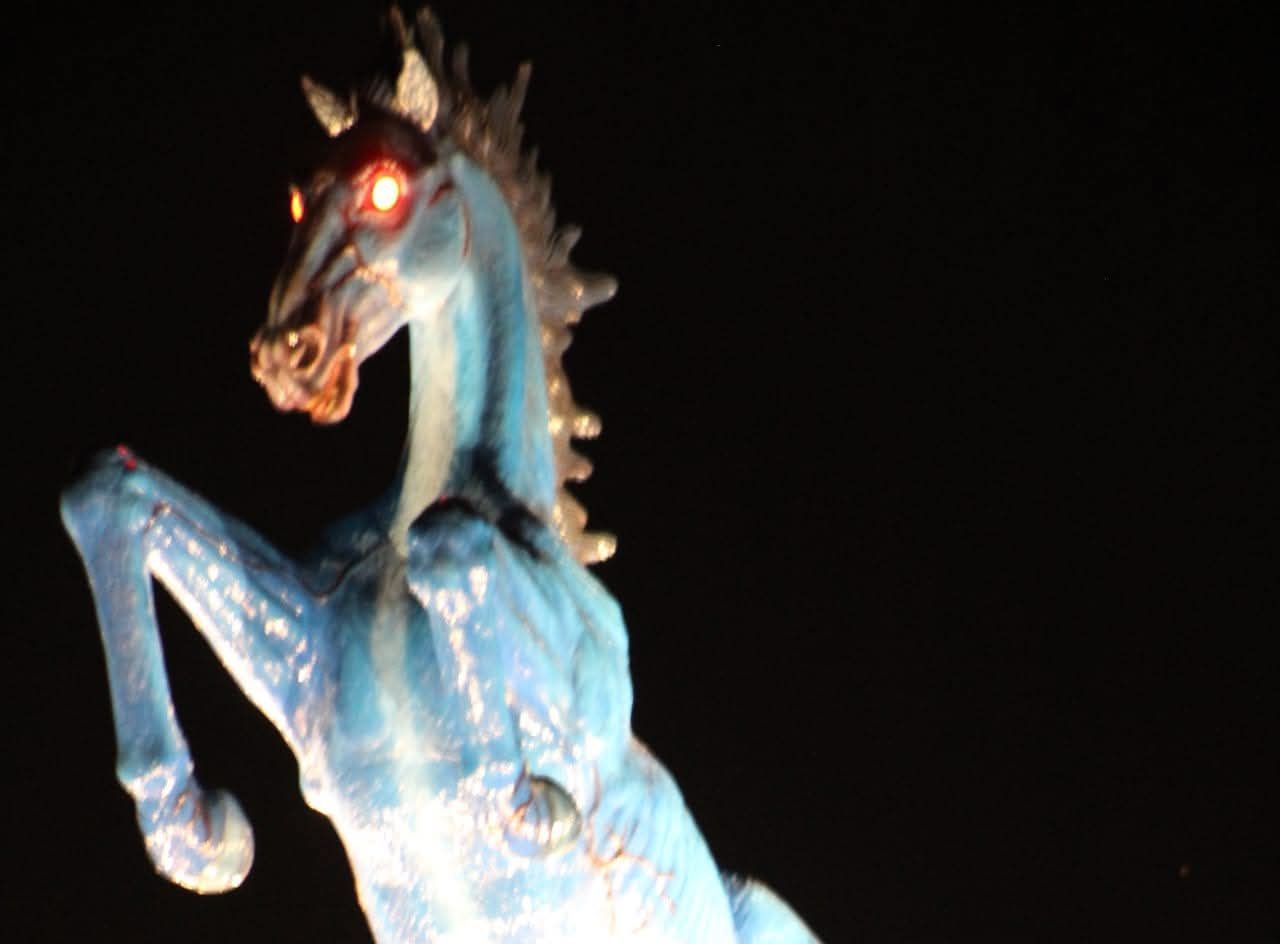
Driving toward Denver International Airport, an enormous blue horse is rearing up; you can hardly miss it. Standing 32 feet tall with glowing red eyes, the fiberglass sculpture located near the terminal entrance is officially named Blue Mustang, and it has been receiving unsettled passengers since 2008.
The statue’s nickname, Blucifer, caught on almost immediately among travelers who found the towering, wild-eyed horse more unsettling than welcoming. Its creator, sculptor Luis Jimenez, was tragically killed in his studio in 2006 when a section of the piece fell on him during construction, a detail that only added to the statue’s eerie reputation. Despite the controversy surrounding it over the years, Blucifer has become one of the most recognizable airport landmarks.
The light tunnel
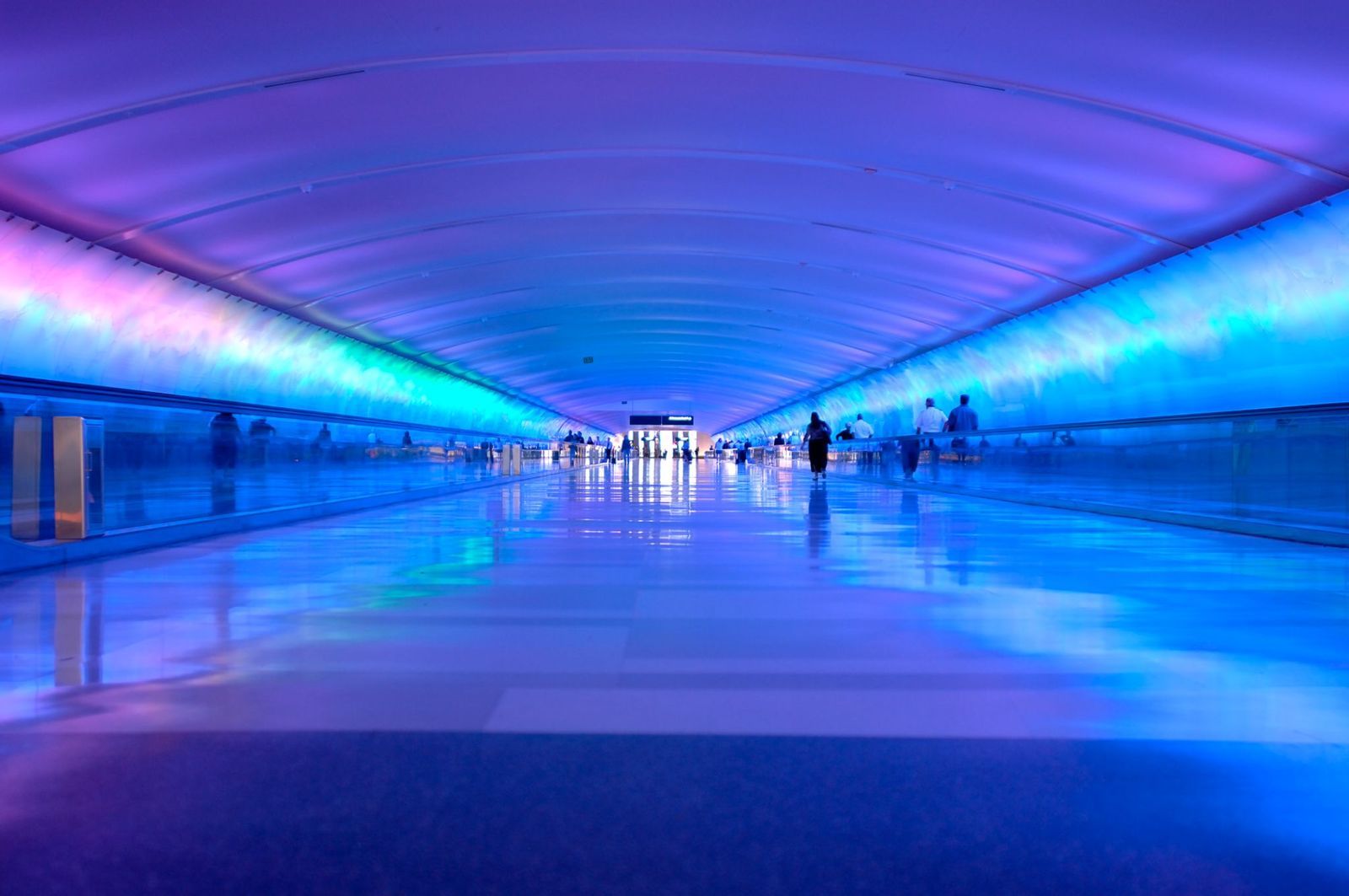
Deep beneath Detroit Metropolitan Airport, there’s a 700-foot underground tunnel connecting Concourse A to Concourse B and C that’s both a walkway and a piece of art. Passengers moving between gates find themselves surrounded by frosted glass panels lit in shifting rainbow colored LED sequences, all timed to a custom musical score playing overhead.
Created by artist Laure Fyfe and unveiled in 2001 as part of a brand new McNamara Terminal, the tunnel first opened as the Motown Music Tunnel, and the light show was timed to songs by hometown legends like The Temptations and The Supremes. Rather than a plain moving walkway, the tunnel turns what could be a tedious transfer between flights into an experience that makes passengers slow down.
Keep wandering
There’s always
more to explore
 General

They left a winning lottery ticket behind at the hotel—What happened next
6 min.
Read Now

10 passenger protections airlines won't tell you about
6 min.
Read Now
 Culture
Why toasting with a glass of water could get you into serious trouble
6 min.
Read Now
Do you know which U.S. beach has sand that’s 99% pure quartz?
7 min.
Read Now