This mysterious monument is 6,000 years older than Stonehenge
 General
Earth’s strangest mysteries
This mysterious monument is 6,000 years older than Stonehenge
Some mysteries are eternal. For millennia, destinations like the Bermuda Triangle and the Pyramids of Giza have mystified visitors and researchers alike. Get ready to explore 10 strange places where history, nature, and the supernatural collide.
The Bermuda Triangle
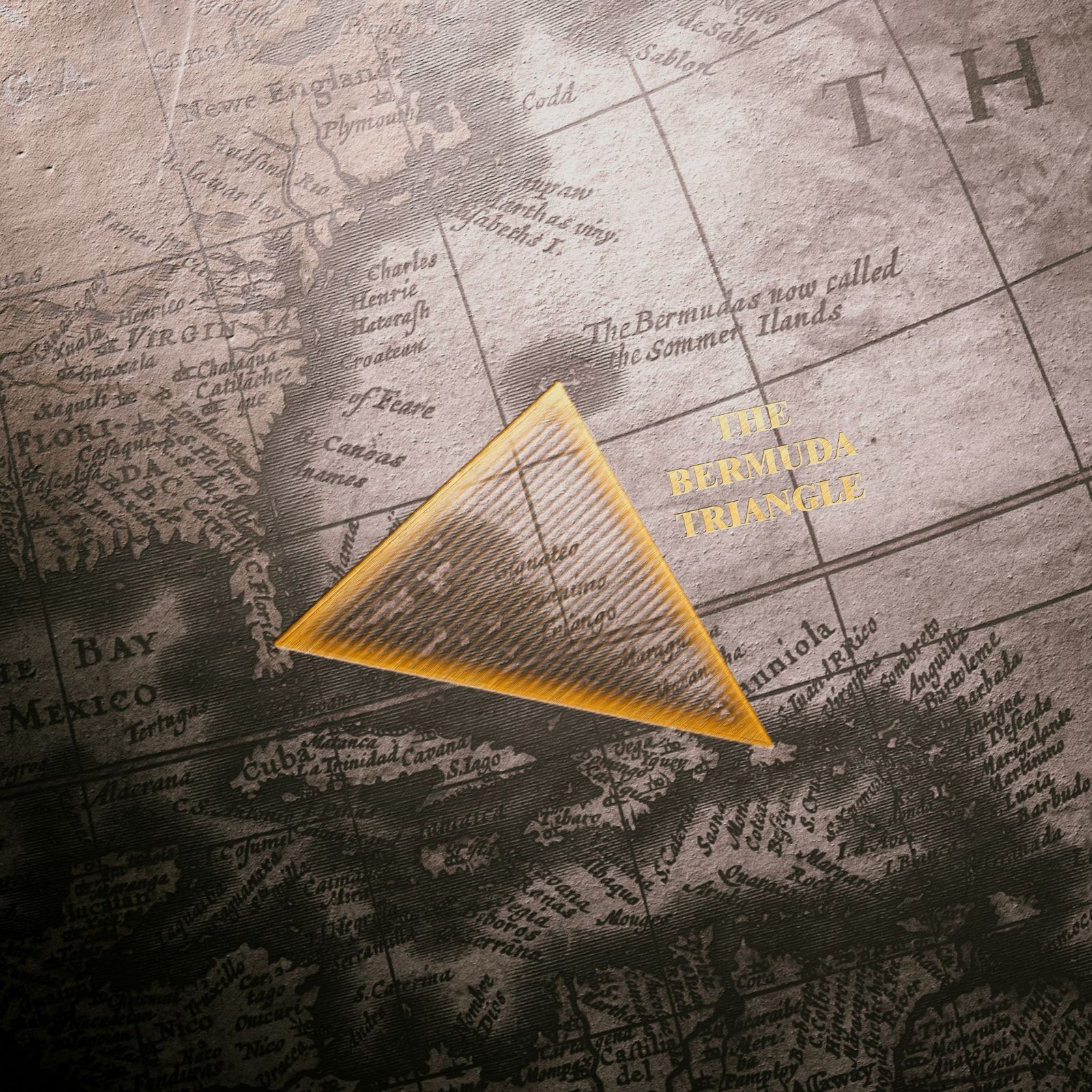
There’s no doubt you’ve heard about the infamous Bermuda Triangle — in the Atlantic Ocean, nearest to the southeastern coast of the United States, the British territory of Bermuda, and the islands of the Great Antilles in the Caribbean — and the stories of ships and planes that have allegedly vanished within it.
Among the most famous cases are the disappearance of the USS Cyclops, a Navy collier carrying 306 people in 1918, and Flight 19, a squadron of five Navy Avenger bombers that disappeared during a training mission in 1945. A Navy flying boat sent to search for Flight 19 also vanished. Scientists point to more earthly explanations, including powerful storms, rough seas, navigation problems, and human error. NOAA notes that there is no evidence that mysterious disappearances happen more frequently in the Bermuda Triangle than in other large, well-traveled areas of the ocean. Still, the legends refuse to disappear.
The Pyramids of Giza in Egypt

Thousands of years after their construction, the Pyramids of Giza, built roughly 4500 years ago and located on the west bank of the Nile River (about eight miles from central Cairo), still inspire questions about exactly how ancient Egyptians organized the enormous workforce, transported materials, and engineered these monuments with such precision.
To this day, they remain tied to mainstream archaeological evidence indicating that they served as monumental royal tombs, though modern scans continue to reveal previously unknown internal structures and fuel alternative theories. In 2024, researchers identified evidence of a long-lost branch of the Nile, now called the Ahramat Branch, that once ran near a number of pyramid sites, including Giza. The discovery supports the idea that ancient Egyptians may have used waterways to transport workers and building materials.
Easter Island in Chile
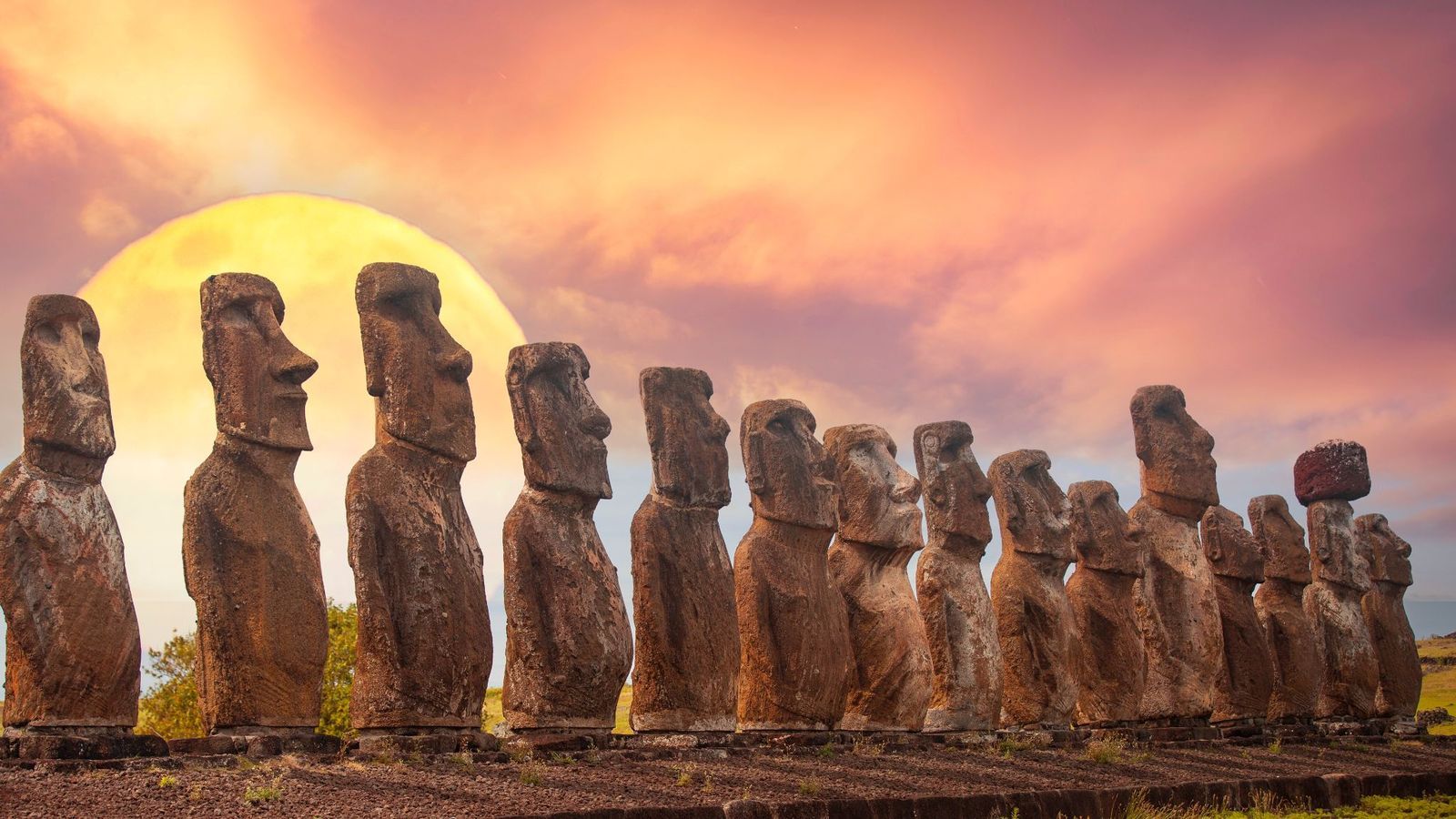
Once you’ve seen these stones with faces, there’s no forgetting them. Easter Island, known locally as Rapa Nui, is one of the most remote and mysterious inhabited islands on Earth, located in the southeastern Pacific Ocean over 2,200 miles off the coast of Chile.
Over 900 giant monolithic statues called moai, which began to be constructed around 1100 CE, are scattered across the landscape. Many don’t realize that these figures have bodies extended below the hidden heads and torsos. Some moai weighed dozens of tons, and researchers have long debated how the Rapa Nui people transported them across the island without modern machinery. Intriguingly, Rapa Nui oral traditions say the statues "walked." Modern archaeological experiments have demonstrated that appropriately shaped replicas could indeed be moved upright by rocking them forward with ropes.
Göbekli Tepe in Turkey
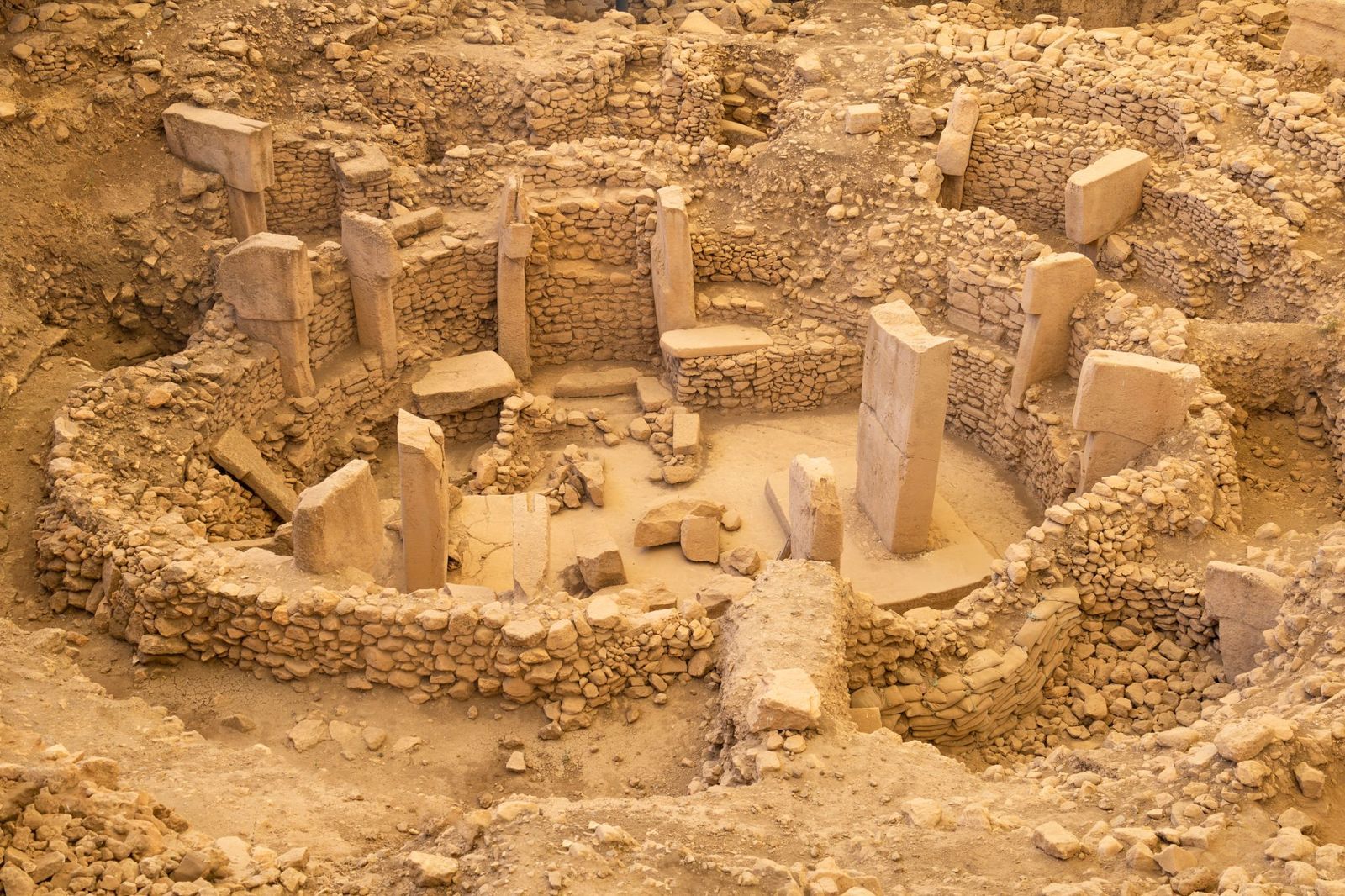
Göbekli Tepe is a massive stone temple complex in southeastern Turkey that has completely rewritten our understanding of human history. Built roughly 11,500 years ago (around 9500 BCE) by hunter-gatherers, it predates Stonehenge by over 6,000 years and the Egyptian pyramids by thousands of years.
The site contains enormous T-shaped limestone pillars carved with animals, and archaeologists believe the structures were used for communal and ritual activities. Exactly how these hunter-gatherer communities built such an ambitious complex remains an intriguing question.
The Nazca Lines in Peru
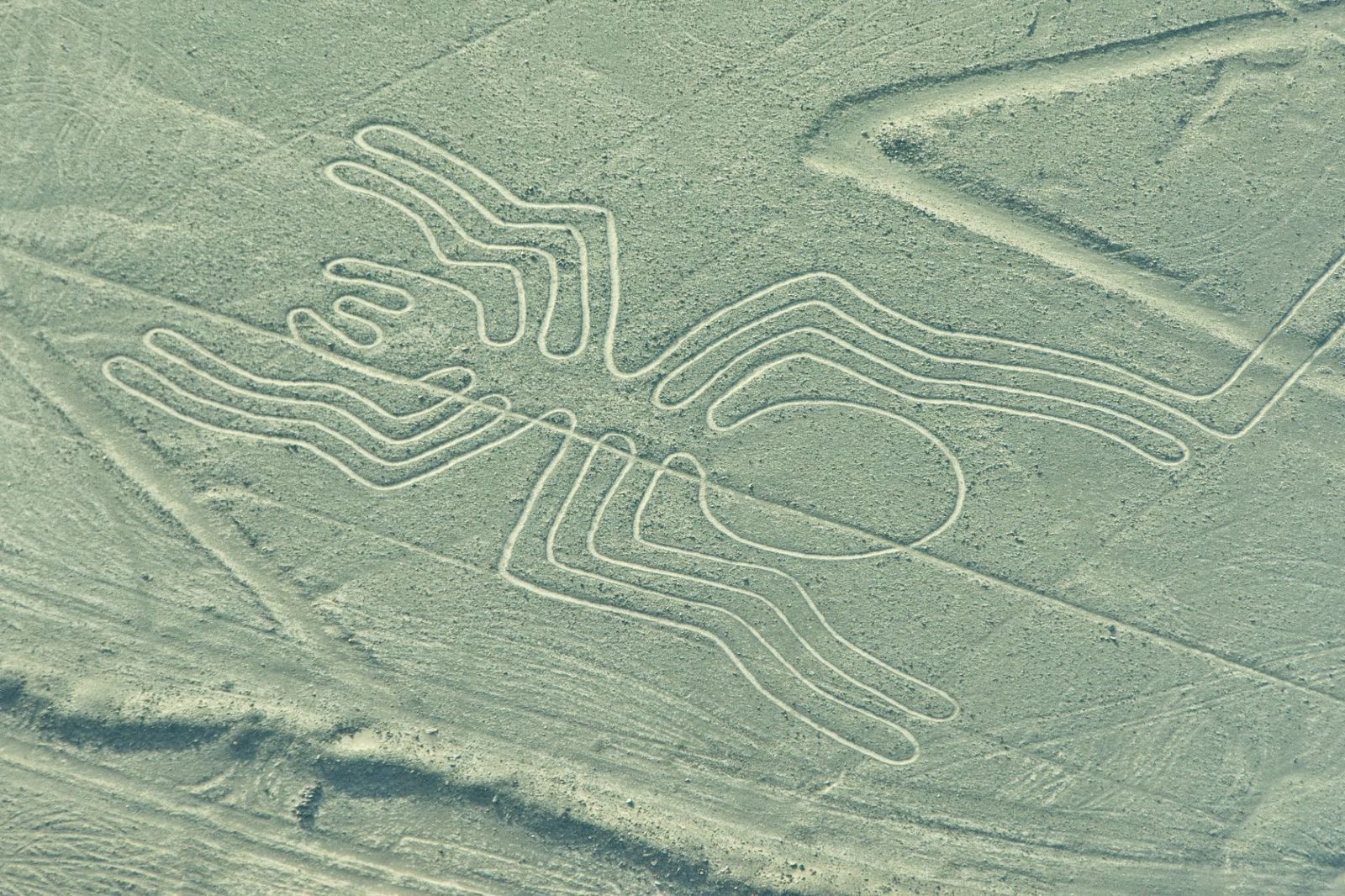
Imagine looking down from the sky and suddenly seeing enormous animals, geometric shapes, and perfectly straight lines etched into the desert below. That’s precisely what the Nazca Lines are: a collection of massive, ancient geoglyphs (drawings etched into the earth) spanning about 450 square kilometers of the hyper-arid Nazca Desert in southern Peru.
Their construction is less mysterious than it once seemed: ancient peoples of the Nazca region created them between approximately 500 BCE and 500 CE by removing the darker surface stones to expose the lighter ground underneath. But their purpose is still debated. UNESCO notes that many researchers associate the lines with ritual and astronomical functions, while some appear to have served as pathways for large groups of people.
The Great Wall of China
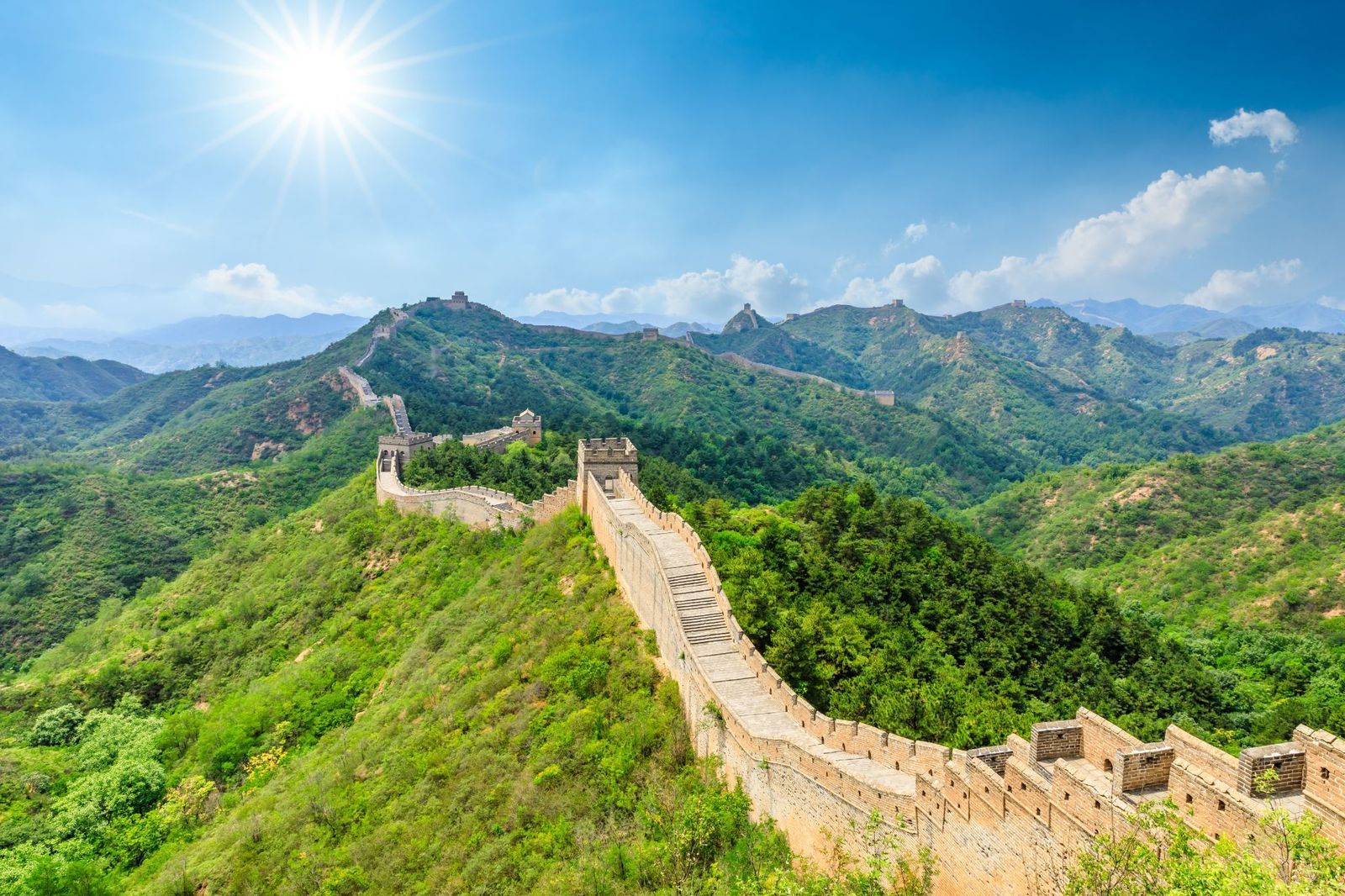
The globally known Great Wall of China is a massive series of fortifications stretching more than 20,000 kilometers when all its sections, branches, and associated fortifications are counted. Built and rebuilt over many centuries between the 7th century BC and the 17th century AD, it is actually a vast network rather than one continuous wall.
Despite the famous myth, the Great Wall is not visible from space and is generally difficult or impossible to see from low Earth orbit, such as for astronauts inside the International Space Station (ISS), with the unaided eye.
The Plain of Jars in Laos
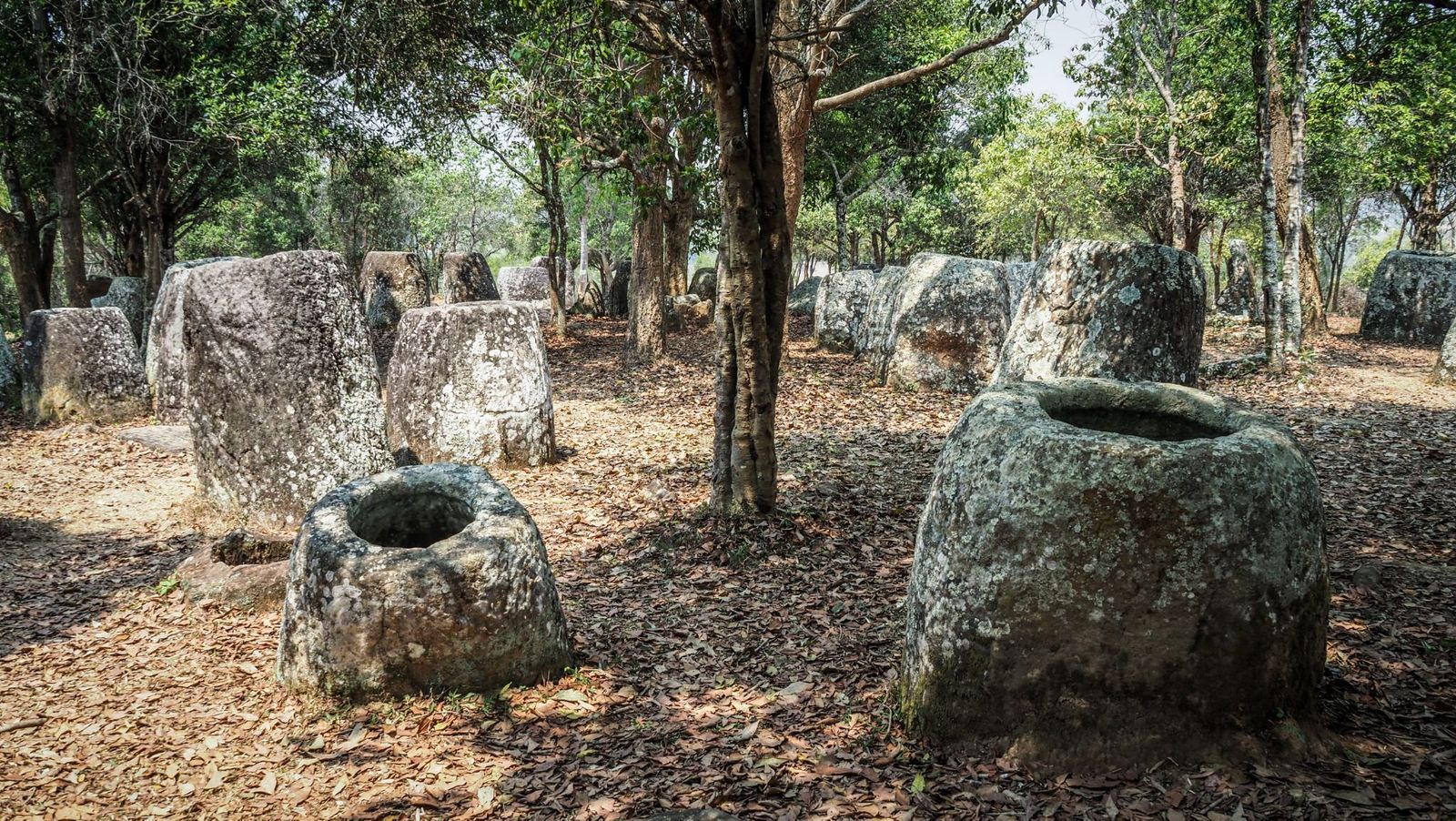
The Plain of Jars in Laos is a mysterious prehistoric landscape featuring thousands of massive stone vessels scattered across the Xieng Khouang Plateau. Among the peculiarities of these stone vessels, they range from roughly 3 to 10 feet in height, and more than 2,100 have been identified across the wider landscape.
The people who created them belonged to an Iron Age culture, but many details about that society and the exact methods used to quarry and transport the enormous jars remain uncertain. UNESCO identifies the jars as part of a funerary landscape dating from roughly 500 BCE to 500 CE.
"The Eye of the Sahara" in Mauritania
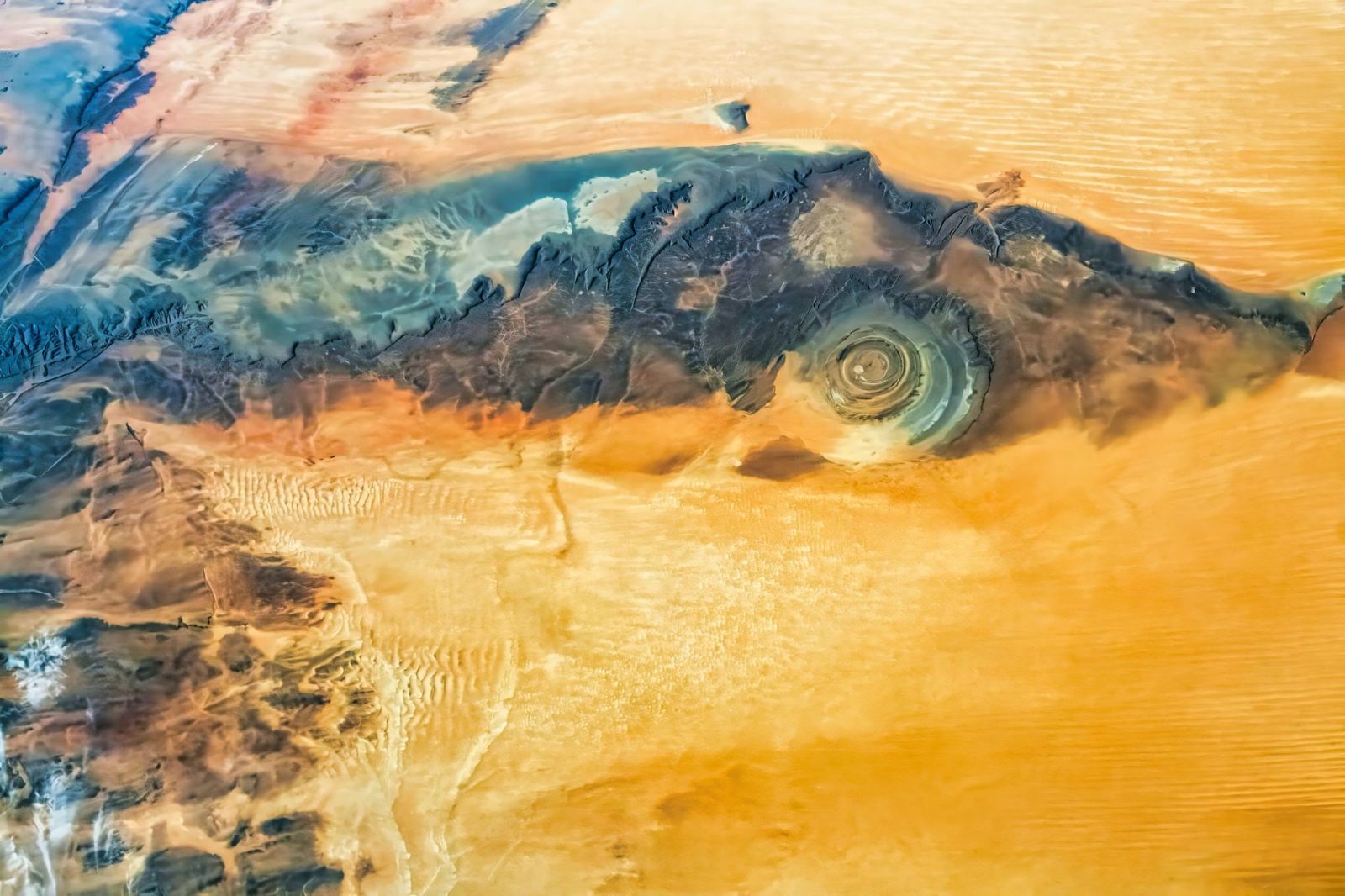
The Richat Structure, also known as the "Eye of the Sahara", is a massive, symmetrical, roughly 30-mile-wide geological formation in northwestern Mauritania. Visible from space, its enormous concentric rings stand out dramatically against the surrounding Sahara. Astronauts have photographed and used the feature as a recognizable landmark.
Its almost perfectly circular appearance once led scientists to believe it might be an impact crater. Today, geologists understand it as a natural geological structure shaped by uplift and erosion.
The Dancing Forest in Russia
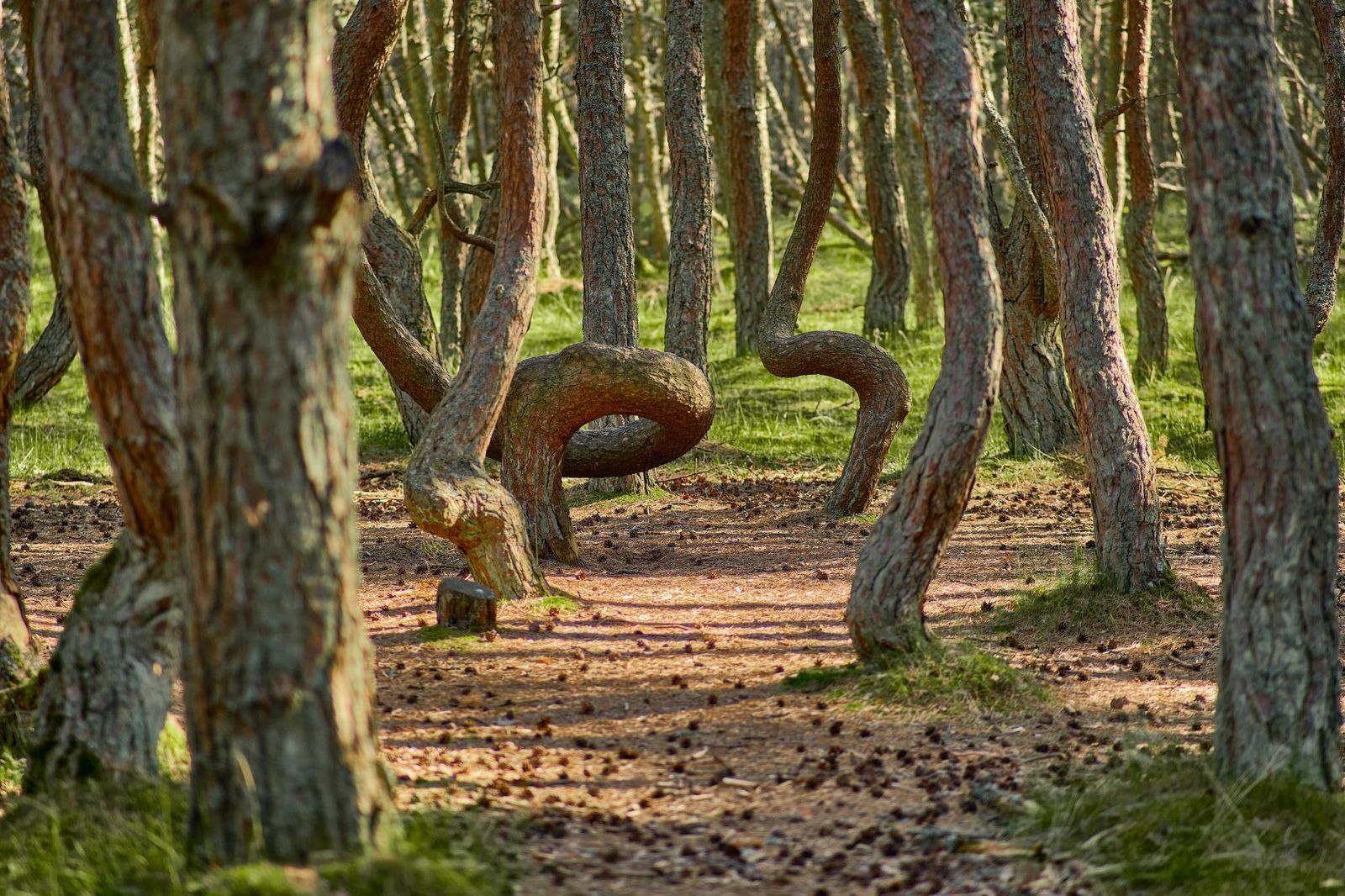
The Dancing Forest in Kaliningrad Oblast, Russia, is a mysterious grove on the Curonian Spit where pine trees grow with bizarrely twisted, looped, and spiral trunks.
Planted in the 1960s to stabilize shifting sands, the pines in this specific 1-square-kilometer patch curve into rings, hearts, and corkscrews near the ground. What makes the sight especially striking is the sharp contrast between the contorted trees and nearby pines that grow normally. Scientists still don't have a single, definitive answer for why the trees bend this way. Proposed explanations have included damage caused by caterpillars during the trees’ early growth, environmental stress, and the effects of wind and shifting sand. Whatever the cause, the result looks out of this world.
Stonehenge in England
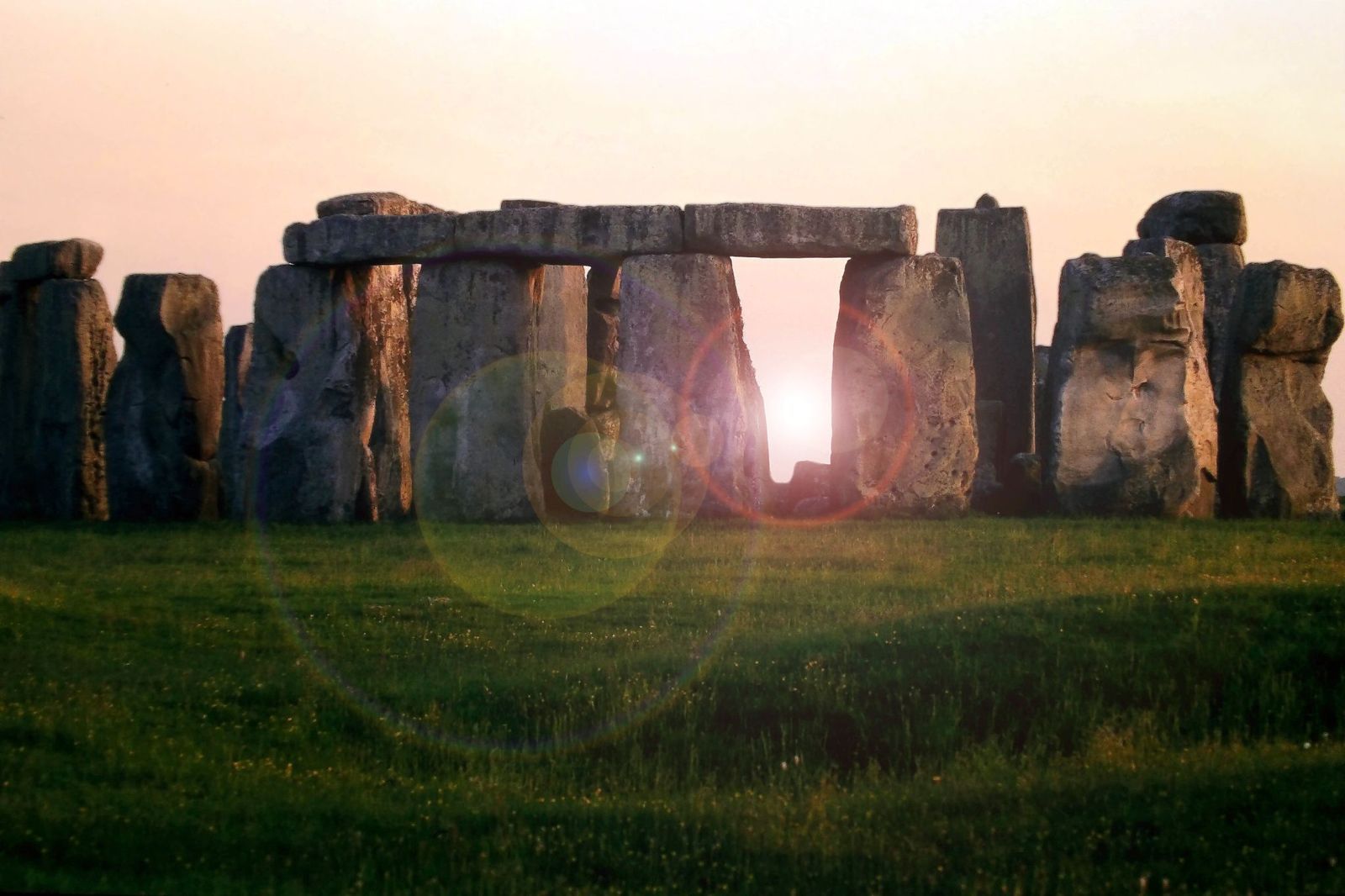
A prehistoric ring of standing stones in Wiltshire, England, Stonehenge is a place experts still don't fully understand. Built in stages over thousands of years, beginning around 3000 BC, it remains one of the world's most recognizable monuments. Some of its largest stones weigh around 30 tons.
While smaller "bluestones" came from the Preseli Hills in Wales (about 160 miles away from the site), how people moved these heavy rocks without modern wheels or trucks is still unknown. The site was used for ceremonial and mortuary purposes, and its alignment with the sun suggests that tracking seasonal cycles may have been important. Yet many questions remain about what the monument meant to the people who built it.

If you had to guess, what are the 12 most common items people forget?
Leave No Object Behind!
Ever wondered which items are most commonly lost in hotels and planes?
There are two kinds of travelers: those who have forgotten something in a hotel or on a plane... and those who eventually will. Between rushing through airport security, checking into hotels, charging devices, and keeping track of passports, it's surprisingly easy for even seasoned travelers to leave something behind. Hotels, airlines, and airports process countless lost-and-found reports every year, and while the occasional forgotten wedding dress or pet lizard grabs headlines, the 12 top items are more familiar.
Phone chargers and charging cables
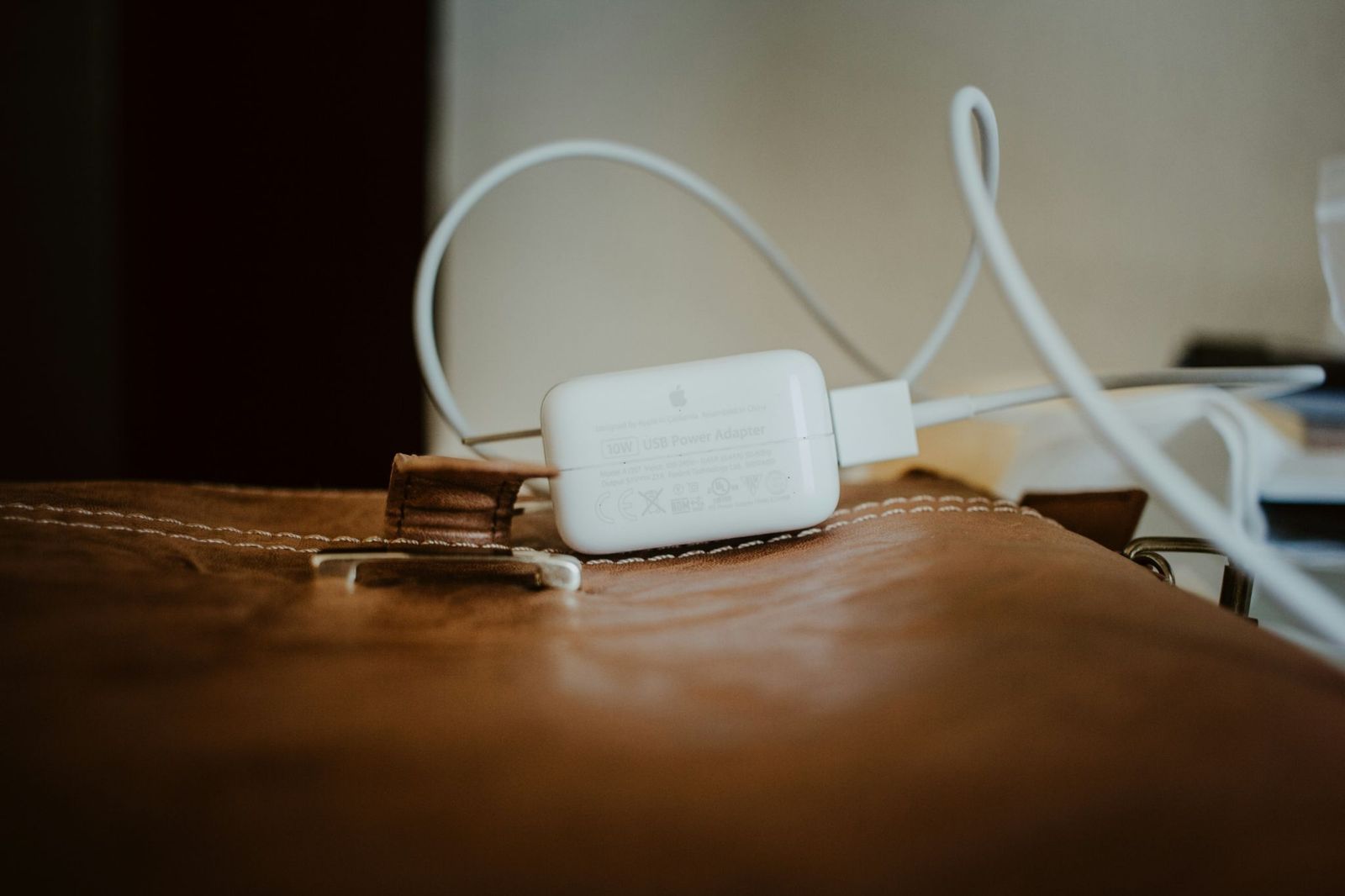
It almost feels inevitable. You plug your charger into the wall beside the hotel bed, use it overnight, pack your suitcase the next morning, and the charger quietly remains in the outlet. Airport charging stations create the same problem, especially when boarding announcements interrupt your break.
Industry surveys consistently place chargers and cables among the most commonly forgotten travel items. Choice Hotels Europe found chargers and adapters topped its list of hotel room leftovers, while Hotels.com also reports them as one of the biggest categories recovered by housekeeping. Their small size, universal appearance, and habit of disappearing behind furniture make them easy to overlook until your phone battery starts running low hours later.
Cell phones

Modern smartphones hold boarding passes, hotel reservations, maps, photos, payment apps, and sometimes even passports in digital form. Ironically, the one item travelers depend on most is also one of the easiest to forget.
GroundLink's traveler survey found cell phones were the single most commonly misplaced item reported by travelers. Hotels frequently recover them from bedside tables, while airlines routinely find them tucked into seat pockets or wedged between airplane cushions. Airport charging stations are another notorious hotspot, as passengers often disconnect their phones just moments before rushing to the gate.
Sunglasses
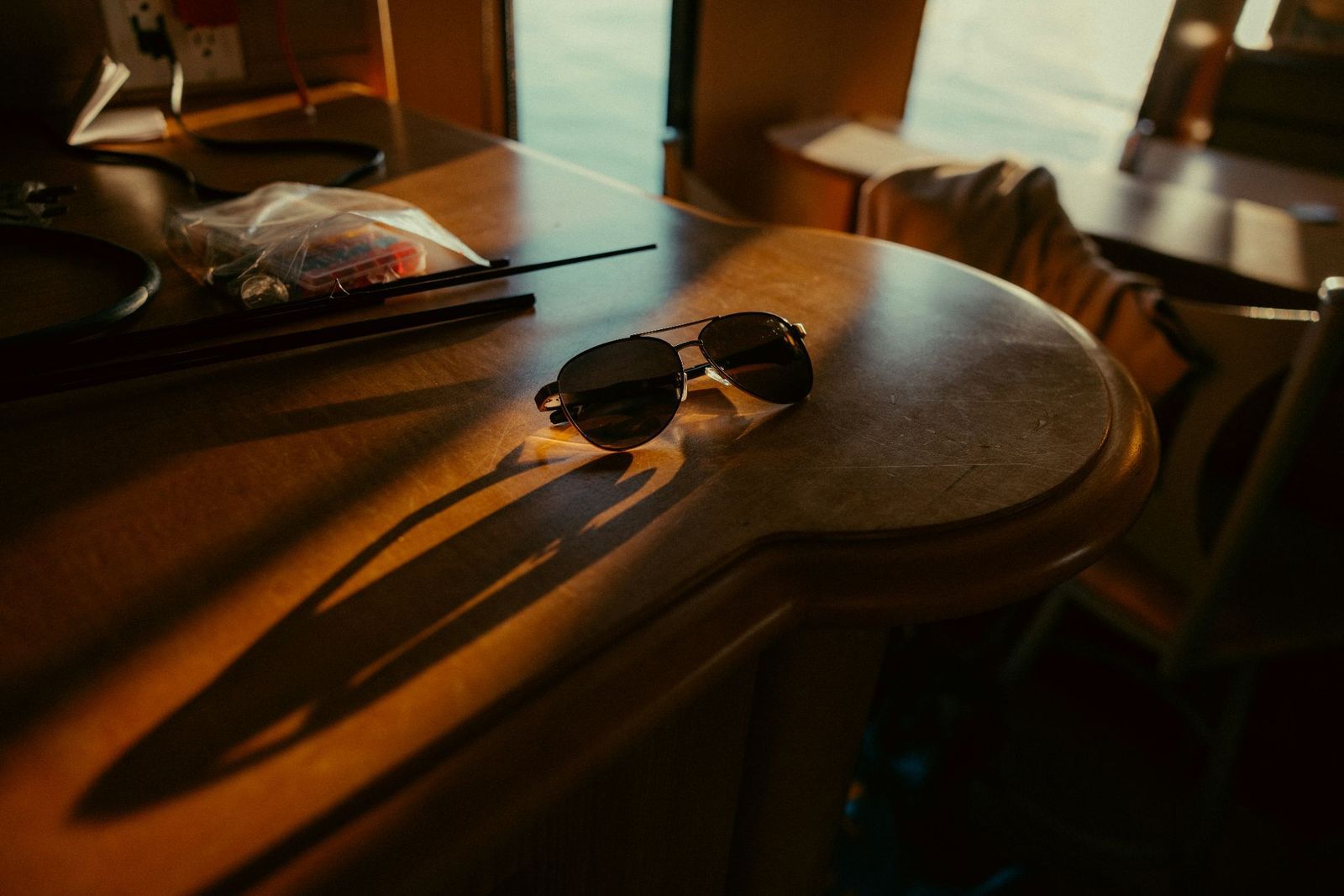
Whether you're arriving at a sunny beach or exploring a new city, sunglasses spend the entire trip moving on and off your face. That constant juggling explains why they regularly appear in lost-and-found collections.
Travel surveys consistently rank sunglasses among the most forgotten vacation accessories. They're commonly discovered beside hotel pools, left on café tables inside terminals, forgotten in rental cars, or tucked into airplane seat pockets after passengers remove them for a movie. Since many people own multiple inexpensive pairs, they sometimes don't even realize one is missing until they get home.
Prescription glasses

Unlike sunglasses, prescription glasses usually go missing when travelers switch to contact lenses or remove them before sleeping. Hotel bathrooms and bedside tables are particularly common places where they end up being forgotten.
Hotel staff frequently report finding reading glasses, bifocals, and prescription eyewear after checkout. Airlines recover plenty of them from seat-back pockets as well, where passengers place them while watching in-flight entertainment or reading. Replacing prescription lenses while traveling can be both expensive and time-consuming, making this one of the more frustrating items to lose.
Headphones and AirPods
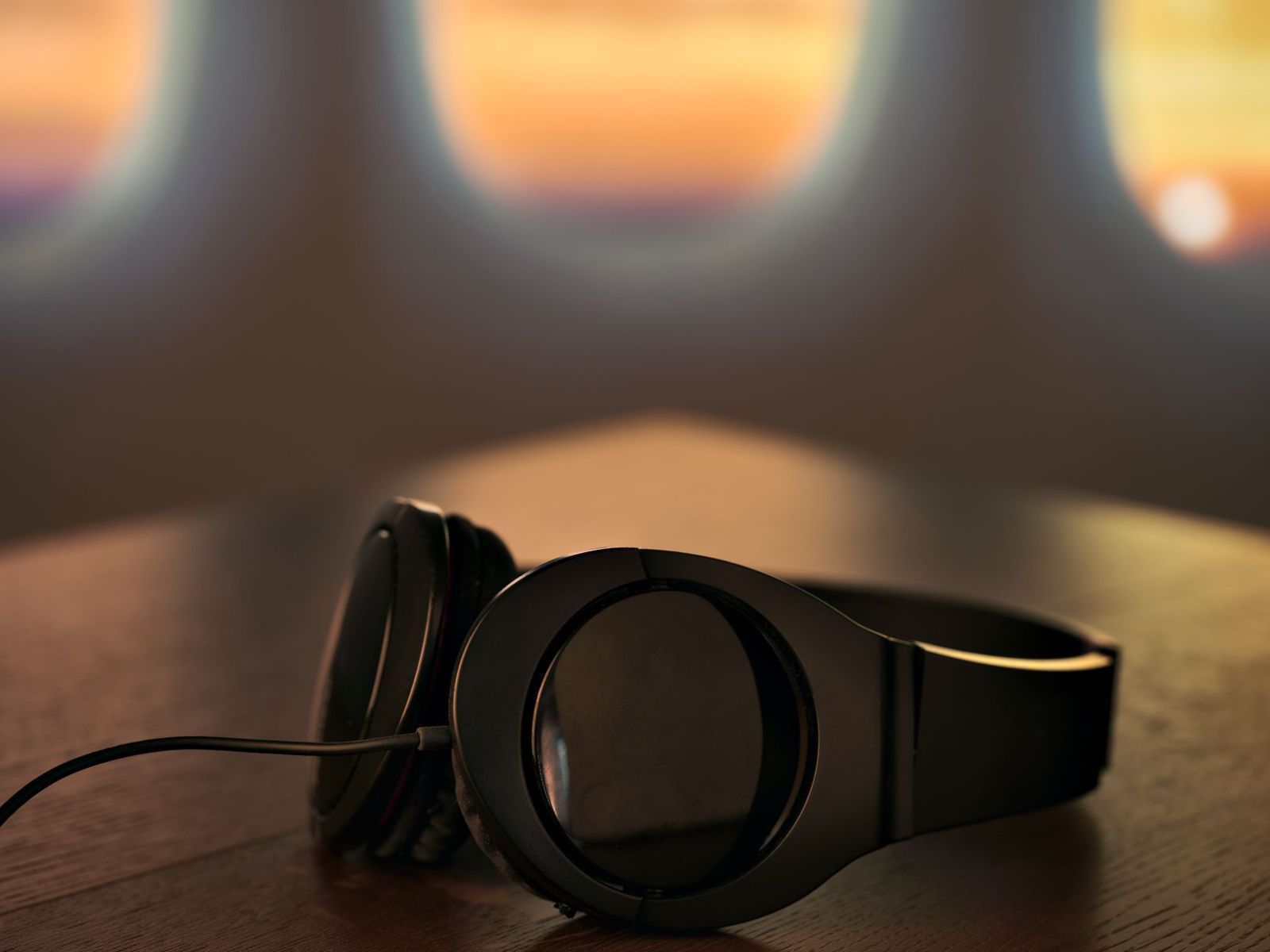
Tiny wireless earbuds have revolutionized travel and created a brand-new category of lost property. Their compact size allows them to slip between airplane seats, disappear into hotel bedding, or hide beneath furniture almost unnoticed.
Lost-and-found departments regularly list headphones among the most recovered electronics. Individual AirPods are particularly problematic because travelers often notice only after they've reached their destination that one earbud, or the entire charging case, never made the trip. Hotel staff often discover them while changing sheets, long after guests have checked out.
Wallets and credit cards

Few travel mishaps create instant panic like realizing your wallet isn't where it should be. Besides the cash itself, it usually contains identification, payment cards, driver's licenses, and other important documents.
Travelers take wallets out repeatedly during a trip for hotel check-in, airport security, boarding, dining, and transportation, which creates countless opportunities to leave them behind. Hotels commonly recover forgotten credit cards from room safes, desks, and nightstands, while airports frequently collect wallets left in security bins after passengers become distracted gathering their luggage.
Passports and travel documents
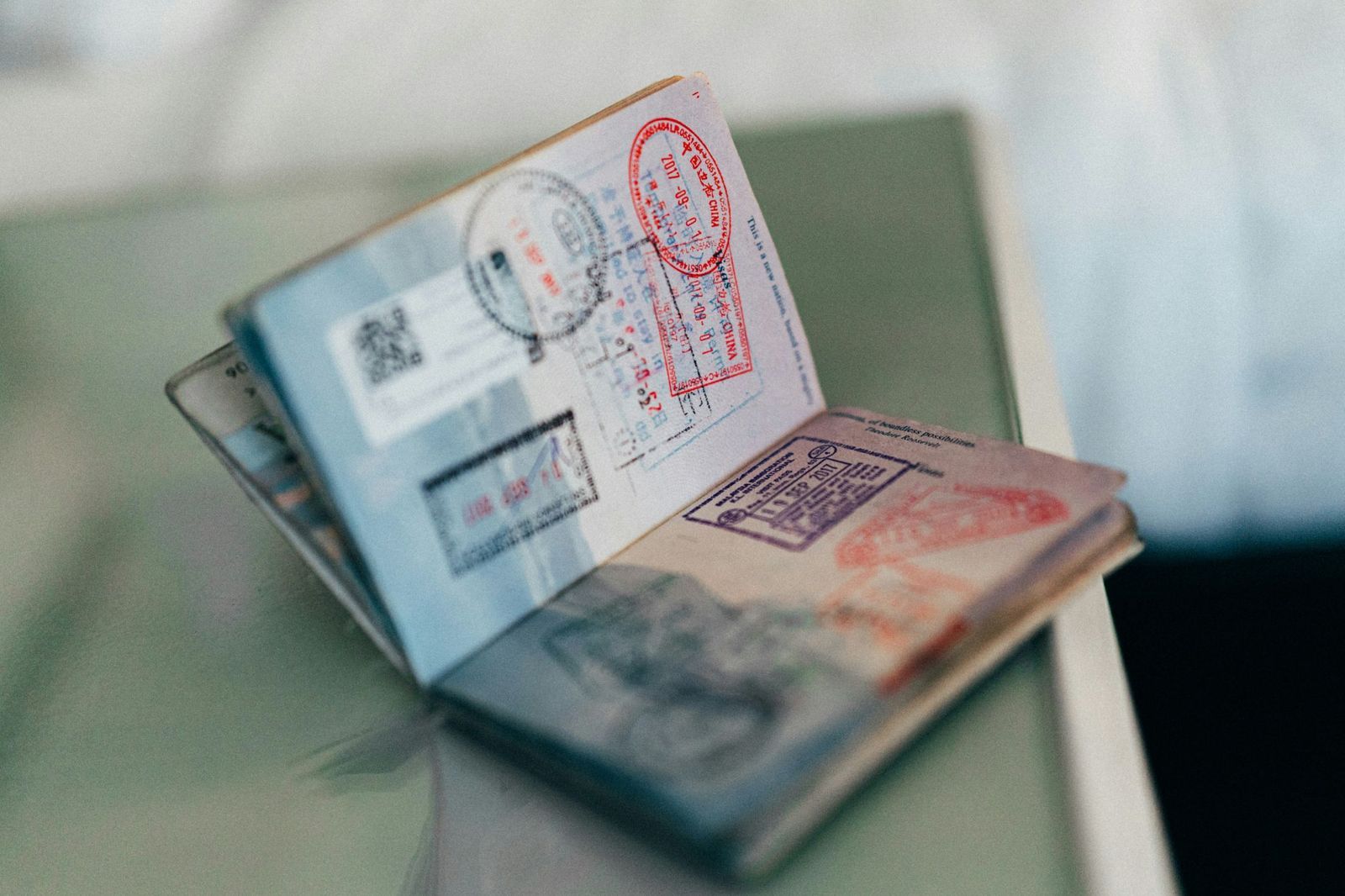
Nothing can derail an international trip faster than losing a passport. It's one of the most valuable items travelers carry, yet it still appears regularly in hotel safes and airport lost-property offices.
Many travelers deliberately store passports in hotel room safes for security, only to forget to retrieve them before checking out. Others accidentally leave travel folders at airline counters or in airport seating areas while organizing boarding passes and identification. Travel experts recommend creating a final "passport check" before leaving every hotel room, a simple habit that can prevent an enormous headache abroad.
Jewelry

Jewelry often comes off for perfectly reasonable reasons: removing rings to wash hands, taking off watches before sleeping, or placing bracelets in airport security trays. Unfortunately, remembering to put them back on isn't always as automatic.
Hotels and airports regularly recover expensive jewelry, from wedding bands to luxury watches. Hotels.com even reported one forgotten watch valued at roughly $6.1 million, proving that even extraordinarily valuable possessions sometimes get left behind. While most forgotten jewelry isn't nearly that expensive, sentimental value often makes these losses especially painful.
Medications

Unlike many forgotten belongings, medications aren't simply inconvenient, they can quickly become a health concern. Prescription medicines, insulin, inhalers, and daily medications are among the most important things travelers pack.
Hotels frequently find medications on bathroom counters, bedside tables, and even inside room refrigerators where temperature-sensitive prescriptions were stored. Airport security areas also recover medicine bags left in inspection trays. Because replacing prescriptions overseas can involve doctors, pharmacies, insurance, and language barriers, travel experts consistently recommend carrying medications in clearly organized, easy-to-check pouches.
Clothing and jackets

Jackets draped over chairs. Sweaters hanging inside closets. Shirts drying in hotel bathrooms. Clothing is by far one of the largest categories of forgotten travel items simply because travelers unpack and spread it throughout a room.
Hotels.com lists clothing among the most common objects housekeeping collects after checkout, while travel surveys in Europe have found clothing to be the category travelers most often realize they've left behind. Cooler airplane cabins also encourage passengers to wear extra layers during flights, making jackets especially likely to remain in overhead bins or on seat backs after landing.
Shoes
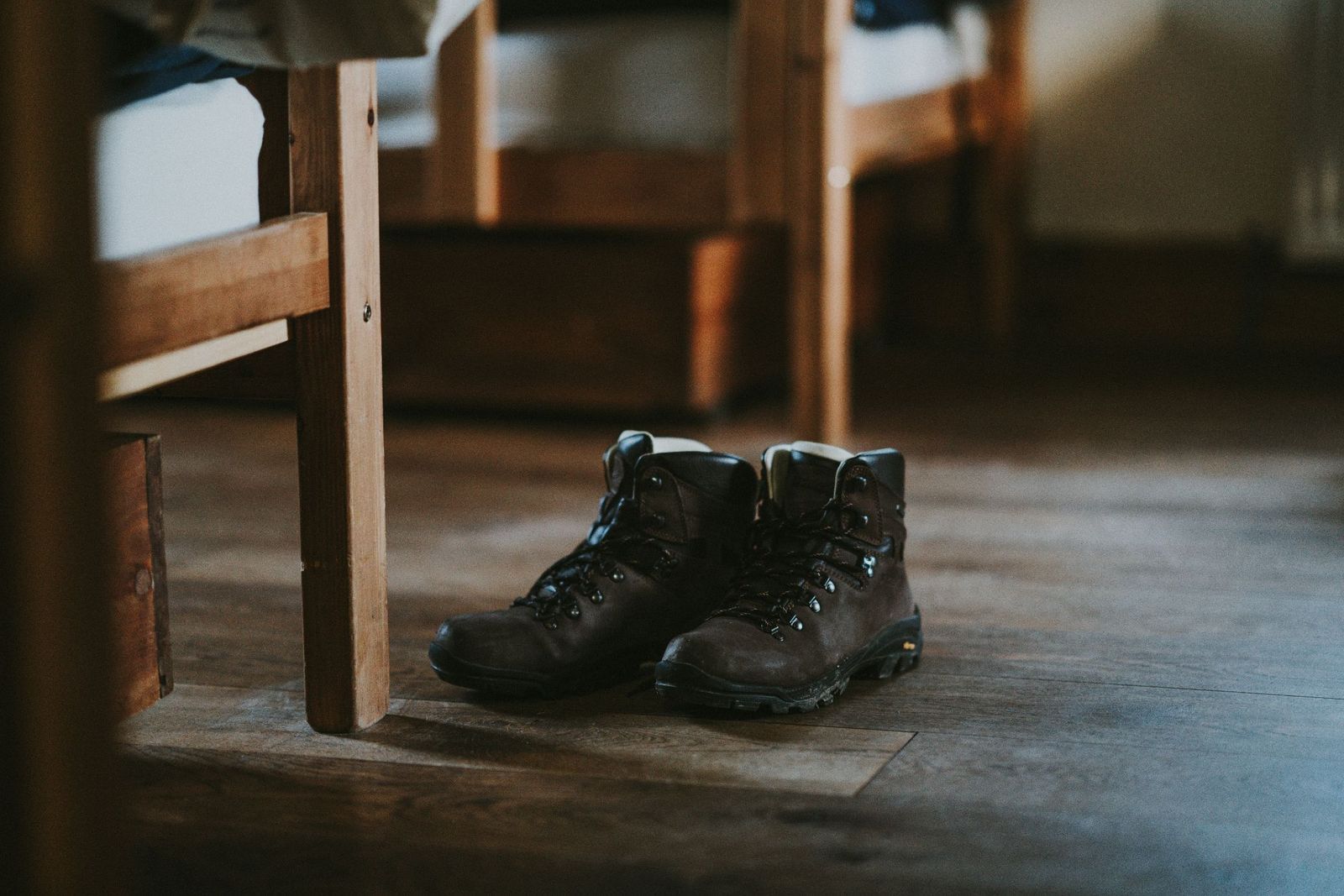
It sounds unlikely until it happens. Shoes are often removed to relax in hotel rooms, placed under beds, left beside balconies, or stored in closets to keep the floor tidy, and then forgotten during the rush to leave.
Hotel employees routinely report finding single shoes or complete pairs hidden beneath furniture. Travelers sometimes pack one shoe while the other remains under the bed, especially during early-morning departures. Because shoes aren't usually packed until the very last moment, they're surprisingly vulnerable to being overlooked.
Toiletry and makeup bags

Toiletries are often the very first things unpacked after arriving at a hotel, and the very last things used before checking out. That combination makes them especially easy to forget.
Toothbrushes, razors, cosmetics, skincare products, hairbrushes, electric toothbrushes, and complete makeup bags regularly end up in hotel bathrooms after guests leave. Many hotels report that entire toiletry kits are recovered almost daily. A glance inside the bathroom before closing the hotel room door for the final time remains one of the simplest ways to avoid becoming part of that statistic.
Keep wandering
There’s always
more to explore

Ten "hidden" tricks that make luxury travel actually affordable
4 min.
Read Now

He spent a week in Vegas without gambling. What did he do?
5 min.
Read Now
Why do flight attendants seem to sit on their hands during takeoff?
5 min.
Read Now

10 sneaky secrets restaurant staff won't tell you
4 min.
Read Now